USDA Hardiness Zone 10
Landscaping in Zone 10: native plants, frost dates and design
Nearly frost-free, with year-round growth. Water, not cold, decides what survives. Zone 10 includes Los Angeles, San Diego, Tampa, Phoenix, San Jose and south Texas.
- 30 to 40 °F
- average winter low
- Frost is rare (before Jan 31 if at all)
- typical last spring frost
- Frost is rare (mid-December or later)
- typical first fall frost
- 43
- catalog plants hardy in Zone 10
Design a Zone 10 yard
The studio below is set to Los Angeles, CA as a Zone 10 example. Replace the ZIP code with your own to match plants to your exact half zone and region.
1 · Pick a yard
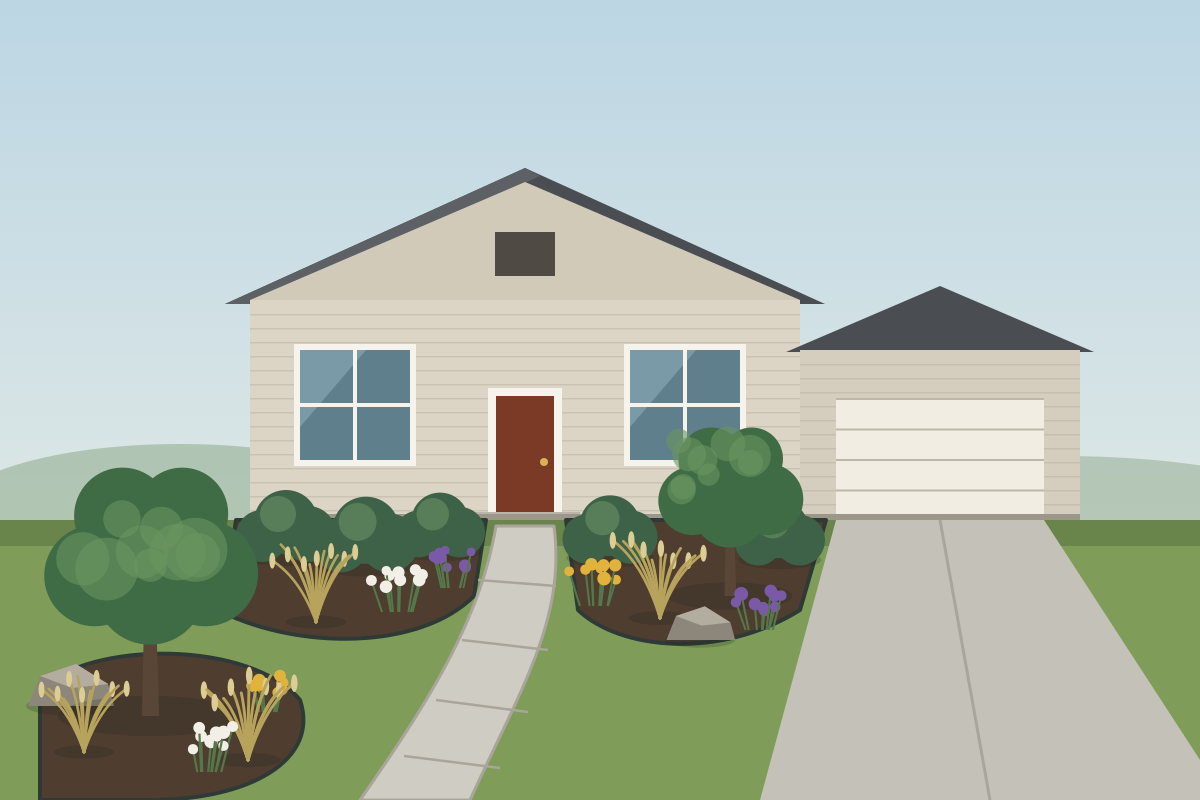
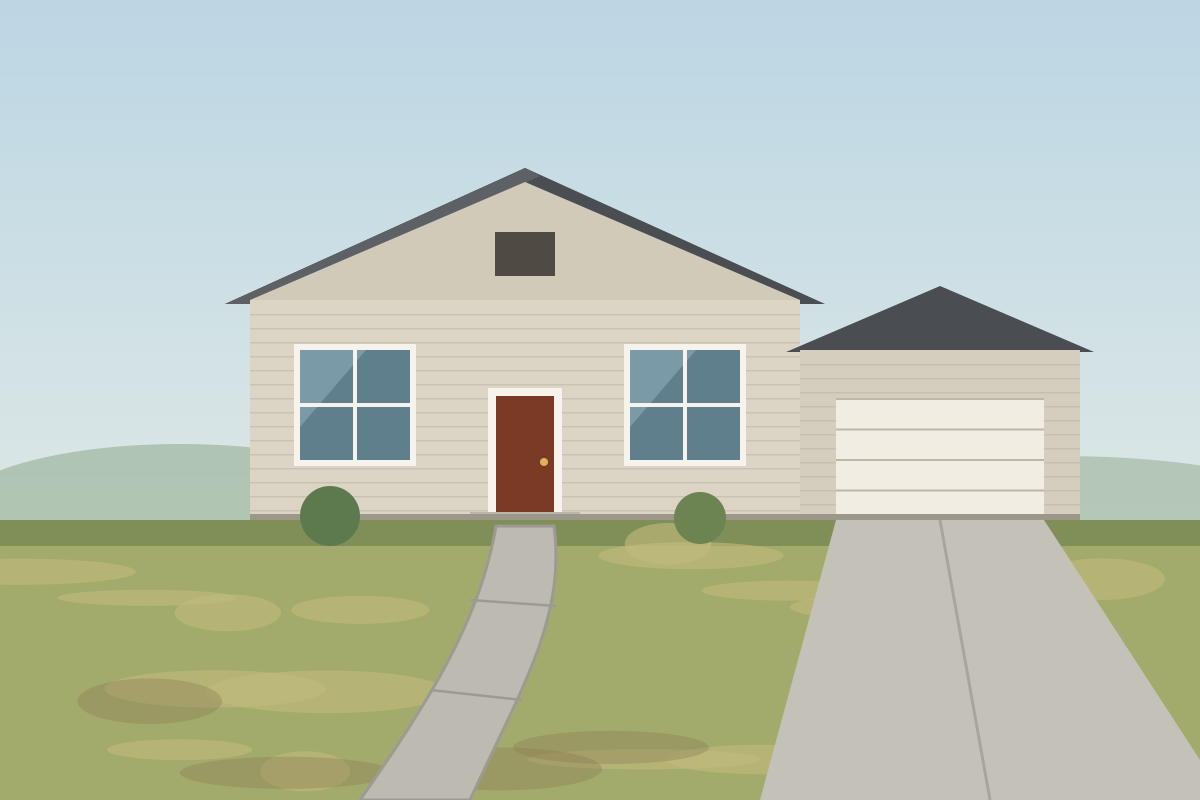 OriginalModern Native concept
Checking today's free renders…
2 · Tune the design
USDA Zone 10b · Coastal CaliforniaCA · winter low 35 to 40 °F
Area
Design style
Clean lines, massed regional natives, steel edging.
Sun exposure
Landscape plan & nursery list
Modern Native Front Yard Plan
USDA Zone 10b · Coastal California · ZIP 90012 · 900 sq ft · Full Sun
- Plants
- 32
- Planting beds
- 270 sq ft
- DIY total
- $1,829
- Landscaper
- $4,570
Trees
$200
Coast Live Oak
Quercus agrifolia
- Zone
- 9–10
- Size
- 40 × 50 ft
- Bloom
- Insignificant
- Water
- Low water
Native to your regionPet cautionDrought-tolerantDeer-resistant1 × 15 gal
$200 each
$200
Shrubs
$90
Concha California Lilac
Ceanothus 'Concha'
- Zone
- 7–10
- Size
- 6 × 8 ft
- Bloom
- Cobalt, March–May
- Water
- Low water
Native to your regionPet cautionDrought-tolerant1 × 3 gal
$42 each
$42
Howard McMinn Manzanita
Arctostaphylos 'Howard McMinn'
- Zone
- 7–10
- Size
- 6 × 7 ft
- Bloom
- Pale pink, February–April
- Water
- Low water
Native to your regionPet cautionDrought-tolerantDeer-resistant1 × 3 gal
$48 each
$48
Perennials
$182
Cleveland Sage
Salvia clevelandii
- Zone
- 8–10
- Size
- 4 × 4 ft
- Bloom
- Violet-blue, May–July
- Water
- Low water
Native to your regionPet-safeDrought-tolerantDeer-resistant2 × 1 gal
$18 each
$36
California Fuchsia
Epilobium canum
- Zone
- 8–10
- Size
- 1.5 × 3 ft
- Bloom
- Scarlet, August–October
- Water
- Low water
Native to your regionPet cautionDrought-tolerantDeer-resistant4 × 1 gal
$14 each
$56
Douglas Iris
Iris douglasiana
- Zone
- 7–10
- Size
- 1.5 × 2 ft
- Bloom
- Violet, March–May
- Water
- Low water
Native to your regionToxic to petsDrought-tolerantDeer-resistant6 × 1 gal
$15 each
$90
Ornamental grasses
$216
California Fescue
Festuca californica
- Zone
- 7–10
- Size
- 2 × 2 ft
- Bloom
- Blue-green blades
- Water
- Low water
Native to your regionPet-safeDrought-tolerantDeer-resistant12 × 1 gal
$14 each
$168
Deer Grass
Muhlenbergia rigens
- Zone
- 6–10
- Size
- 4 × 4 ft
- Bloom
- Tan wands, summer
- Water
- Low water
Native to your regionPet-safeDrought-tolerantDeer-resistant3 × 1 gal
$16 each
$48
Groundcovers
$28
Pigeon Point Coyote Brush
Baccharis pilularis 'Pigeon Point'
- Zone
- 7–10
- Size
- 2 × 8 ft
- Bloom
- Evergreen mat
- Water
- Low water
Native to your regionPet cautionDrought-tolerantDeer-resistant2 × quart
$14 each
$28
DIY vs. landscaper
| Item | DIY | Pro |
|---|---|---|
| Plants32 plants across 9 species | $716 | $931 |
| Soil & compost1.7 cu yd at 2 in deep | $71 | $133 |
| Mulch2.5 cu yd shredded hardwood mulch | $95 | $213 |
| Edging76 linear ft steel edging | $247 | $570 |
| Pavers & hardscape72 sq ft large-format concrete pavers | $540 | $1,512 |
| LaborDIY: about 30 hours of your time | $0 | $721 |
| Delivery & tool rentalBulk delivery plus plate compactor | $160 | $0 |
| Design & overhead12% contractor overhead | $0 | $490 |
| Total | $1,829 | $4,570 |
Doing it yourself saves about $2,741 for roughly 30 hours of work.
Planting notes
- Best planting window for Zone 10b: november through february, ahead of summer heat. Typical last spring frost Frost is rare (before Jan 31 if at all); first fall frost Frost is rare (mid-December or later).
- Coastal California: Mediterranean pattern — cool wet winters, rainless summers, rare frost. Expect 12–25 in / yr, almost all Nov–Mar.
- Work 2 in of compost into the top 6 in of soil, then mulch 3 in deep, keeping it off stems and trunks.
- Water deeply twice a week for the first 8 weeks, weekly through the first summer, then taper. Established natives need supplemental water only in drought.
Zone estimated from your ZIP prefix using the 2023 USDA map. Plants marked pet-safe are not listed as toxic by the ASPCA and are recognized as non-toxic to dogs and cats; “pet caution” means unlisted or mildly irritating. Prices are mid-range US estimates — confirm stock and pricing with your nursery.
Planting calendar
Zone 10 frost dates and planting window
In the West, design around a rainless summer with drought-adapted natives. In Florida, design for heavy summer rain, sandy soil and salt.
- Last spring frost
- Frost is rare (before Jan 31 if at all)
- First fall frost
- Frost is rare (mid-December or later)
- Growing season
- about 330–365 days
- Best planting window
- November through February, ahead of summer heat
Frost dates are typical for the zone as a whole. Elevation, slope and nearby water can shift them by a week or two.
Native plant palette
Native plants that are hardy in Zone 10
Grouped by layer. Each plant lists the regions where it is native, because a zone number alone does not tell you whether a plant suits your rainfall.
Trees
Cabbage Palm
Sabal palmetto
Zone 8–11 · 40 × 12 ft · Low water
Native to Southeast Humid
Coast Live Oak
Quercus agrifolia
Zone 9–10 · 40 × 50 ft · Low water
Native to Coastal California
Desert Museum Palo Verde
Parkinsonia × 'Desert Museum'
Zone 8–11 · 25 × 25 ft · Low water
Native to Southwest Arid
Desert Willow
Chilopsis linearis
Zone 7–11 · 20 × 15 ft · Low water
Native to Southwest Arid
Little Gem Southern Magnolia
Magnolia grandiflora 'Little Gem'
Zone 7–10 · 20 × 10 ft · Moderate water
Native to Southeast Humid
Shrubs
Concha California Lilac
Ceanothus 'Concha'
Zone 7–10 · 6 × 8 ft · Low water
Native to Coastal California, Pacific Northwest
Dwarf Yaupon Holly
Ilex vomitoria 'Nana'
Zone 7–10 · 3 × 4 ft · Low water
Native to Southeast Humid, Southwest Arid
Howard McMinn Manzanita
Arctostaphylos 'Howard McMinn'
Zone 7–10 · 6 × 7 ft · Low water
Native to Coastal California, Pacific Northwest
Turk's Cap
Malvaviscus arboreus var. drummondii
Zone 7–10 · 4 × 4 ft · Low water
Native to Southwest Arid, Southeast Humid
American Beautyberry
Callicarpa americana
Zone 6–10 · 5 × 5 ft · Moderate water
Native to Southeast Humid
Perennials
California Fuchsia
Epilobium canum
Zone 8–10 · 1.5 × 3 ft · Low water
Native to Coastal California, Southwest Arid
Douglas Iris
Iris douglasiana
Zone 7–10 · 1.5 × 2 ft · Low water
Native to Coastal California, Pacific Northwest
Seaside Daisy
Erigeron glaucus
Zone 8–10 · 1 × 2 ft · Low water
Native to Coastal California, Pacific Northwest
Autumn Sage
Salvia greggii
Zone 7–10 · 3 × 3 ft · Low water
Native to Southwest Arid
Blackfoot Daisy
Melampodium leucanthum
Zone 6–10 · 1 × 1.5 ft · Low water
Native to Southwest Arid
Ornamental grasses
California Fescue
Festuca californica
Zone 7–10 · 2 × 2 ft · Low water
Native to Coastal California, Pacific Northwest
Deer Grass
Muhlenbergia rigens
Zone 6–10 · 4 × 4 ft · Low water
Native to Coastal California, Southwest Arid
Pink Muhly Grass
Muhlenbergia capillaris
Zone 6–11 · 3 × 3 ft · Low water
Native to Southeast Humid, Southwest Arid
Dwarf Fakahatchee Grass
Tripsacum floridanum
Zone 8–11 · 3 × 3 ft · Moderate water
Native to Southeast Humid
Groundcovers
Frogfruit
Phyla nodiflora
Zone 7–11 · 3 in × 3 ft · Low water
Native to Southeast Humid, Southwest Arid
Beach Sunflower
Helianthus debilis
Zone 8–11 · 1.5 × 3 ft · Low water
Native to Southeast Humid
Damianita
Chrysactinia mexicana
Zone 7–10 · 1.5 × 2 ft · Low water
Native to Southwest Arid
Pigeon Point Coyote Brush
Baccharis pilularis 'Pigeon Point'
Zone 7–10 · 2 × 8 ft · Low water
Native to Coastal California
Sunshine Mimosa
Mimosa strigillosa
Zone 8–11 · 4 in × 3 ft · Low water
Native to Southeast Humid
Low-water picks
Drought-tolerant plants for Zone 10
Hardy in this zone and able to live on rainfall once established.
California Fescue
Festuca californica
Zone 7–10 · 2 × 2 ft · Low water
Native to Coastal California, Pacific Northwest
California Fuchsia
Epilobium canum
Zone 8–10 · 1.5 × 3 ft · Low water
Native to Coastal California, Southwest Arid
Concha California Lilac
Ceanothus 'Concha'
Zone 7–10 · 6 × 8 ft · Low water
Native to Coastal California, Pacific Northwest
Deer Grass
Muhlenbergia rigens
Zone 6–10 · 4 × 4 ft · Low water
Native to Coastal California, Southwest Arid
Douglas Iris
Iris douglasiana
Zone 7–10 · 1.5 × 2 ft · Low water
Native to Coastal California, Pacific Northwest
Dwarf Yaupon Holly
Ilex vomitoria 'Nana'
Zone 7–10 · 3 × 4 ft · Low water
Native to Southeast Humid, Southwest Arid
Frogfruit
Phyla nodiflora
Zone 7–11 · 3 in × 3 ft · Low water
Native to Southeast Humid, Southwest Arid
Howard McMinn Manzanita
Arctostaphylos 'Howard McMinn'
Zone 7–10 · 6 × 7 ft · Low water
Native to Coastal California, Pacific Northwest
Questions
Zone 10 landscaping FAQ
What is USDA Hardiness Zone 10?
Zone 10 covers places where the average coldest night of the year falls between 30 to 40 °F. It includes Los Angeles, San Diego, Tampa, Phoenix, San Jose and south Texas. The zone is split into 10a, the colder half, and 10b, the warmer half.
When should I plant in Zone 10?
The best planting window in Zone 10 is november through february, ahead of summer heat. The typical last spring frost is Frost is rare (before Jan 31 if at all) and the first fall frost is Frost is rare (mid-December or later), giving about 330–365 days of growing season.
What are the best drought-tolerant plants for Zone 10?
Reliable low-water choices that are hardy in Zone 10 include California Fescue, California Fuchsia, Concha California Lilac, Deer Grass. Enter your ZIP code in the studio to narrow these to plants native to your region.
How do I find out if I am in Zone 10?
Enter your 5-digit ZIP code in the YardCraft studio. It returns your half zone, such as 10a or 10b, your climate region and your average winter low.