USDA Hardiness Zone 5
Landscaping in Zone 5: native plants, frost dates and design
Cold winters, warm humid summers and deep, fertile soils across the prairie and northern states. Zone 5 includes Des Moines, Minneapolis–St. Paul, Madison, Omaha, Milwaukee and Burlington.
- −20 to −10 °F
- average winter low
- Apr 15 – May 1
- typical last spring frost
- Oct 7 – Oct 21
- typical first fall frost
- 74
- catalog plants hardy in Zone 5
Design a Zone 5 yard
The studio below is set to Des Moines, IA as a Zone 5 example. Replace the ZIP code with your own to match plants to your exact half zone and region.
1 · Pick a yard
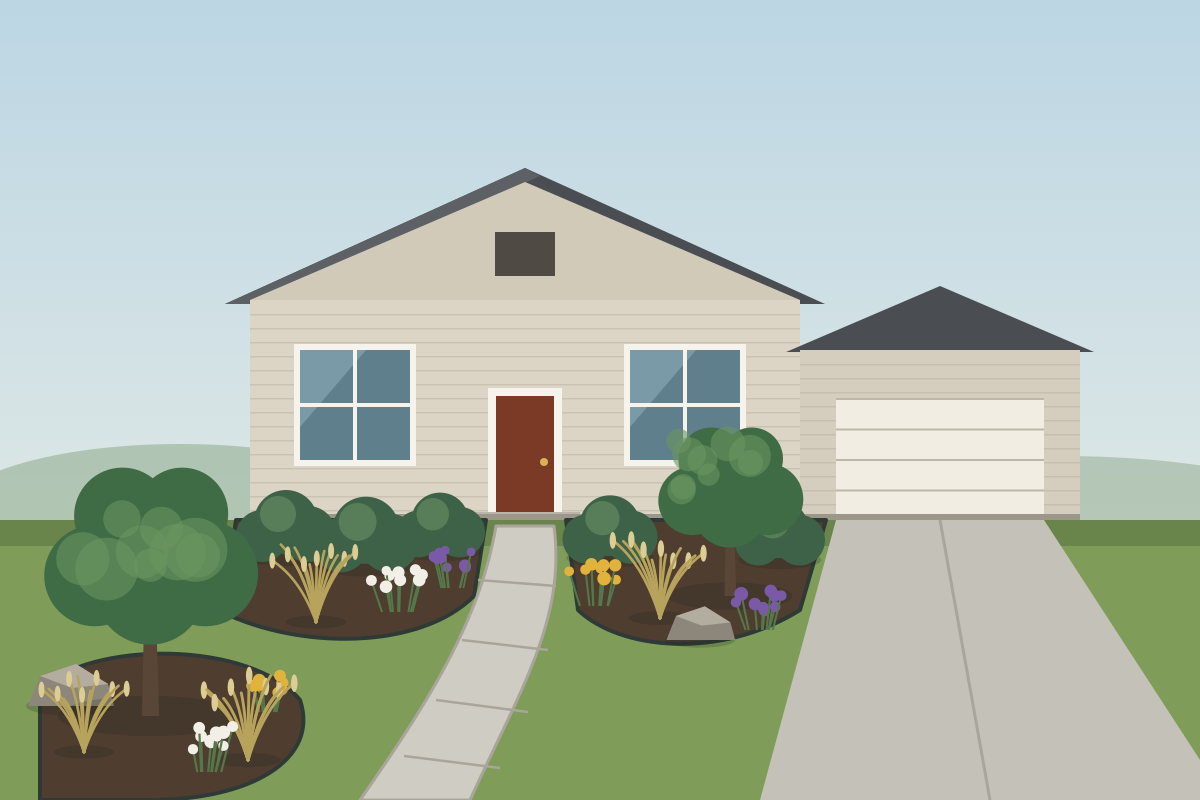
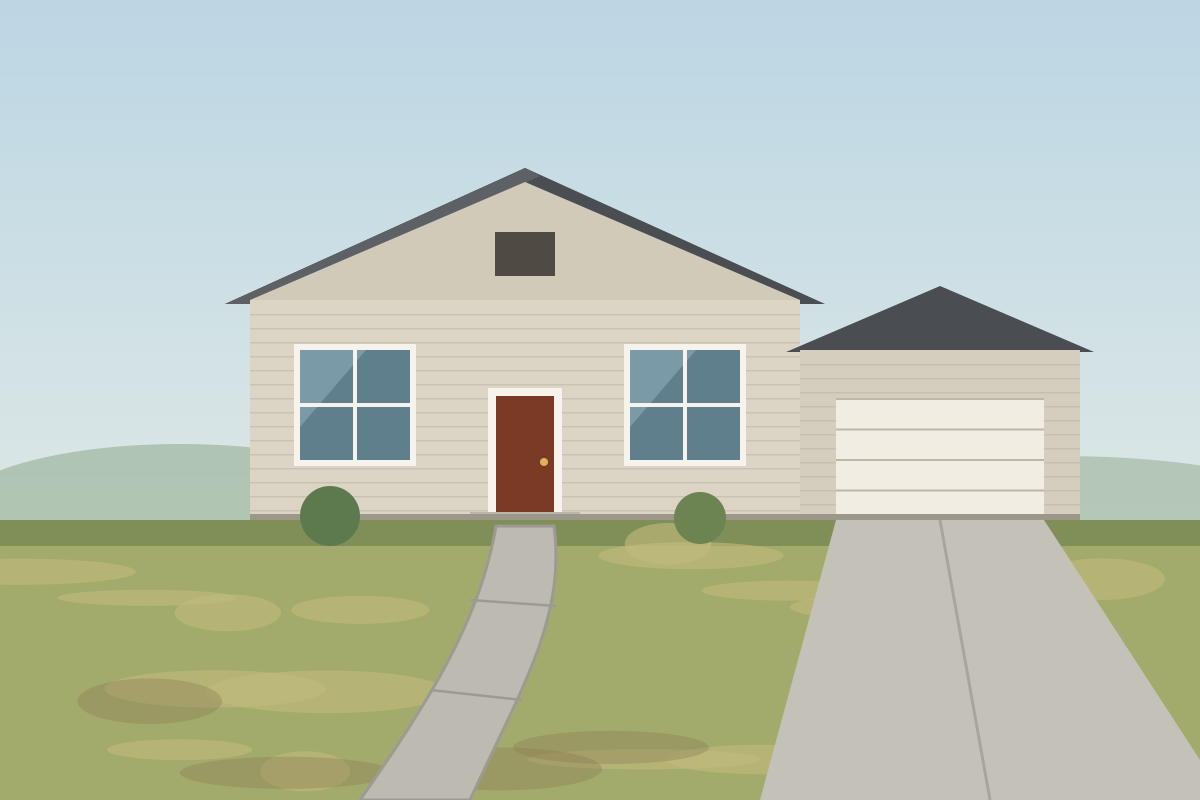 OriginalModern Native concept
Checking today's free renders…
2 · Tune the design
USDA Zone 5b · Midwest ContinentalIA · winter low −15 to −10 °F
Area
Design style
Clean lines, massed regional natives, steel edging.
Sun exposure
Landscape plan & nursery list
Modern Native Front Yard Plan
USDA Zone 5b · Midwest Continental · ZIP 50309 · 900 sq ft · Full Sun
- Plants
- 57
- Planting beds
- 270 sq ft
- DIY total
- $2,112
- Landscaper
- $5,230
Trees
$190
Bur Oak
Quercus macrocarpa
- Zone
- 3–8
- Size
- 70 × 70 ft
- Bloom
- Insignificant
- Water
- Low water
Native to your regionPet cautionDrought-tolerant1 × 15 gal
$190 each
$190
Shrubs
$128
New Jersey Tea
Ceanothus americanus
- Zone
- 4–8
- Size
- 3 × 4 ft
- Bloom
- White, June–July
- Water
- Low water
Native to your regionPet cautionDrought-tolerant3 × 3 gal
$30 each
$90
Diabolo Ninebark
Physocarpus opulifolius 'Diabolo'
- Zone
- 3–7
- Size
- 8 × 6 ft
- Bloom
- Blush white, May–June
- Water
- Low water
Native to your regionPet cautionDrought-tolerant1 × 3 gal
$38 each
$38
Perennials
$348
Dense Blazing Star
Liatris spicata
- Zone
- 3–9
- Size
- 3 × 1.5 ft
- Bloom
- Violet, July–August
- Water
- Moderate water
Native to your regionPet-safeDrought-tolerant11 × 1 gal
$12 each
$132
Lanceleaf Coreopsis
Coreopsis lanceolata
- Zone
- 4–9
- Size
- 2 × 1.5 ft
- Bloom
- Yellow, May–July
- Water
- Low water
Native to your regionPet-safeDrought-tolerantDeer-resistant11 × 1 gal
$12 each
$132
Purple Coneflower
Echinacea purpurea
- Zone
- 3–9
- Size
- 3 × 2 ft
- Bloom
- Rose-purple, June–September
- Water
- Low water
Native to your regionPet-safeDrought-tolerantDeer-resistant6 × 1 gal
$14 each
$84
Ornamental grasses
$273
Blonde Ambition Blue Grama
Bouteloua gracilis 'Blonde Ambition'
- Zone
- 4–9
- Size
- 2.5 × 2.5 ft
- Bloom
- Chartreuse flags, July–October
- Water
- Low water
Native to your regionPet-safeDrought-tolerantDeer-resistant7 × 1 gal
$15 each
$105
Little Bluestem
Schizachyrium scoparium
- Zone
- 3–9
- Size
- 3 × 2 ft
- Bloom
- Copper fall color
- Water
- Low water
Native to your regionPet-safeDrought-tolerantDeer-resistant12 × 1 gal
$14 each
$168
Groundcovers
$60
Kinnikinnick
Arctostaphylos uva-ursi
- Zone
- 3–7
- Size
- 6 in × 4 ft
- Bloom
- Pink, April–May
- Water
- Low water
Native to your regionPet cautionDrought-tolerantDeer-resistant5 × quart
$12 each
$60
DIY vs. landscaper
| Item | DIY | Pro |
|---|---|---|
| Plants57 plants across 9 species | $999 | $1,299 |
| Soil & compost1.7 cu yd at 2 in deep | $71 | $133 |
| Mulch2.5 cu yd shredded hardwood mulch | $95 | $213 |
| Edging76 linear ft steel edging | $247 | $570 |
| Pavers & hardscape72 sq ft large-format concrete pavers | $540 | $1,512 |
| LaborDIY: about 34 hours of your time | $0 | $943 |
| Delivery & tool rentalBulk delivery plus plate compactor | $160 | $0 |
| Design & overhead12% contractor overhead | $0 | $560 |
| Total | $2,112 | $5,230 |
Doing it yourself saves about $3,118 for roughly 34 hours of work.
Planting notes
- Best planting window for Zone 5b: late april to early june, then september. Typical last spring frost Apr 15 – May 1; first fall frost Oct 7 – Oct 21.
- Midwest Continental: Cold winters, hot humid summers, and deep prairie soils. Expect 28–42 in / yr.
- Work 2 in of compost into the top 6 in of soil, then mulch 3 in deep, keeping it off stems and trunks.
- Water deeply twice a week for the first 8 weeks, weekly through the first summer, then taper. Established natives need supplemental water only in drought.
Zone estimated from your ZIP prefix using the 2023 USDA map. Plants marked pet-safe are not listed as toxic by the ASPCA and are recognized as non-toxic to dogs and cats; “pet caution” means unlisted or mildly irritating. Prices are mid-range US estimates — confirm stock and pricing with your nursery.
Planting calendar
Zone 5 frost dates and planting window
Late spring frosts are the main risk. Wait until after the last frost date for tender plants, and use prairie natives that shrug off both January cold and August heat.
- Last spring frost
- Apr 15 – May 1
- First fall frost
- Oct 7 – Oct 21
- Growing season
- about 150–175 days
- Best planting window
- Late April to early June, then September
Frost dates are typical for the zone as a whole. Elevation, slope and nearby water can shift them by a week or two.
Native plant palette
Native plants that are hardy in Zone 5
Grouped by layer. Each plant lists the regions where it is native, because a zone number alone does not tell you whether a plant suits your rainfall.
Trees
Autumn Brilliance Serviceberry
Amelanchier × grandiflora
Zone 4–9 · 20 × 15 ft · Moderate water
Native to Northeast Cold, Midwest Continental, Southeast Humid, Mountain West, Pacific Northwest
Bur Oak
Quercus macrocarpa
Zone 3–8 · 70 × 70 ft · Low water
Native to Midwest Continental, Northeast Cold, Mountain West
Eastern Redbud
Cercis canadensis
Zone 4–9 · 25 × 25 ft · Moderate water
Native to Northeast Cold, Midwest Continental, Southeast Humid
Flowering Dogwood
Cornus florida
Zone 5–9 · 20 × 20 ft · Moderate water
Native to Northeast Cold, Southeast Humid, Midwest Continental
Heritage River Birch
Betula nigra 'Heritage'
Zone 4–9 · 40 × 30 ft · Regular water
Native to Northeast Cold, Midwest Continental, Southeast Humid
Shrubs
Red Twig Dogwood
Cornus sericea
Zone 3–8 · 7 × 8 ft · Moderate water
Native to Northeast Cold, Midwest Continental, Mountain West, Pacific Northwest
Annabelle Smooth Hydrangea
Hydrangea arborescens 'Annabelle'
Zone 3–9 · 4 × 5 ft · Moderate water
Native to Northeast Cold, Midwest Continental, Southeast Humid
Arrowwood Viburnum
Viburnum dentatum
Zone 3–8 · 8 × 8 ft · Moderate water
Native to Northeast Cold, Midwest Continental, Southeast Humid
Diabolo Ninebark
Physocarpus opulifolius 'Diabolo'
Zone 3–7 · 8 × 6 ft · Low water
Native to Northeast Cold, Midwest Continental, Mountain West
Henry's Garnet Sweetspire
Itea virginica 'Henry's Garnet'
Zone 5–9 · 4 × 5 ft · Moderate water
Native to Southeast Humid, Northeast Cold, Midwest Continental
Perennials
Western Yarrow
Achillea millefolium
Zone 3–9 · 2 × 2 ft · Low water
Native to Coastal California, Pacific Northwest, Mountain West, Midwest Continental, Northeast Cold, Southwest Arid
Butterfly Milkweed
Asclepias tuberosa
Zone 3–9 · 2 × 1.5 ft · Low water
Native to Midwest Continental, Northeast Cold, Southeast Humid, Southwest Arid
Wild Bergamot
Monarda fistulosa
Zone 3–9 · 3 × 3 ft · Moderate water
Native to Midwest Continental, Northeast Cold, Southeast Humid, Mountain West
American Alumroot
Heuchera americana
Zone 4–9 · 1.5 × 1.5 ft · Moderate water
Native to Northeast Cold, Southeast Humid, Midwest Continental
Blanket Flower
Gaillardia aristata
Zone 3–9 · 2 × 2 ft · Low water
Native to Mountain West, Midwest Continental, Southwest Arid
Ornamental grasses
Little Bluestem
Schizachyrium scoparium
Zone 3–9 · 3 × 2 ft · Low water
Native to Midwest Continental, Northeast Cold, Southeast Humid, Mountain West, Southwest Arid
Blonde Ambition Blue Grama
Bouteloua gracilis 'Blonde Ambition'
Zone 4–9 · 2.5 × 2.5 ft · Low water
Native to Mountain West, Southwest Arid, Midwest Continental
Northwind Switchgrass
Panicum virgatum 'Northwind'
Zone 4–9 · 5 × 2.5 ft · Low water
Native to Midwest Continental, Northeast Cold, Southeast Humid
River Oats
Chasmanthium latifolium
Zone 4–9 · 3 × 2 ft · Moderate water
Native to Southeast Humid, Midwest Continental, Northeast Cold
Tufted Hairgrass
Deschampsia cespitosa
Zone 4–9 · 3 × 2 ft · Moderate water
Native to Pacific Northwest, Mountain West, Northeast Cold
Groundcovers
Wild Strawberry
Fragaria virginiana
Zone 3–9 · 5 in × 2 ft · Moderate water
Native to Northeast Cold, Midwest Continental, Mountain West, Pacific Northwest, Coastal California
Kinnikinnick
Arctostaphylos uva-ursi
Zone 3–7 · 6 in × 4 ft · Low water
Native to Pacific Northwest, Mountain West, Northeast Cold, Midwest Continental
Canada Wild Ginger
Asarum canadense
Zone 3–8 · 6 in × 1.5 ft · Moderate water
Native to Northeast Cold, Midwest Continental, Southeast Humid
Moss Phlox
Phlox subulata
Zone 3–9 · 6 in × 2 ft · Moderate water
Native to Northeast Cold, Midwest Continental, Southeast Humid
Green-and-Gold
Chrysogonum virginianum
Zone 5–9 · 6 in × 1.5 ft · Moderate water
Native to Southeast Humid, Northeast Cold
Low-water picks
Drought-tolerant plants for Zone 5
Hardy in this zone and able to live on rainfall once established.
Western Yarrow
Achillea millefolium
Zone 3–9 · 2 × 2 ft · Low water
Native to Coastal California, Pacific Northwest, Mountain West, Midwest Continental, Northeast Cold, Southwest Arid
Little Bluestem
Schizachyrium scoparium
Zone 3–9 · 3 × 2 ft · Low water
Native to Midwest Continental, Northeast Cold, Southeast Humid, Mountain West, Southwest Arid
Butterfly Milkweed
Asclepias tuberosa
Zone 3–9 · 2 × 1.5 ft · Low water
Native to Midwest Continental, Northeast Cold, Southeast Humid, Southwest Arid
Kinnikinnick
Arctostaphylos uva-ursi
Zone 3–7 · 6 in × 4 ft · Low water
Native to Pacific Northwest, Mountain West, Northeast Cold, Midwest Continental
Blanket Flower
Gaillardia aristata
Zone 3–9 · 2 × 2 ft · Low water
Native to Mountain West, Midwest Continental, Southwest Arid
Blonde Ambition Blue Grama
Bouteloua gracilis 'Blonde Ambition'
Zone 4–9 · 2.5 × 2.5 ft · Low water
Native to Mountain West, Southwest Arid, Midwest Continental
Blue Wild Indigo
Baptisia australis
Zone 3–9 · 4 × 4 ft · Low water
Native to Midwest Continental, Northeast Cold, Southeast Humid
Bur Oak
Quercus macrocarpa
Zone 3–8 · 70 × 70 ft · Low water
Native to Midwest Continental, Northeast Cold, Mountain West
Questions
Zone 5 landscaping FAQ
What is USDA Hardiness Zone 5?
Zone 5 covers places where the average coldest night of the year falls between −20 to −10 °F. It includes Des Moines, Minneapolis–St. Paul, Madison, Omaha, Milwaukee and Burlington. The zone is split into 5a, the colder half, and 5b, the warmer half.
When should I plant in Zone 5?
The best planting window in Zone 5 is late april to early june, then september. The typical last spring frost is Apr 15 – May 1 and the first fall frost is Oct 7 – Oct 21, giving about 150–175 days of growing season.
What are the best drought-tolerant plants for Zone 5?
Reliable low-water choices that are hardy in Zone 5 include Western Yarrow, Little Bluestem, Butterfly Milkweed, Kinnikinnick. Enter your ZIP code in the studio to narrow these to plants native to your region.
How do I find out if I am in Zone 5?
Enter your 5-digit ZIP code in the YardCraft studio. It returns your half zone, such as 5a or 5b, your climate region and your average winter low.