USDA Hardiness Zone 8
Landscaping in Zone 8: native plants, frost dates and design
Short, mild winters and a growing season of eight months or more, from the humid Southeast to the Pacific Northwest. Zone 8 includes Atlanta, Dallas, Charlotte, Raleigh, Portland and the Carolina coast.
- 10 to 20 °F
- average winter low
- Mar 7 – Mar 28
- typical last spring frost
- Nov 7 – Nov 28
- typical first fall frost
- 112
- catalog plants hardy in Zone 8
Design a Zone 8 yard
The studio below is set to Atlanta, GA as a Zone 8 example. Replace the ZIP code with your own to match plants to your exact half zone and region.
1 · Pick a yard
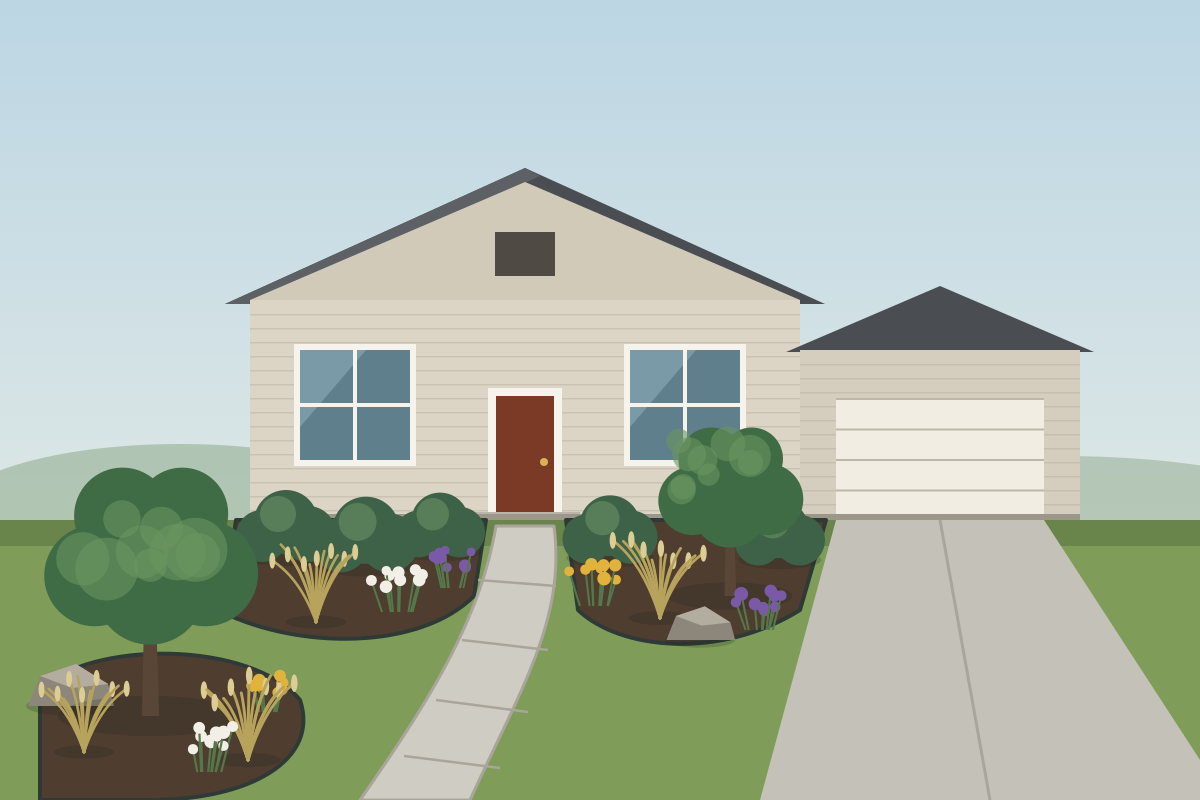
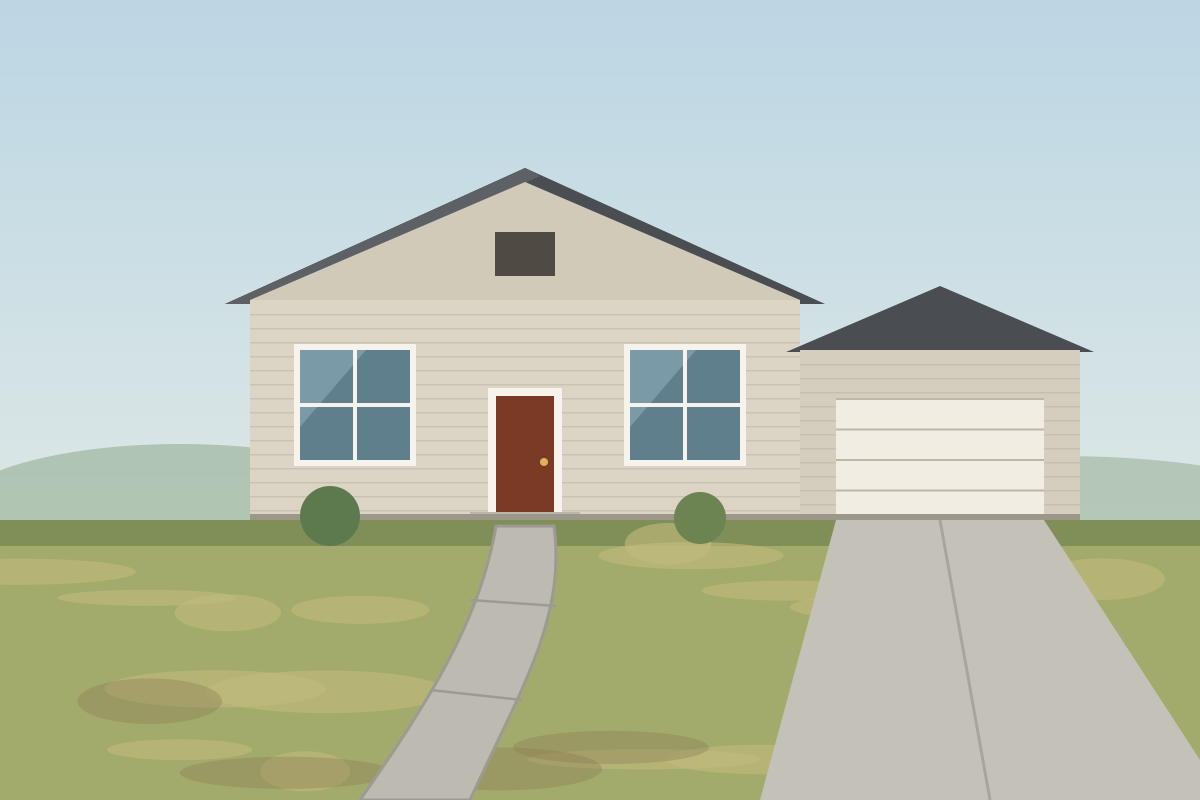 OriginalModern Native concept
Checking today's free renders…
2 · Tune the design
USDA Zone 8a · Southeast HumidGA · winter low 10 to 15 °F
Area
Design style
Clean lines, massed regional natives, steel edging.
Sun exposure
Landscape plan & nursery list
Modern Native Front Yard Plan
USDA Zone 8a · Southeast Humid · ZIP 30303 · 900 sq ft · Full Sun
- Plants
- 58
- Planting beds
- 270 sq ft
- DIY total
- $2,173
- Landscaper
- $5,338
Trees
$240
Cabbage Palm
Sabal palmetto
- Zone
- 8–11
- Size
- 40 × 12 ft
- Bloom
- Cream, summer
- Water
- Low water
Native to your regionPet-safeDrought-tolerantDeer-resistant1 × 15 gal
$240 each
$240
Shrubs
$166
American Beautyberry
Callicarpa americana
- Zone
- 6–10
- Size
- 5 × 5 ft
- Bloom
- Violet berries, fall
- Water
- Moderate water
Native to your regionPet cautionDrought-tolerant2 × 3 gal
$32 each
$64
Coontie
Zamia integrifolia
- Zone
- 8–11
- Size
- 3 × 4 ft
- Bloom
- Evergreen
- Water
- Low water
Native to your regionToxic to petsDrought-tolerantDeer-resistant3 × 3 gal
$34 each
$102
Perennials
$348
Dense Blazing Star
Liatris spicata
- Zone
- 3–9
- Size
- 3 × 1.5 ft
- Bloom
- Violet, July–August
- Water
- Moderate water
Native to your regionPet-safeDrought-tolerant11 × 1 gal
$12 each
$132
Lanceleaf Coreopsis
Coreopsis lanceolata
- Zone
- 4–9
- Size
- 2 × 1.5 ft
- Bloom
- Yellow, May–July
- Water
- Low water
Native to your regionPet-safeDrought-tolerantDeer-resistant11 × 1 gal
$12 each
$132
Purple Coneflower
Echinacea purpurea
- Zone
- 3–9
- Size
- 3 × 2 ft
- Bloom
- Rose-purple, June–September
- Water
- Low water
Native to your regionPet-safeDrought-tolerantDeer-resistant6 × 1 gal
$14 each
$84
Ornamental grasses
$243
Dwarf Fakahatchee Grass
Tripsacum floridanum
- Zone
- 8–11
- Size
- 3 × 3 ft
- Bloom
- Evergreen clump
- Water
- Moderate water
Native to your regionPet-safeDrought-tolerantDeer-resistant5 × 1 gal
$15 each
$75
Little Bluestem
Schizachyrium scoparium
- Zone
- 3–9
- Size
- 3 × 2 ft
- Bloom
- Copper fall color
- Water
- Low water
Native to your regionPet-safeDrought-tolerantDeer-resistant12 × 1 gal
$14 each
$168
Groundcovers
$63
Beach Sunflower
Helianthus debilis
- Zone
- 8–11
- Size
- 1.5 × 3 ft
- Bloom
- Yellow, year-round
- Water
- Low water
Native to your regionPet-safeDrought-tolerant7 × quart
$9 each
$63
DIY vs. landscaper
| Item | DIY | Pro |
|---|---|---|
| Plants58 plants across 9 species | $1,060 | $1,378 |
| Soil & compost1.7 cu yd at 2 in deep | $71 | $133 |
| Mulch2.5 cu yd shredded hardwood mulch | $95 | $213 |
| Edging76 linear ft steel edging | $247 | $570 |
| Pavers & hardscape72 sq ft large-format concrete pavers | $540 | $1,512 |
| LaborDIY: about 34 hours of your time | $0 | $960 |
| Delivery & tool rentalBulk delivery plus plate compactor | $160 | $0 |
| Design & overhead12% contractor overhead | $0 | $572 |
| Total | $2,173 | $5,338 |
Doing it yourself saves about $3,165 for roughly 34 hours of work.
Planting notes
- Best planting window for Zone 8a: october through march (fall planting is best). Typical last spring frost Mar 7 – Mar 28; first fall frost Nov 7 – Nov 28.
- Southeast Humid: Long warm seasons, high humidity, and heavy summer rain. Expect 45–62 in / yr.
- Work 2 in of compost into the top 6 in of soil, then mulch 3 in deep, keeping it off stems and trunks.
- Water deeply twice a week for the first 8 weeks, weekly through the first summer, then taper. Established natives need supplemental water only in drought.
Zone estimated from your ZIP prefix using the 2023 USDA map. Plants marked pet-safe are not listed as toxic by the ASPCA and are recognized as non-toxic to dogs and cats; “pet caution” means unlisted or mildly irritating. Prices are mid-range US estimates — confirm stock and pricing with your nursery.
Planting calendar
Zone 8 frost dates and planting window
Zone 8 spans very different rainfall patterns. A plant that loves Atlanta's wet summers can fail in Portland's dry ones, so region matters as much as zone.
- Last spring frost
- Mar 7 – Mar 28
- First fall frost
- Nov 7 – Nov 28
- Growing season
- about 240–260 days
- Best planting window
- October through March (fall planting is best)
Frost dates are typical for the zone as a whole. Elevation, slope and nearby water can shift them by a week or two.
Native plant palette
Native plants that are hardy in Zone 8
Grouped by layer. Each plant lists the regions where it is native, because a zone number alone does not tell you whether a plant suits your rainfall.
Trees
Autumn Brilliance Serviceberry
Amelanchier × grandiflora
Zone 4–9 · 20 × 15 ft · Moderate water
Native to Northeast Cold, Midwest Continental, Southeast Humid, Mountain West, Pacific Northwest
Bur Oak
Quercus macrocarpa
Zone 3–8 · 70 × 70 ft · Low water
Native to Midwest Continental, Northeast Cold, Mountain West
Eastern Redbud
Cercis canadensis
Zone 4–9 · 25 × 25 ft · Moderate water
Native to Northeast Cold, Midwest Continental, Southeast Humid
Flowering Dogwood
Cornus florida
Zone 5–9 · 20 × 20 ft · Moderate water
Native to Northeast Cold, Southeast Humid, Midwest Continental
Heritage River Birch
Betula nigra 'Heritage'
Zone 4–9 · 40 × 30 ft · Regular water
Native to Northeast Cold, Midwest Continental, Southeast Humid
Shrubs
Red Twig Dogwood
Cornus sericea
Zone 3–8 · 7 × 8 ft · Moderate water
Native to Northeast Cold, Midwest Continental, Mountain West, Pacific Northwest
Annabelle Smooth Hydrangea
Hydrangea arborescens 'Annabelle'
Zone 3–9 · 4 × 5 ft · Moderate water
Native to Northeast Cold, Midwest Continental, Southeast Humid
Arrowwood Viburnum
Viburnum dentatum
Zone 3–8 · 8 × 8 ft · Moderate water
Native to Northeast Cold, Midwest Continental, Southeast Humid
Henry's Garnet Sweetspire
Itea virginica 'Henry's Garnet'
Zone 5–9 · 4 × 5 ft · Moderate water
Native to Southeast Humid, Northeast Cold, Midwest Continental
New Jersey Tea
Ceanothus americanus
Zone 4–8 · 3 × 4 ft · Low water
Native to Midwest Continental, Northeast Cold, Southeast Humid
Perennials
Western Yarrow
Achillea millefolium
Zone 3–9 · 2 × 2 ft · Low water
Native to Coastal California, Pacific Northwest, Mountain West, Midwest Continental, Northeast Cold, Southwest Arid
Butterfly Milkweed
Asclepias tuberosa
Zone 3–9 · 2 × 1.5 ft · Low water
Native to Midwest Continental, Northeast Cold, Southeast Humid, Southwest Arid
Wild Bergamot
Monarda fistulosa
Zone 3–9 · 3 × 3 ft · Moderate water
Native to Midwest Continental, Northeast Cold, Southeast Humid, Mountain West
American Alumroot
Heuchera americana
Zone 4–9 · 1.5 × 1.5 ft · Moderate water
Native to Northeast Cold, Southeast Humid, Midwest Continental
Blanket Flower
Gaillardia aristata
Zone 3–9 · 2 × 2 ft · Low water
Native to Mountain West, Midwest Continental, Southwest Arid
Ornamental grasses
Little Bluestem
Schizachyrium scoparium
Zone 3–9 · 3 × 2 ft · Low water
Native to Midwest Continental, Northeast Cold, Southeast Humid, Mountain West, Southwest Arid
Blonde Ambition Blue Grama
Bouteloua gracilis 'Blonde Ambition'
Zone 4–9 · 2.5 × 2.5 ft · Low water
Native to Mountain West, Southwest Arid, Midwest Continental
Northwind Switchgrass
Panicum virgatum 'Northwind'
Zone 4–9 · 5 × 2.5 ft · Low water
Native to Midwest Continental, Northeast Cold, Southeast Humid
River Oats
Chasmanthium latifolium
Zone 4–9 · 3 × 2 ft · Moderate water
Native to Southeast Humid, Midwest Continental, Northeast Cold
Tufted Hairgrass
Deschampsia cespitosa
Zone 4–9 · 3 × 2 ft · Moderate water
Native to Pacific Northwest, Mountain West, Northeast Cold
Groundcovers
Wild Strawberry
Fragaria virginiana
Zone 3–9 · 5 in × 2 ft · Moderate water
Native to Northeast Cold, Midwest Continental, Mountain West, Pacific Northwest, Coastal California
Canada Wild Ginger
Asarum canadense
Zone 3–8 · 6 in × 1.5 ft · Moderate water
Native to Northeast Cold, Midwest Continental, Southeast Humid
Moss Phlox
Phlox subulata
Zone 3–9 · 6 in × 2 ft · Moderate water
Native to Northeast Cold, Midwest Continental, Southeast Humid
Frogfruit
Phyla nodiflora
Zone 7–11 · 3 in × 3 ft · Low water
Native to Southeast Humid, Southwest Arid
Green-and-Gold
Chrysogonum virginianum
Zone 5–9 · 6 in × 1.5 ft · Moderate water
Native to Southeast Humid, Northeast Cold
Low-water picks
Drought-tolerant plants for Zone 8
Hardy in this zone and able to live on rainfall once established.
Western Yarrow
Achillea millefolium
Zone 3–9 · 2 × 2 ft · Low water
Native to Coastal California, Pacific Northwest, Mountain West, Midwest Continental, Northeast Cold, Southwest Arid
Little Bluestem
Schizachyrium scoparium
Zone 3–9 · 3 × 2 ft · Low water
Native to Midwest Continental, Northeast Cold, Southeast Humid, Mountain West, Southwest Arid
Butterfly Milkweed
Asclepias tuberosa
Zone 3–9 · 2 × 1.5 ft · Low water
Native to Midwest Continental, Northeast Cold, Southeast Humid, Southwest Arid
Blanket Flower
Gaillardia aristata
Zone 3–9 · 2 × 2 ft · Low water
Native to Mountain West, Midwest Continental, Southwest Arid
Blonde Ambition Blue Grama
Bouteloua gracilis 'Blonde Ambition'
Zone 4–9 · 2.5 × 2.5 ft · Low water
Native to Mountain West, Southwest Arid, Midwest Continental
Blue Wild Indigo
Baptisia australis
Zone 3–9 · 4 × 4 ft · Low water
Native to Midwest Continental, Northeast Cold, Southeast Humid
Bur Oak
Quercus macrocarpa
Zone 3–8 · 70 × 70 ft · Low water
Native to Midwest Continental, Northeast Cold, Mountain West
Lanceleaf Coreopsis
Coreopsis lanceolata
Zone 4–9 · 2 × 1.5 ft · Low water
Native to Southeast Humid, Midwest Continental, Northeast Cold
Questions
Zone 8 landscaping FAQ
What is USDA Hardiness Zone 8?
Zone 8 covers places where the average coldest night of the year falls between 10 to 20 °F. It includes Atlanta, Dallas, Charlotte, Raleigh, Portland and the Carolina coast. The zone is split into 8a, the colder half, and 8b, the warmer half.
When should I plant in Zone 8?
The best planting window in Zone 8 is october through march (fall planting is best). The typical last spring frost is Mar 7 – Mar 28 and the first fall frost is Nov 7 – Nov 28, giving about 240–260 days of growing season.
What are the best drought-tolerant plants for Zone 8?
Reliable low-water choices that are hardy in Zone 8 include Western Yarrow, Little Bluestem, Butterfly Milkweed, Blanket Flower. Enter your ZIP code in the studio to narrow these to plants native to your region.
How do I find out if I am in Zone 8?
Enter your 5-digit ZIP code in the YardCraft studio. It returns your half zone, such as 8a or 8b, your climate region and your average winter low.