Climate region · East Asian Subtropical
East Asian Subtropical landscaping for humid summers and mild winters.
Design refined Zen courtyards and urban gardens across Tokyo, Kyoto, Osaka, Taipei and Shanghai with camellias, autumn ferns, black mondo grass and evergreen shrubs.
- Zone 9b
- Tokyo, Japan (−4 to −1 °C)
- 1200–2200 mm / yr, summer-weighted
- typical annual rainfall
- 16 native
- 4 adapted in catalog
- Metric · JPY
- Northern Hemisphere
Plan an East Asian Subtropical garden
Pre-configured for Tokyo, Japan in metric (m²) units and JPY, with Northern Hemisphere seasons. Enter your own city, ZIP or postcode below to customize for your exact address.
1 · Pick a yard
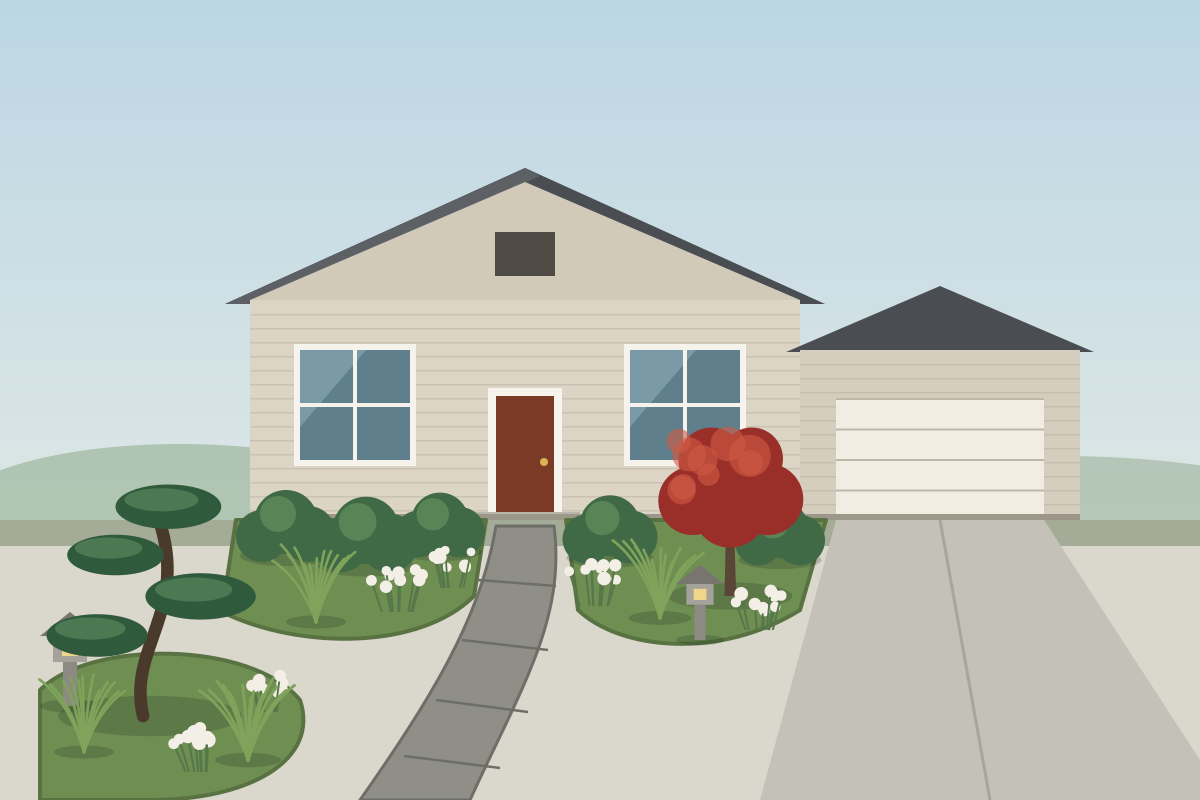
 OriginalJapanese Zen concept
Checking today's free renders…
2 · Tune the design
Units
USDA Zone 9b · East Asian SubtropicalTokyo, Japan · winter low −4 to −1 °C
Area
Design style
Raked gravel, moss, stone, and restrained evergreen form.
Sun exposure
Landscape plan & nursery list
Japanese Zen Backyard Plan
USDA Zone 9b · East Asian Subtropical · Tokyo, Japan · 46.5 m² · Part Shade
- Plants
- 38
- Planting beds
- 13 m²
- DIY total
- ¥276,365
- Landscaper
- ¥661,230
Trees
¥29,450
Japanese Maple
Acer palmatum
- Zone
- 5–9
- Size
- 15 × 15 ft
- Bloom
- Crimson foliage
- Water
- Moderate water
Native to your regionPet-safe1 × 15 gal
¥29,450 each
¥29,450
Shrubs
¥17,050
Sasanqua Camellia
Camellia sasanqua
- Zone
- 7–9
- Size
- 8 × 6 ft
- Bloom
- Pink, October–December
- Water
- Moderate water
Native to your regionPet-safe2 × 3 gal
¥8,525 each
¥17,050
Perennials
¥17,360
Autumn Fern
Dryopteris erythrosora
- Zone
- 5–9
- Size
- 2 × 2 ft
- Bloom
- Copper new growth
- Water
- Moderate water
Native to your regionPet-safeDeer-resistant4 × 1 gal
¥2,170 each
¥8,680
Japanese Painted Fern
Athyrium niponicum 'Pictum'
- Zone
- 4–9
- Size
- 1.5 × 2 ft
- Bloom
- Silver-burgundy fronds
- Water
- Moderate water
Native to your regionPet-safeDeer-resistant4 × 1 gal
¥2,170 each
¥8,680
Ornamental grasses
¥16,740
Golden Japanese Forest Grass
Hakonechloa macra 'Aureola'
- Zone
- 5–9
- Size
- 1.5 × 2 ft
- Bloom
- Gold cascading blades
- Water
- Moderate water
Native to your regionPet-safeDeer-resistant6 × 1 gal
¥2,790 each
¥16,740
Groundcovers
¥32,550
Big Blue Lilyturf
Liriope muscari
- Zone
- 5–11
- Size
- 1 × 1.5 ft
- Bloom
- Violet spikes, August–September
- Water
- Low water
Native to your regionPet-safeDrought-tolerantDeer-resistant21 × quart
¥1,550 each
¥32,550
DIY vs. landscaper
| Item | DIY | Pro |
|---|---|---|
| Plants38 plants across 6 species | ¥113,150 | ¥147,095 |
| Soil & compost0.7 m³ at 5 cm deep | ¥5,890 | ¥10,850 |
| Decomposed granite & gravel0.7 m³ pea gravel | ¥8,680 | ¥16,740 |
| Edging16.5 linear m steel edging | ¥27,280 | ¥62,775 |
| Pavers & hardscape7.7 m² stepping stones and granite sett | ¥96,565 | ¥270,165 |
| LaborDIY: about 29 hours of your time | ¥0 | ¥82,770 |
| Delivery & tool rentalBulk delivery plus plate compactor | ¥24,800 | ¥0 |
| Design & overhead12% contractor overhead | ¥0 | ¥70,835 |
| Total | ¥276,365 | ¥661,230 |
Doing it yourself saves about ¥384,865 for roughly 29 hours of work.
Planting notes
- Best planting window for Zone 9b: october through february. Typical last spring frost Feb 6 – Feb 28; first fall frost Nov 25 – Dec 13.
- East Asian Subtropical: Humid subtropical climate of southern Japan, Taiwan, coastal south China and parts of Korea. Expect 1200–2200 mm / yr, summer-weighted.
- Spread pea gravel 5 cm deep over bare soil — skip landscape fabric so natives can self-seed.
- Water deeply twice a week for the first 8 weeks, weekly through the first summer, then taper. Established natives need supplemental water only in drought.
Year-round interest calendar
Northern Hemisphere · 6 species · 38 plants
Lawn-replacement water & cost savings
vs. irrigated turfgrass
- Water saved / yr
- 18,030 L
- Water bill saved / yr
- ¥5,537
- Share of turf irrigation cut
- 37%
(4,763 gal)
at local average water rates
Planning estimate — confirm with your utility.
Curious how another style compares? See a side-by-side water & cost readout.
Zone estimated from your ZIP, postal code or city using the 2023 USDA map and equivalents. Plants marked pet-safe are not listed as toxic by the ASPCA and are recognized as non-toxic to dogs and cats; “pet caution” means unlisted or mildly irritating. Prices shown in JPY are converted from mid-range US estimates — confirm stock and pricing with your nursery. Water-savings figures are climate-adjusted planning estimates benchmarked against a thirsty cool-season lawn; confirm current rates with your utility.
Northern Hemisphere planting & bloom calendar
Seasonal timing for East Asian Subtropical
Major metros in this region include Tokyo, Kyoto, Osaka, Fukuoka, Busan, Shanghai, Taipei and Hong Kong. Plant in early spring (March–April) or autumn (October–November) to avoid the sultry June–July rainy season and August heat peaks.
- Best planting window
- October through February
- Typical last spring frost
- Feb 6 – Feb 28
- Typical first fall frost
- Nov 25 – Dec 13
- Growing season
- about 280–310 days
Regional 12-month bloom & evergreen calendar (Northern Hemisphere)
Across 20 native & adapted catalog species
Regional plant catalog
Native & adapted plants for East Asian Subtropical
All 20 regional picks (16 native, 4 adapted) from YardCraft's 186-plant catalog, with Northern Hemisphere peak bloom windows.
Trees (5)
Natchez Crape Myrtle
NativeLagerstroemia 'Natchez'
Zone 7–10 · 20 × 15 ft · Low water
Peak Jun–Sep · Drought-tolerant · Pet-safe
Japanese Maple
NativeAcer palmatum
Zone 5–9 · 15 × 15 ft · Moderate water
Peak Apr–Oct · Pet-safe
Japanese Stewartia
NativeStewartia pseudocamellia
Zone 5–8 · 25 × 20 ft · Moderate water
Peak Jun–Jul
Kousa Dogwood
NativeCornus kousa
Zone 5–8 · 20 × 20 ft · Moderate water
Peak May–Jun · Pet-safe
Pygmy Date Palm
AdaptedPhoenix roebelenii
Zone 10–12 · 10 × 7 ft · Low water
Evergreen year-round · Drought-tolerant · Pet-safe
Shrubs (5)
Glossy Abelia
NativeAbelia × grandiflora
Zone 6–10 · 5 × 5 ft · Low water
Peak May–Oct · Drought-tolerant · Pet-safe
Japanese Pieris
NativePieris japonica
Zone 5–8 · 6 × 5 ft · Moderate water
Peak Mar–Apr
Sasanqua Camellia
NativeCamellia sasanqua
Zone 7–9 · 8 × 6 ft · Moderate water
Peak Oct–Dec · Pet-safe
Arabian Jasmine
AdaptedJasminum sambac
Zone 10–12 · 5 × 4 ft · Moderate water
Year-round interest · Pet-safe
Jungle Flame Ixora
AdaptedIxora coccinea
Zone 10–12 · 4 × 4 ft · Moderate water
Year-round interest · Pet-safe
Perennials (4)
Autumn Fern
NativeDryopteris erythrosora
Zone 5–9 · 2 × 2 ft · Moderate water
Evergreen year-round · Pet-safe
Bird's Nest Fern
NativeAsplenium nidus
Zone 10–12 · 3 × 3 ft · Moderate water
Evergreen year-round · Pet-safe
Japanese Painted Fern
NativeAthyrium niponicum 'Pictum'
Zone 4–9 · 1.5 × 2 ft · Moderate water
Peak Apr–Oct · Pet-safe
Egyptian Starcluster
AdaptedPentas lanceolata
Zone 10–12 · 2.5 × 2 ft · Low water
Year-round interest · Drought-tolerant · Pet-safe
Ornamental grasses (3)
Maiden Grass
NativeMiscanthus sinensis
Zone 5–10 · 5 × 3 ft · Low water
Peak Aug–Oct · Drought-tolerant · Pet-safe
Golden Japanese Forest Grass
NativeHakonechloa macra 'Aureola'
Zone 5–9 · 1.5 × 2 ft · Moderate water
Peak Apr–Oct · Pet-safe
Korean Feather Reed Grass
NativeCalamagrostis brachytricha
Zone 4–9 · 4 × 3 ft · Moderate water
Peak Sep–Nov · Pet-safe
Groundcovers (3)
Big Blue Lilyturf
NativeLiriope muscari
Zone 5–11 · 1 × 1.5 ft · Low water
Peak Aug–Sep · Drought-tolerant · Pet-safe
Black Mondo Grass
NativeOphiopogon planiscapus 'Nigrescens'
Zone 6–10 · 6 in × 1 ft · Moderate water
Evergreen year-round
Dwarf Mondo Grass
NativeOphiopogon japonicus 'Nana'
Zone 7–10 · 3 in × 8 in · Moderate water
Evergreen year-round
Soil, climate & style match
Designing for East Asian Subtropical
Warm, humid rainy-season summers (1200–2200 mm/yr) and mild winters that support rich broadleaf evergreens, camellias, moss-like groundcovers and woodland ferns.
Best landscape styles for this region
Regional playbook
Local planting & care checklist
- 01Lean on evergreen texture (camellia, pieris, mondo grass, lilyturf) for crisp small-space structure year-round.
- 02Use pea gravel and stepping stones to keep courtyard paths mud-free during June–July rainy seasons.
- 03Thin dense shrub interiors after bloom to keep humid summer air moving cleanly.
- 04Choose compact dwarf cultivars for tight urban setbacks and courtyard light wells.
Questions
East Asian Subtropical landscaping FAQ
What native plants grow best in East Asian Subtropical?
Top regional picks in YardCraft's catalog for East Asian Subtropical include Big Blue Lilyturf, Glossy Abelia, Maiden Grass, Natchez Crape Myrtle. In total, the catalog tracks 16 native and 4 adapted species for this region—enter your exact city or postal code in the studio to filter by sun exposure, drought tolerance and pet safety.
When is the best time to plant in East Asian Subtropical?
For a representative East Asian Subtropical location like Tokyo, Japan (Zone 9b, Northern Hemisphere), the best planting window is october through february. Plant in early spring (March–April) or autumn (October–November) to avoid the sultry June–July rainy season and August heat peaks.
What rainfall and winter temperatures should I plan for in East Asian Subtropical?
East Asian Subtropical receives roughly 1200–2200 mm / yr, summer-weighted. Around Tokyo, Japan, average annual minimum temperatures fall in the −4 to −1 °C band. Humid subtropical climate of southern Japan, Taiwan, coastal south China and parts of Korea.
When is peak bloom season in East Asian Subtropical?
Adjusted for the Northern Hemisphere calendar, the heaviest flowering months across YardCraft's East Asian Subtropical plant palette fall around June, August, September, supported by evergreen shrubs and grasses that hold structure through the rest of the year.