Pollinator garden design
Pollinator garden design that blooms from spring to frost.
Convert lawn into layered drifts of native milkweeds, salvias, coneflowers and host grasses that feed native bees, butterflies and songbirds—with spacing and costs built for your zone.
- 74
- catalog plants for this style
- $2,204
- sample 400 sq ft DIY
- 7,394 gal/yr
- estimated water saved (~71%)
- Leaf mulch (first season only)
- signature ground finish
Design a Pollinator Meadow yard for your climate
The studio below is pre-configured for Pollinator Meadow using Des Moines, IA (Zone 5b) as an example. Replace the location with your ZIP code, postal code or city to rebuild the plant list, spacing and budget for your zone.
1 · Pick a yard
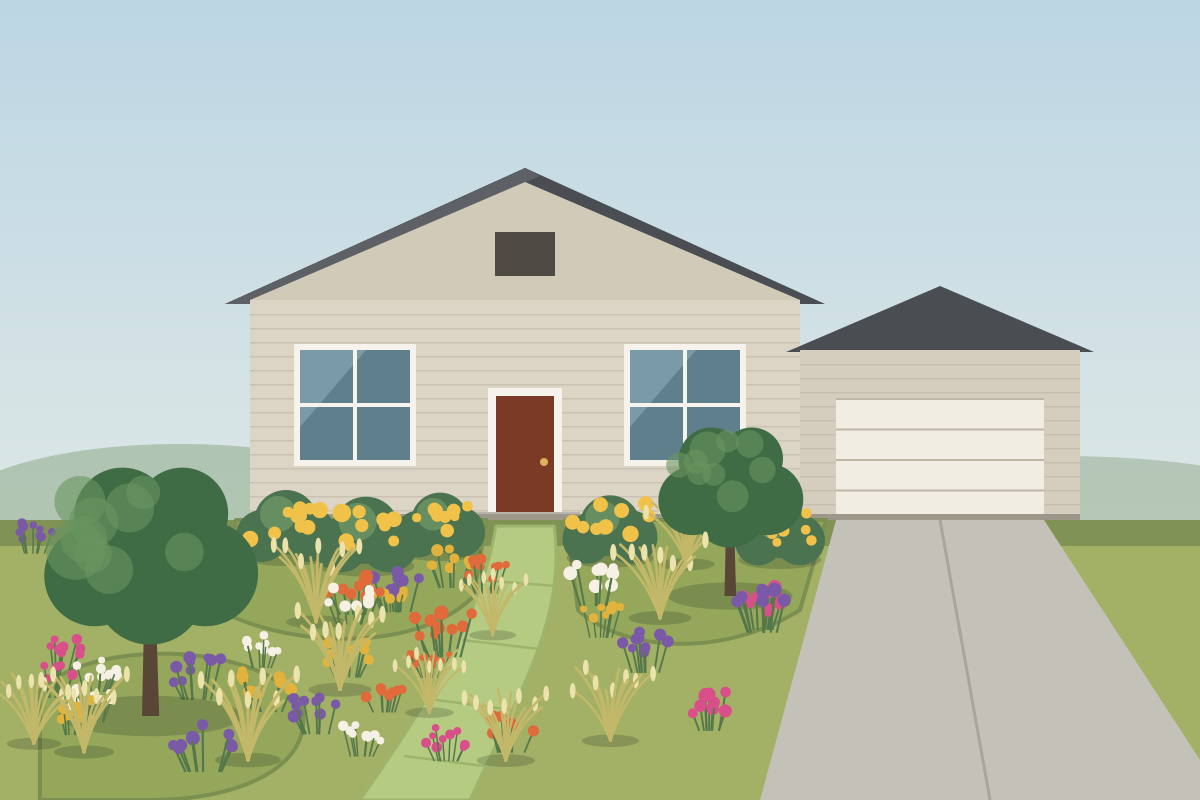
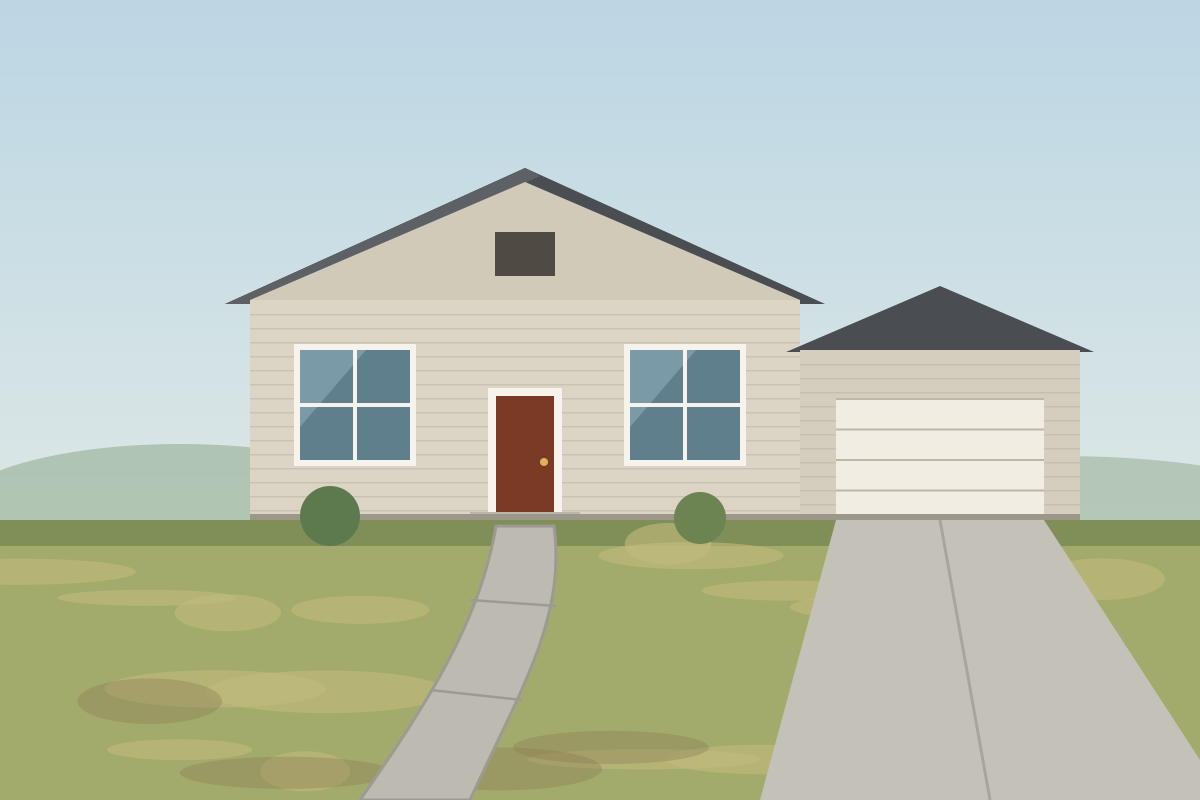 OriginalPollinator Meadow concept
Checking today's free renders…
2 · Tune the design
Units
USDA Zone 5b · Midwest ContinentalZIP 50309, IA, USA · winter low −15 to −10 °F
Area
Design style
Grasses and nectar plants in drifts, mown paths through.
Sun exposure
Landscape plan & nursery list
Pollinator Meadow Garden Bed Plan
USDA Zone 5b · Midwest Continental · ZIP 50309, IA, USA · 400 sq ft · Full Sun
- Plants
- 123
- Planting beds
- 400 sq ft
- DIY total
- $2,204
- Landscaper
- $5,198
Trees
—
This space is too small for a canopy tree — the shrub layer carries the height.
Shrubs
$98
New Jersey Tea
Ceanothus americanus
- Zone
- 4–8
- Size
- 3 × 4 ft
- Bloom
- White, June–July
- Water
- Low water
Native to your regionPet cautionDrought-tolerant2 × 3 gal
$30 each
$60
Arrowwood Viburnum
Viburnum dentatum
- Zone
- 3–8
- Size
- 8 × 8 ft
- Bloom
- White, May–June
- Water
- Moderate water
Native to your regionPet-safe1 × 3 gal
$38 each
$38
Perennials
$903
Dense Blazing Star
Liatris spicata
- Zone
- 3–9
- Size
- 3 × 1.5 ft
- Bloom
- Violet, July–August
- Water
- Moderate water
Native to your regionPet-safeDrought-tolerant23 × 1 gal
$12 each
$276
Lanceleaf Coreopsis
Coreopsis lanceolata
- Zone
- 4–9
- Size
- 2 × 1.5 ft
- Bloom
- Yellow, May–July
- Water
- Low water
Native to your regionPet-safeDrought-tolerantDeer-resistant23 × 1 gal
$12 each
$276
Purple Coneflower
Echinacea purpurea
- Zone
- 3–9
- Size
- 3 × 2 ft
- Bloom
- Rose-purple, June–September
- Water
- Low water
Native to your regionPet-safeDrought-tolerantDeer-resistant13 × 1 gal
$14 each
$182
Goldsturm Black-Eyed Susan
Rudbeckia fulgida 'Goldsturm'
- Zone
- 3–9
- Size
- 2.5 × 2 ft
- Bloom
- Gold, July–October
- Water
- Moderate water
Native to your regionPet cautionDrought-tolerantDeer-resistant13 × 1 gal
$13 each
$169
Ornamental grasses
$403
Blonde Ambition Blue Grama
Bouteloua gracilis 'Blonde Ambition'
- Zone
- 4–9
- Size
- 2.5 × 2.5 ft
- Bloom
- Chartreuse flags, July–October
- Water
- Low water
Native to your regionPet-safeDrought-tolerantDeer-resistant11 × 1 gal
$15 each
$165
Little Bluestem
Schizachyrium scoparium
- Zone
- 3–9
- Size
- 3 × 2 ft
- Bloom
- Copper fall color
- Water
- Low water
Native to your regionPet-safeDrought-tolerantDeer-resistant17 × 1 gal
$14 each
$238
Groundcovers
$160
Moss Phlox
Phlox subulata
- Zone
- 2–9
- Size
- 6 in × 2 ft
- Bloom
- Pink, April–May
- Water
- Moderate water
Native to your regionPet-safeDrought-tolerantDeer-resistant20 × quart
$8 each
$160
DIY vs. landscaper
| Item | DIY | Pro |
|---|---|---|
| Plants123 plants across 9 species | $1,564 | $2,033 |
| Soil & compost2.5 cu yd at 2 in deep | $105 | $195 |
| Mulch3.7 cu yd leaf mulch (first season only) | $141 | $315 |
| Edging92 linear ft steel edging | $299 | $690 |
| Pavers & hardscapeNone in this plan | $0 | $0 |
| LaborDIY: about 25.5 hours of your time | $0 | $1,408 |
| Delivery & tool rentalBulk material delivery | $95 | $0 |
| Design & overhead12% contractor overhead | $0 | $557 |
| Total | $2,204 | $5,198 |
Doing it yourself saves about $2,994 for roughly 25.5 hours of work.
Planting notes
- Best planting window for Zone 5b: late april to early june, then september. Typical last spring frost Apr 15 – May 1; first fall frost Oct 7 – Oct 21.
- Midwest Continental: Cold winters, hot humid summers, and deep prairie soils. Expect 28–42 in / yr.
- Work 2 in of compost into the top 6 in of soil, then mulch 3 in deep, keeping it off stems and trunks.
- Water deeply twice a week for the first 8 weeks, weekly through the first summer, then taper. Established natives need supplemental water only in drought.
Year-round interest calendar
Northern Hemisphere · 9 species · 123 plants
December–March is bare (Northern Hemisphere winter). Add an evergreen anchor or winter-interest shrub — e.g. inkberry holly, boxwood, or hellebore — to carry the view.
Lawn-replacement water & cost savings
vs. irrigated turfgrass
- Water saved / yr
- 7,394 gal
- Water bill saved / yr
- $55
- Share of turf irrigation cut
- 71%
(27,989 L)
at local average water rates
Planning estimate — confirm with your utility.
Curious how another style compares? See a side-by-side water & cost readout.
Zone estimated from your ZIP, postal code or city using the 2023 USDA map and equivalents. Plants marked pet-safe are not listed as toxic by the ASPCA and are recognized as non-toxic to dogs and cats; “pet caution” means unlisted or mildly irritating. Prices shown in USD are converted from mid-range US estimates — confirm stock and pricing with your nursery. Water-savings figures are climate-adjusted planning estimates benchmarked against a thirsty cool-season lawn; confirm current rates with your utility.
Blueprint, water savings & budget
How Pollinator Meadow allocates space, water and budget
Modeled on a 400 sq ft yard in Des Moines, IA (Zone 5b): 400 sq ft planted beds, 0 sq ft mown or gravel path, and 123 total plants across 9 species.
Itemized DIY vs. Landscaper Estimate (400 sq ft)
| Item | Spec | DIY | Pro |
|---|---|---|---|
| Plants | 123 plants across 9 species | $1,564 | $2,033 |
| Soil & compost | 2.5 cu yd at 2 in deep | $105 | $195 |
| Mulch | 3.7 cu yd leaf mulch (first season only) | $141 | $315 |
| Edging | 92 linear ft steel edging | $299 | $690 |
| Pavers & hardscape | None in this plan | $0 | $0 |
| Labor | DIY: about 25.5 hours of your time | $0 | $1,408 |
| Delivery & tool rental | Bulk material delivery | $95 | $0 |
| Design & overhead | 12% contractor overhead | $0 | $557 |
| Estimated total (DIY saves $2,994 · ~25.5 hrs) | $2,204 | $5,198 | |
Water-savings model
- Saved vs. irrigated turf
- 7,394 gal/yr
- Est. water bill savings
- $55/yr
(27,989 L / yr · ~71% reduction)
At mid-range US residential water rates
Understory bed proportions
- Shrubs
- 15%
- Perennials
- 45%
- Ornamental grasses
- 30%
- Groundcovers
- 10%
Dedicates 50% more area to planting beds than standard layouts—45% flowering perennials and 30% native grasses—using light leaf mulch in year one and minimal mown or gravel paths.
Signature plant palette
Top Pollinator Meadow plants from the YardCraft catalog
Representative picks across all five structural layers. Enter your ZIP code or city in the studio above to narrow these to species hardy and native to your exact climate.
Trees
Autumn Brilliance Serviceberry
Amelanchier × grandiflora
Zone 4–9 · 20 × 15 ft · Moderate water
White, April
Native to Northeast Cold, Midwest Continental, Southeast Humid +2
Bur Oak
Quercus macrocarpa
Zone 2–8 · 70 × 70 ft · Low water
Insignificant · Drought-tolerant
Native to Midwest Continental, Northeast Cold, Mountain West
Quaking Aspen
Populus tremuloides
Zone 2–7 · 40 × 20 ft · Moderate water
Gold fall color
Native to Mountain West, Midwest Continental, Northeast Cold
Winter King Hawthorn
Crataegus viridis 'Winter King'
Zone 4–8 · 25 × 25 ft · Moderate water
White, May · Drought-tolerant · Pet-safe
Native to Midwest Continental, Northeast Cold, Southeast Humid
Shrubs
Glossy Abelia
Abelia × grandiflora
Zone 6–10 · 5 × 5 ft · Low water
Blush-white, May–October · Drought-tolerant · Pet-safe
Native to East Asian Temperate, East Asian Subtropical
Jungle Flame Ixora
Ixora coccinea
Zone 10–12 · 4 × 4 ft · Moderate water
Scarlet clusters, year-round · Pet-safe
Native to Tropical & Subtropical Asia
Arrowwood Viburnum
Viburnum dentatum
Zone 3–8 · 8 × 8 ft · Moderate water
White, May–June · Pet-safe
Native to Northeast Cold, Midwest Continental, Southeast Humid
Moonlight Grevillea
Grevillea 'Moonlight'
Zone 9–11 · 8 × 8 ft · Low water
Cream brushes, year-round · Drought-tolerant
Native to Australian Temperate, Australian Mediterranean, Australian Subtropical
Perennials
Hidcote English Lavender
Lavandula angustifolia 'Hidcote'
Zone 5–9 · 2 × 2 ft · Low water
Deep violet, June–August · Drought-tolerant
Native to Mediterranean Europe
Western Yarrow
Achillea millefolium
Zone 2–9 · 2 × 2 ft · Low water
White, May–September · Drought-tolerant
Native to Coastal California, Pacific Northwest, Mountain West +6
Egyptian Starcluster
Pentas lanceolata
Zone 10–12 · 2.5 × 2 ft · Low water
Ruby & pink star clusters, year-round · Drought-tolerant · Pet-safe
Native to Arid Middle East & North Africa, Southern Africa
Butterfly Milkweed
Asclepias tuberosa
Zone 3–9 · 2 × 1.5 ft · Low water
Orange, June–August · Drought-tolerant
Native to Midwest Continental, Northeast Cold, Southeast Humid +1
Ornamental grasses
Tufted Hairgrass
Deschampsia cespitosa
Zone 2–9 · 3 × 2 ft · Moderate water
Gold haze, June · Pet-safe
Native to Pacific Northwest, Mountain West, Northeast Cold +3
Little Bluestem
Schizachyrium scoparium
Zone 3–9 · 3 × 2 ft · Low water
Copper fall color · Drought-tolerant · Pet-safe
Native to Midwest Continental, Northeast Cold, Southeast Humid +2
Blonde Ambition Blue Grama
Bouteloua gracilis 'Blonde Ambition'
Zone 4–9 · 2.5 × 2.5 ft · Low water
Chartreuse flags, July–October · Drought-tolerant · Pet-safe
Native to Mountain West, Southwest Arid, Midwest Continental
Northwind Switchgrass
Panicum virgatum 'Northwind'
Zone 4–9 · 5 × 2.5 ft · Low water
Airy panicles, August · Drought-tolerant · Pet-safe
Native to Midwest Continental, Northeast Cold, Southeast Humid
Groundcovers
Perennial Peanut
Arachis glabrata
Zone 9–12 · 8 in × 3 ft · Low water
Golden blooms, year-round · Drought-tolerant · Pet-safe
Native to Latin America Tropical & Subtropical
Wild Strawberry
Fragaria virginiana
Zone 2–9 · 5 in × 2 ft · Moderate water
White, April–June · Pet-safe
Native to Northeast Cold, Midwest Continental, Mountain West +2
Moss Phlox
Phlox subulata
Zone 2–9 · 6 in × 2 ft · Moderate water
Pink, April–May · Drought-tolerant · Pet-safe
Native to Northeast Cold, Midwest Continental, Southeast Humid
Frogfruit
Phyla nodiflora
Zone 7–11 · 3 in × 3 ft · Low water
White, May–October · Drought-tolerant
Native to Southeast Humid, Southwest Arid
Site fit & care
Where Pollinator Meadow works best
Sunny lawns, parkways, front borders and backyard meadow conversions where homeowners want maximum ecological value, movement, and continuous three-season flower color.
Top climate regions for this style
Maintenance notes
Seasonal care checklist
- 01Avoid all synthetic pesticides, neonicotinoids and broad-spectrum herbicides; confirm nursery starts are neonicotinoid-free.
- 02Leave hollow stems and seedheads standing through winter—cut them back to 12–18 inches in mid-spring after temperatures pass 50°F (10°C) so stem-nesting native bees emerge safely.
- 03Use leaf mulch only in the first establishment season so ground-nesting native bees retain patches of accessible bare soil.
- 04Pull aggressive lawn weeds during the first summer; by year two, dense native root systems outcompete most invaders naturally.
Questions
Pollinator Meadow landscaping FAQ
What makes a great pollinator garden design?
Three essentials: native plants local insects evolved with, overlapping bloom times from early spring through late autumn, and clumped plantings of 3–7 of each species so bees can forage efficiently without wasting energy.
How much sun does a pollinator meadow need?
Most nectar-rich meadow perennials need full sun (6+ hours daily). If your site has part shade, switch the light setting in the studio to Part Shade and YardCraft substitutes woodland pollinator favorites like wild geranium, columbine and oakleaf hydrangea.
Will a pollinator garden look messy in winter?
A mown path or crisp border around the meadow signals intentional design. Ornamental grasses, dried coneflower seedheads and evergreen shrubs add bronze winter texture while sheltering overwintering butterflies and feeding finches.
How big does a pollinator garden need to be to help bees?
Even a 100–200 sq ft bed makes a measurable difference in urban and suburban neighborhoods. YardCraft scales plant counts cleanly from a 40 sq ft border up to a 20,000 sq ft meadow.