Climate region · Arid Middle East & North Africa
Arid Middle East landscaping built for extreme heat and minimal water.
Create shaded courtyard oases in Dubai, Abu Dhabi, Riyadh and Cairo with date palms, bougainvillea, vetiver, desert succulents and stone paving—sized in m² and priced in AED.
- Zone 11a
- Dubai, UAE (4 to 7 °C)
- 50–250 mm / yr, mostly Nov–Mar
- typical annual rainfall
- 3 native
- 8 adapted in catalog
- Metric · AED
- Northern Hemisphere
Plan an Arid Middle East & North Africa garden
Pre-configured for Dubai, UAE in metric (m²) units and AED, with Northern Hemisphere seasons. Enter your own city, ZIP or postcode below to customize for your exact address.
1 · Pick a yard
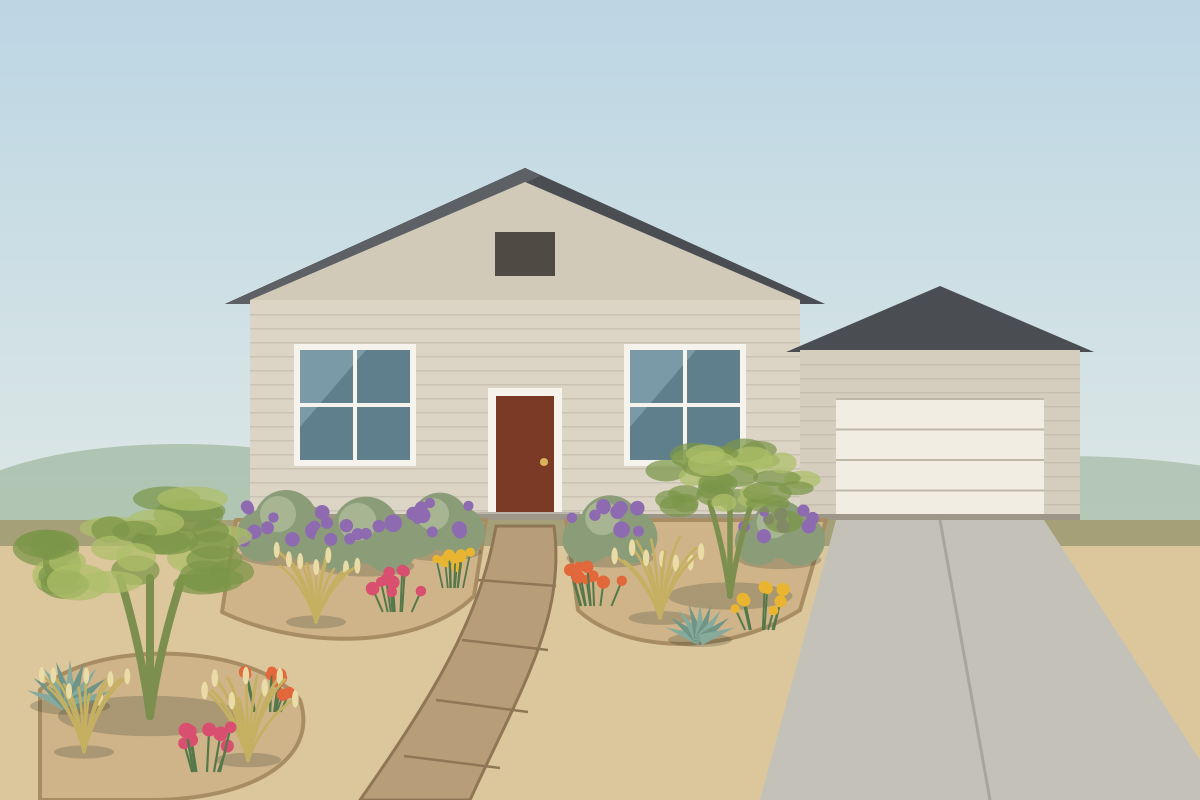
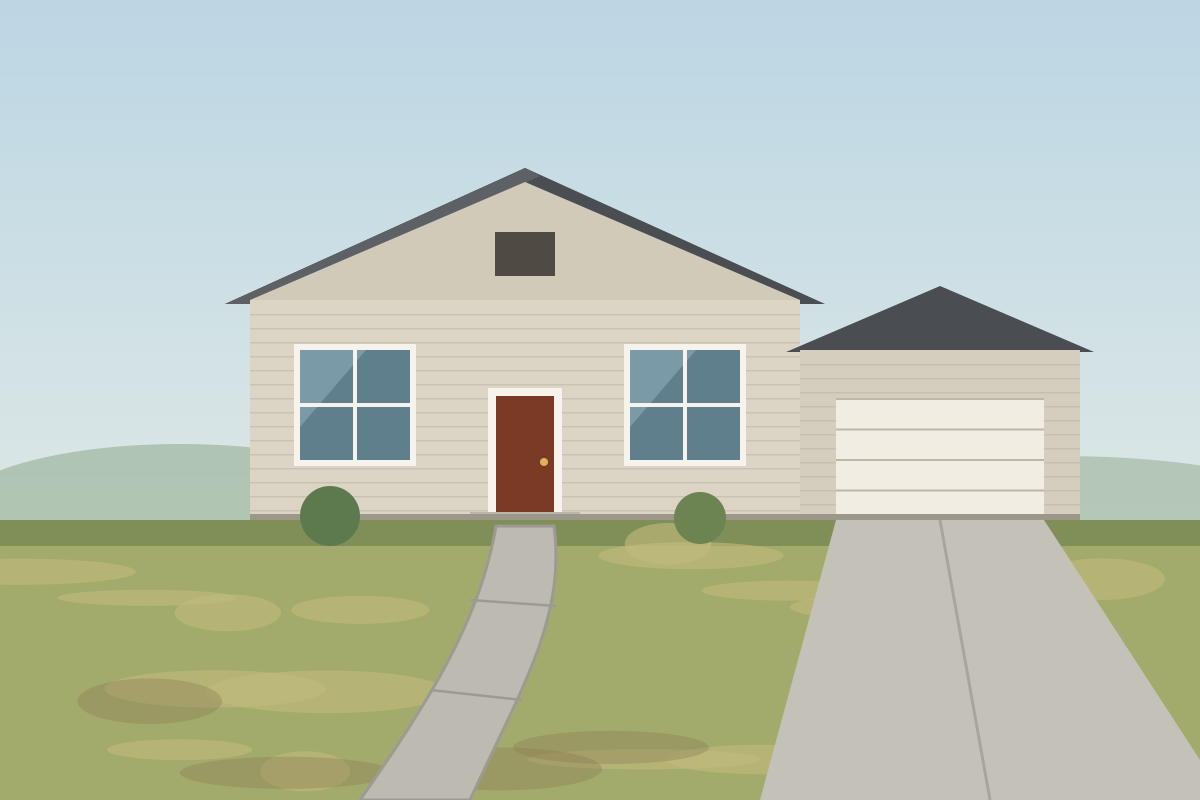 OriginalLow-Water Xeriscape concept
Checking today's free renders…
2 · Tune the design
Units
USDA Zone 11a · Arid Middle East & North AfricaDubai, United Arab Emirates · winter low 4 to 7 °C
Area
Design style
Gravel mulch, boulders, and plants that live on rainfall.
Sun exposure
Landscape plan & nursery list
Low-Water Xeriscape Backyard Plan
USDA Zone 11a · Arid Middle East & North Africa · Dubai, United Arab Emirates · 83.6 m² · Full Sun
- Plants
- 95
- Planting beds
- 30.5 m²
- DIY total
- AED 11,546
- Landscaper
- AED 27,613
Trees
AED 881
Date Palm
Phoenix dactylifera
- Zone
- 9–11
- Size
- 60 × 20 ft
- Bloom
- Cream, spring; dates
- Water
- Low water
Native to your regionPet cautionDrought-tolerantDeer-resistant1 × 15 gal
AED 881 each
AED 881
Shrubs
AED 690
Ponytail Palm
Beaucarnea recurvata
- Zone
- 9–12
- Size
- 10 × 6 ft
- Bloom
- Sculptural caudex & cascading leaves
- Water
- Low water
Regionally adaptedPet-safeDrought-tolerantDeer-resistant2 × 3 gal
AED 213 each
AED 426
Upright Rosemary
Salvia rosmarinus
- Zone
- 8–11
- Size
- 4 × 4 ft
- Bloom
- Blue, winter–spring
- Water
- Low water
Regionally adaptedPet-safeDrought-tolerantDeer-resistant4 × 3 gal
AED 66 each
AED 264
Perennials
AED 888
Egyptian Starcluster
Pentas lanceolata
- Zone
- 10–12
- Size
- 2.5 × 2 ft
- Bloom
- Ruby & pink star clusters, year-round
- Water
- Low water
Native to your regionPet-safeDrought-tolerant8 × 1 gal
AED 55 each
AED 440
Red Yucca
Hesperaloe parviflora
- Zone
- 5–11
- Size
- 3 × 4 ft
- Bloom
- Coral spikes, May–September
- Water
- Low water
Zone-compatiblePet cautionDrought-tolerantDeer-resistant3 × 1 gal
AED 117 each
AED 352
Bougainvillea
Bougainvillea glabra
- Zone
- 9–11
- Size
- 15 × 10 ft
- Bloom
- Magenta bracts, year-round
- Water
- Low water
Regionally adaptedPet cautionDrought-tolerantDeer-resistant1 × 1 gal
AED 95 each
AED 95
Ornamental grasses
AED 470
Vetiver Grass
Chrysopogon zizanioides
- Zone
- 9–12
- Size
- 5 × 3 ft
- Bloom
- Upright fragrant clumps
- Water
- Low water
Regionally adaptedPet-safeDrought-tolerantDeer-resistant4 × 1 gal
AED 59 each
AED 235
Pink Muhly Grass
Muhlenbergia capillaris
- Zone
- 6–11
- Size
- 3 × 3 ft
- Bloom
- Pink haze, September–November
- Water
- Low water
Zone-compatiblePet-safeDrought-tolerantDeer-resistant4 × 1 gal
AED 59 each
AED 235
Groundcovers
AED 2,918
Mexican Snowball
Echeveria elegans
- Zone
- 9–12
- Size
- 6 in × 1.5 ft
- Bloom
- Blue-green succulent rosettes
- Water
- Low water
Regionally adaptedPet-safeDrought-tolerantDeer-resistant21 × quart
AED 40 each
AED 848
Zebra Haworthia
Haworthia fasciata
- Zone
- 9–12
- Size
- 6 in × 1 ft
- Bloom
- Striped succulent rosettes
- Water
- Low water
Regionally adaptedPet-safeDrought-tolerantDeer-resistant47 × quart
AED 44 each
AED 2,070
DIY vs. landscaper
| Item | DIY | Pro |
|---|---|---|
| Plants95 plants across 10 species | AED 5,846 | AED 7,601 |
| Soil & compost1.5 m³ at 5 cm deep | AED 308 | AED 573 |
| Decomposed granite & gravel1.5 m³ decomposed granite | AED 455 | AED 881 |
| Edging25.3 linear m steel edging | AED 991 | AED 2,286 |
| Pavers & hardscape11.3 m² flagstone on compacted base | AED 3,358 | AED 9,403 |
| LaborDIY: about 48 hours of your time | AED 0 | AED 3,912 |
| Delivery & tool rentalBulk delivery plus plate compactor | AED 587 | AED 0 |
| Design & overhead12% contractor overhead | AED 0 | AED 2,958 |
| Total | AED 11,546 | AED 27,613 |
Doing it yourself saves about AED 16,067 for roughly 48 hours of work.
Planting notes
- Best planting window for Zone 11a: start of the rainy season, or any time with irrigation. Typical last spring frost Frost-free; first fall frost Frost-free.
- Arid Middle East & North Africa: Hot arid climate of the Gulf, Levant and North Africa with intense sun and sparse winter rainfall. Expect 50–250 mm / yr, mostly Nov–Mar.
- Spread decomposed granite 5 cm deep over bare soil — skip landscape fabric so natives can self-seed.
- Water deeply twice a week for the first 8 weeks, weekly through the first summer, then taper. Established natives need supplemental water only in drought.
Year-round interest calendar
Northern Hemisphere · 10 species · 95 plants
Lawn-replacement water & cost savings
vs. irrigated turfgrass
- Water saved / yr
- 39,448 L
- Water bill saved / yr
- AED 287
- Share of turf irrigation cut
- 45%
(10,421 gal)
at local average water rates
Planning estimate — confirm with your utility.
Curious how another style compares? See a side-by-side water & cost readout.
Zone estimated from your ZIP, postal code or city using the 2023 USDA map and equivalents. Plants marked pet-safe are not listed as toxic by the ASPCA and are recognized as non-toxic to dogs and cats; “pet caution” means unlisted or mildly irritating. Prices shown in AED are converted from mid-range US estimates — confirm stock and pricing with your nursery. Water-savings figures are climate-adjusted planning estimates benchmarked against a thirsty cool-season lawn; confirm current rates with your utility.
Northern Hemisphere planting & bloom calendar
Seasonal timing for Arid Middle East & North Africa
Major metros in this region include Dubai, Abu Dhabi, Riyadh, Doha, Cairo and Muscat. Plant strictly during the cool season (October–March) so root systems establish deeply before summer heat arrives. Pair courtyards with shade sails or pergola structures.
- Best planting window
- Start of the rainy season, or any time with irrigation
- Typical last spring frost
- Frost-free
- Typical first fall frost
- Frost-free
- Growing season
- 365 days
Regional 12-month bloom & evergreen calendar (Northern Hemisphere)
Across 11 native & adapted catalog species
Regional plant catalog
Native & adapted plants for Arid Middle East & North Africa
All 11 regional picks (3 native, 8 adapted) from YardCraft's 186-plant catalog, with Northern Hemisphere peak bloom windows.
Trees (2)
Date Palm
NativePhoenix dactylifera
Zone 9–11 · 60 × 20 ft · Low water
Peak Mar–May · Drought-tolerant
Pygmy Date Palm
AdaptedPhoenix roebelenii
Zone 10–12 · 10 × 7 ft · Low water
Evergreen year-round · Drought-tolerant · Pet-safe
Shrubs (4)
Oleander
NativeNerium oleander
Zone 8–11 · 10 × 8 ft · Low water
Year-round interest · Drought-tolerant
Ponytail Palm
AdaptedBeaucarnea recurvata
Zone 9–12 · 10 × 6 ft · Low water
Evergreen year-round · Drought-tolerant · Pet-safe
Upright Rosemary
AdaptedSalvia rosmarinus
Zone 8–11 · 4 × 4 ft · Low water
Peak Jan–Dec · Drought-tolerant · Pet-safe
Arabian Jasmine
AdaptedJasminum sambac
Zone 10–12 · 5 × 4 ft · Moderate water
Year-round interest · Pet-safe
Perennials (2)
Egyptian Starcluster
NativePentas lanceolata
Zone 10–12 · 2.5 × 2 ft · Low water
Year-round interest · Drought-tolerant · Pet-safe
Bougainvillea
AdaptedBougainvillea glabra
Zone 9–11 · 15 × 10 ft · Low water
Year-round interest · Drought-tolerant
Ornamental grasses (1)
Vetiver Grass
AdaptedChrysopogon zizanioides
Zone 9–12 · 5 × 3 ft · Low water
Evergreen year-round · Drought-tolerant · Pet-safe
Groundcovers (2)
Mexican Snowball
AdaptedEcheveria elegans
Zone 9–12 · 6 in × 1.5 ft · Low water
Evergreen year-round · Drought-tolerant · Pet-safe
Zebra Haworthia
AdaptedHaworthia fasciata
Zone 9–12 · 6 in × 1 ft · Low water
Evergreen year-round · Drought-tolerant · Pet-safe
Soil, climate & style match
Designing for Arid Middle East & North Africa
Intense solar radiation, 45°C+ summer peaks, sandy saline soils, and sparse winter rainfall (50–250 mm/yr) demanding strict shade design and buried drip irrigation.
Best landscape styles for this region
Regional playbook
Local planting & care checklist
- 01Flush sandy soils periodically and amend planting pits with compost to combat soil salinity.
- 02Run subsurface or covered drip lines in pre-dawn hours to minimize evaporative loss.
- 03Use light-colored limestone or tumbled travertine paving to reflect solar heat instead of storing it.
- 04Concentrate lush fragrant shrubs like Arabian jasmine in shaded courtyard pockets close to seating.
Questions
Arid Middle East & North Africa landscaping FAQ
What native plants grow best in Arid Middle East & North Africa?
Top regional picks in YardCraft's catalog for Arid Middle East & North Africa include Date Palm, Egyptian Starcluster, Oleander. In total, the catalog tracks 3 native and 8 adapted species for this region—enter your exact city or postal code in the studio to filter by sun exposure, drought tolerance and pet safety.
When is the best time to plant in Arid Middle East & North Africa?
For a representative Arid Middle East & North Africa location like Dubai, UAE (Zone 11a, Northern Hemisphere), the best planting window is start of the rainy season, or any time with irrigation. Plant strictly during the cool season (October–March) so root systems establish deeply before summer heat arrives. Pair courtyards with shade sails or pergola structures.
What rainfall and winter temperatures should I plan for in Arid Middle East & North Africa?
Arid Middle East & North Africa receives roughly 50–250 mm / yr, mostly Nov–Mar. Around Dubai, UAE, average annual minimum temperatures fall in the 4 to 7 °C band. Hot arid climate of the Gulf, Levant and North Africa with intense sun and sparse winter rainfall.
When is peak bloom season in Arid Middle East & North Africa?
Adjusted for the Northern Hemisphere calendar, the heaviest flowering months across YardCraft's Arid Middle East & North Africa plant palette fall around March, April, May, supported by evergreen shrubs and grasses that hold structure through the rest of the year.