Climate region · Southwest Arid
Southwest Arid landscaping that thrives in desert sun and alkaline soil.
Swap high-evaporation turf for native mesquite, palo verde, desert willow, Texas sage and yuccas matched to alkaline soils and summer heat.
- Zone 9b
- Tucson, AZ (85718) (25 to 30 °F)
- 4–18 in / yr
- typical annual rainfall
- 27 native
- 11 adapted in catalog
- Imperial · USD
- Northern Hemisphere
Plan a Southwest Arid garden
Pre-configured for Tucson, AZ (85718) in imperial (sq ft) units and USD, with Northern Hemisphere seasons. Enter your own city, ZIP or postcode below to customize for your exact address.
1 · Pick a yard
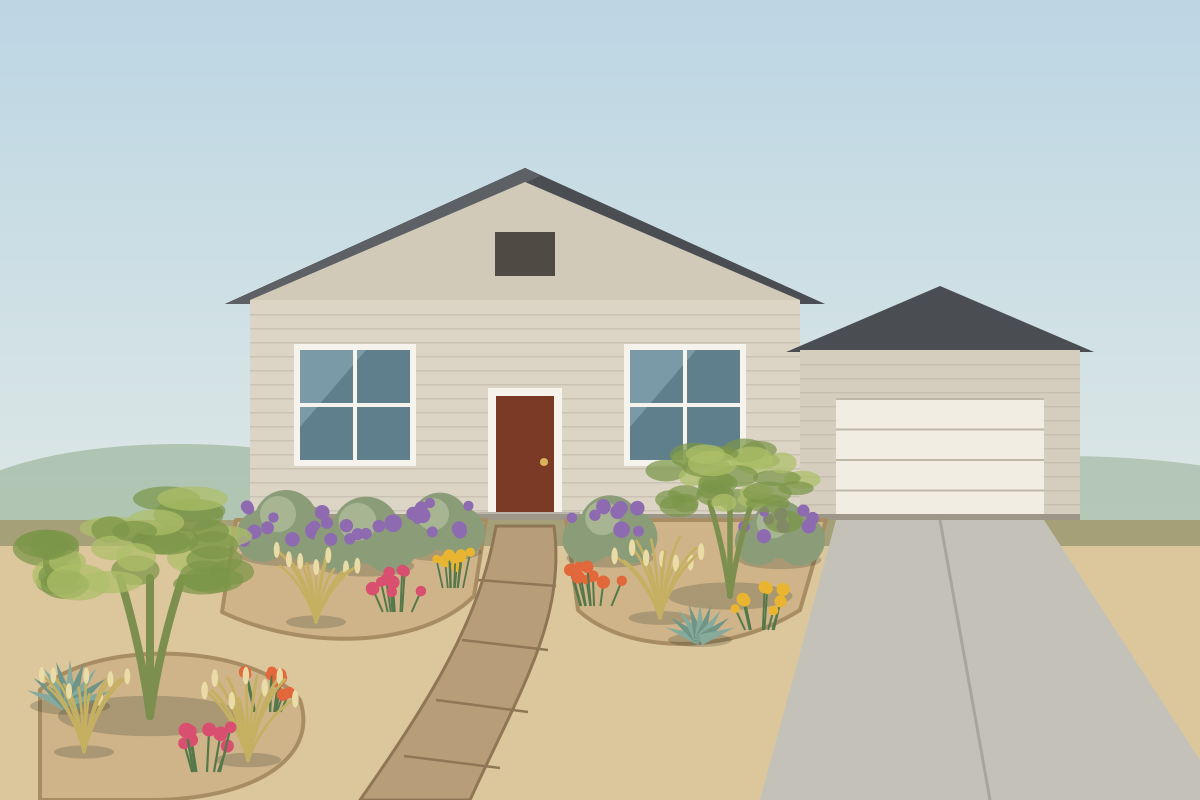
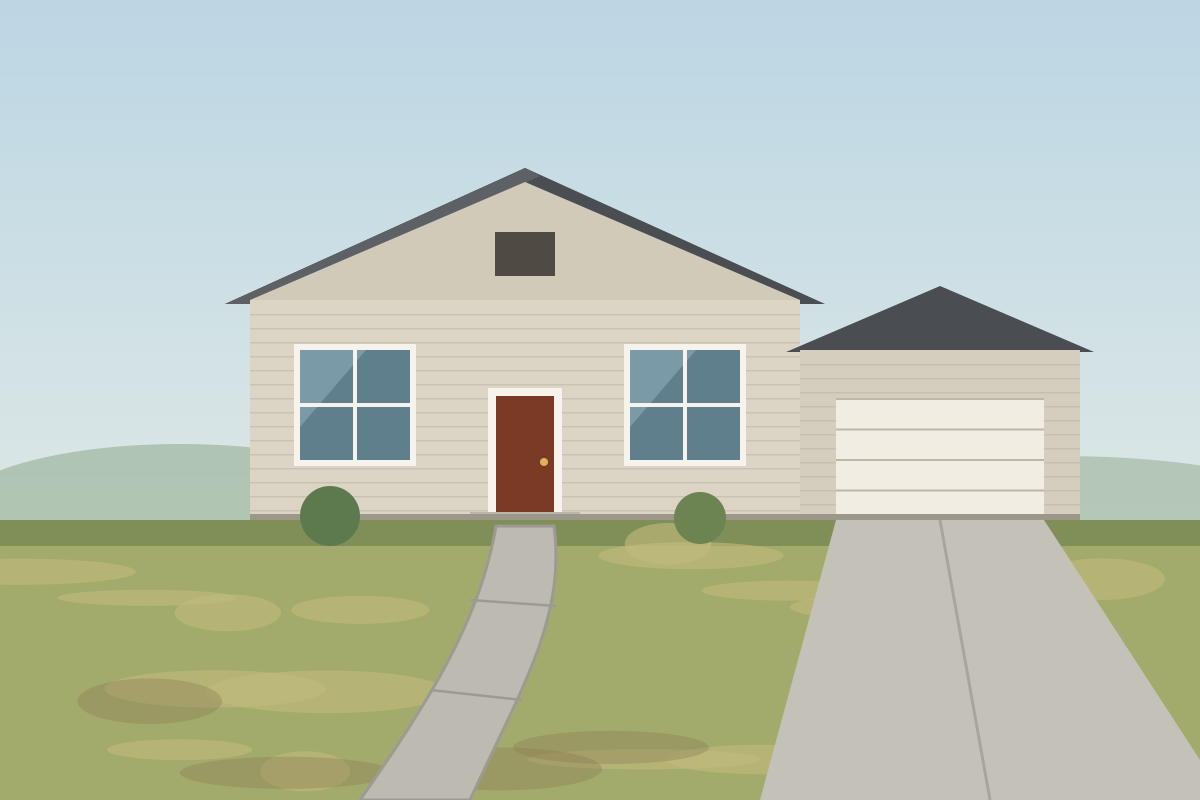 OriginalLow-Water Xeriscape concept
Checking today's free renders…
2 · Tune the design
Units
USDA Zone 9b · Southwest AridZIP 85718, AZ, USA · winter low 25 to 30 °F
Area
Design style
Gravel mulch, boulders, and plants that live on rainfall.
Sun exposure
Landscape plan & nursery list
Low-Water Xeriscape Front Yard Plan
USDA Zone 9b · Southwest Arid · ZIP 85718, AZ, USA · 900 sq ft · Full Sun
- Plants
- 63
- Planting beds
- 351 sq ft
- DIY total
- $2,168
- Landscaper
- $5,347
Trees
$110
Desert Willow
Chilopsis linearis
- Zone
- 7–11
- Size
- 20 × 15 ft
- Bloom
- Pink, May–September
- Water
- Low water
Native to your regionPet cautionDrought-tolerantDeer-resistant1 × 15 gal
$110 each
$110
Shrubs
$124
Texas Sage
Leucophyllum frutescens
- Zone
- 8–11
- Size
- 5 × 5 ft
- Bloom
- Violet, summer after rain
- Water
- Low water
Native to your regionPet-safeDrought-tolerantDeer-resistant2 × 3 gal
$30 each
$60
Apache Plume
Fallugia paradoxa
- Zone
- 4–9
- Size
- 5 × 5 ft
- Bloom
- White, May–September
- Water
- Low water
Native to your regionPet cautionDrought-tolerantDeer-resistant2 × 3 gal
$32 each
$64
Perennials
$402
Autumn Sage
Salvia greggii
- Zone
- 7–10
- Size
- 3 × 3 ft
- Bloom
- Red, March–November
- Water
- Low water
Native to your regionPet-safeDrought-tolerantDeer-resistant5 × 1 gal
$16 each
$80
Sunset Hyssop
Agastache rupestris
- Zone
- 5–9
- Size
- 2.5 × 1.5 ft
- Bloom
- Coral, July–October
- Water
- Low water
Native to your regionPet-safeDrought-tolerantDeer-resistant15 × 1 gal
$14 each
$210
Parry's Penstemon
Penstemon parryi
- Zone
- 8–10
- Size
- 3 × 2 ft
- Bloom
- Hot pink, February–April
- Water
- Low water
Native to your regionPet-safeDrought-tolerant8 × 1 gal
$14 each
$112
Ornamental grasses
$138
Blonde Ambition Blue Grama
Bouteloua gracilis 'Blonde Ambition'
- Zone
- 4–9
- Size
- 2.5 × 2.5 ft
- Bloom
- Chartreuse flags, July–October
- Water
- Low water
Native to your regionPet-safeDrought-tolerantDeer-resistant6 × 1 gal
$15 each
$90
Deer Grass
Muhlenbergia rigens
- Zone
- 6–10
- Size
- 4 × 4 ft
- Bloom
- Tan wands, summer
- Water
- Low water
Native to your regionPet-safeDrought-tolerantDeer-resistant3 × 1 gal
$16 each
$48
Groundcovers
$238
Damianita
Chrysactinia mexicana
- Zone
- 7–10
- Size
- 1.5 × 2 ft
- Bloom
- Gold, April–September
- Water
- Low water
Native to your regionPet cautionDrought-tolerantDeer-resistant13 × quart
$14 each
$182
Frogfruit
Phyla nodiflora
- Zone
- 7–11
- Size
- 3 in × 3 ft
- Bloom
- White, May–October
- Water
- Low water
Native to your regionPet cautionDrought-tolerant8 × quart
$7 each
$56
DIY vs. landscaper
| Item | DIY | Pro |
|---|---|---|
| Plants63 plants across 10 species | $1,012 | $1,316 |
| Soil & compost2.2 cu yd at 2 in deep | $92 | $172 |
| Decomposed granite & gravel2.2 cu yd decomposed granite | $136 | $264 |
| Edging86 linear ft steel edging | $280 | $645 |
| Pavers & hardscape65 sq ft flagstone on compacted base | $488 | $1,365 |
| LaborDIY: about 33 hours of your time | $0 | $1,012 |
| Delivery & tool rentalBulk delivery plus plate compactor | $160 | $0 |
| Design & overhead12% contractor overhead | $0 | $573 |
| Total | $2,168 | $5,347 |
Doing it yourself saves about $3,179 for roughly 33 hours of work.
Planting notes
- Best planting window for Zone 9b: october through february. Typical last spring frost Feb 6 – Feb 28; first fall frost Nov 25 – Dec 13.
- Southwest Arid: Intense sun, alkaline soil, and long dry stretches broken by monsoon rain. Expect 4–18 in / yr.
- Spread decomposed granite 2 in deep over bare soil — skip landscape fabric so natives can self-seed.
- Water deeply twice a week for the first 8 weeks, weekly through the first summer, then taper. Established natives need supplemental water only in drought.
Year-round interest calendar
Northern Hemisphere · 10 species · 63 plants
December–January is bare (Northern Hemisphere winter). Add an evergreen anchor or winter-interest shrub — e.g. inkberry holly, boxwood, or hellebore — to carry the view.
Lawn-replacement water & cost savings
vs. irrigated turfgrass
- Water saved / yr
- 9,447 gal
- Water bill saved / yr
- $71
- Share of turf irrigation cut
- 40%
(35,761 L)
at local average water rates
Planning estimate — confirm with your utility.
Curious how another style compares? See a side-by-side water & cost readout.
Zone estimated from your ZIP, postal code or city using the 2023 USDA map and equivalents. Plants marked pet-safe are not listed as toxic by the ASPCA and are recognized as non-toxic to dogs and cats; “pet caution” means unlisted or mildly irritating. Prices shown in USD are converted from mid-range US estimates — confirm stock and pricing with your nursery. Water-savings figures are climate-adjusted planning estimates benchmarked against a thirsty cool-season lawn; confirm current rates with your utility.
Northern Hemisphere planting & bloom calendar
Seasonal timing for Southwest Arid
Major metros in this region include Phoenix, Tucson, Las Vegas, El Paso, Albuquerque and Austin. Plant in October–November or early spring before 100°F heat arrives. Basin-shape soil around trees and shrubs to harvest monsoon cloudbursts directly at the root zone.
- Best planting window
- October through February
- Typical last spring frost
- Feb 6 – Feb 28
- Typical first fall frost
- Nov 25 – Dec 13
- Growing season
- about 280–310 days
Regional 12-month bloom & evergreen calendar (Northern Hemisphere)
Across 38 native & adapted catalog species
Regional plant catalog
Native & adapted plants for Southwest Arid
All 38 regional picks (27 native, 11 adapted) from YardCraft's 186-plant catalog, with Northern Hemisphere peak bloom windows.
Trees (5)
Desert Museum Palo Verde
NativeParkinsonia × 'Desert Museum'
Zone 8–11 · 25 × 25 ft · Low water
Peak Apr–Jun · Drought-tolerant
Desert Willow
NativeChilopsis linearis
Zone 7–11 · 20 × 15 ft · Low water
Peak May–Sep · Drought-tolerant
Western Redbud
NativeCercis occidentalis
Zone 6–9 · 15 × 12 ft · Low water
Peak Mar–Apr · Drought-tolerant
Natchez Crape Myrtle
AdaptedLagerstroemia 'Natchez'
Zone 7–10 · 20 × 15 ft · Low water
Peak Jun–Sep · Drought-tolerant · Pet-safe
Swan Hill Fruitless Olive
AdaptedOlea europaea 'Swan Hill'
Zone 8–11 · 25 × 20 ft · Low water
Evergreen year-round · Drought-tolerant · Pet-safe
Shrubs (8)
Apache Plume
NativeFallugia paradoxa
Zone 4–9 · 5 × 5 ft · Low water
Peak May–Sep · Drought-tolerant
Dwarf Yaupon Holly
NativeIlex vomitoria 'Nana'
Zone 7–10 · 3 × 4 ft · Low water
Evergreen year-round · Drought-tolerant
Pink Fairy Duster
NativeCalliandra eriophylla
Zone 8–11 · 3 × 4 ft · Low water
Peak Feb–May · Drought-tolerant
Rubber Rabbitbrush
NativeEricameria nauseosa
Zone 4–9 · 4 × 4 ft · Low water
Peak Aug–Oct · Drought-tolerant
Texas Sage
NativeLeucophyllum frutescens
Zone 8–11 · 5 × 5 ft · Low water
Peak Jun–Aug · Drought-tolerant · Pet-safe
Turk's Cap
NativeMalvaviscus arboreus var. drummondii
Zone 7–10 · 4 × 4 ft · Low water
Peak May–Nov · Drought-tolerant
Ponytail Palm
AdaptedBeaucarnea recurvata
Zone 9–12 · 10 × 6 ft · Low water
Evergreen year-round · Drought-tolerant · Pet-safe
Upright Rosemary
AdaptedSalvia rosmarinus
Zone 8–11 · 4 × 4 ft · Low water
Peak Jan–Dec · Drought-tolerant · Pet-safe
Perennials (14)
Autumn Sage
NativeSalvia greggii
Zone 7–10 · 3 × 3 ft · Low water
Peak Mar–Nov · Drought-tolerant · Pet-safe
Blackfoot Daisy
NativeMelampodium leucanthum
Zone 6–10 · 1 × 1.5 ft · Low water
Peak Mar–Nov · Drought-tolerant
Blanket Flower
NativeGaillardia aristata
Zone 3–9 · 2 × 2 ft · Low water
Peak Jun–Sep · Drought-tolerant
Butterfly Milkweed
NativeAsclepias tuberosa
Zone 3–9 · 2 × 1.5 ft · Low water
Peak Jun–Aug · Drought-tolerant
California Fuchsia
NativeEpilobium canum
Zone 8–10 · 1.5 × 3 ft · Low water
Peak Aug–Oct · Drought-tolerant
Desert Marigold
NativeBaileya multiradiata
Zone 7–10 · 1.5 × 1.5 ft · Low water
Peak Mar–Nov · Drought-tolerant
Parry's Agave
NativeAgave parryi
Zone 7–10 · 2 × 3 ft · Low water
Evergreen year-round · Drought-tolerant
Parry's Penstemon
NativePenstemon parryi
Zone 8–10 · 3 × 2 ft · Low water
Peak Feb–Apr · Drought-tolerant · Pet-safe
Red Yucca
NativeHesperaloe parviflora
Zone 5–11 · 3 × 4 ft · Low water
Peak May–Sep · Drought-tolerant
Rocky Mountain Penstemon
NativePenstemon strictus
Zone 4–9 · 2.5 × 2 ft · Low water
Peak May–Jul · Drought-tolerant · Pet-safe
Sunset Hyssop
NativeAgastache rupestris
Zone 5–9 · 2.5 × 1.5 ft · Low water
Peak Jul–Oct · Drought-tolerant · Pet-safe
Western Yarrow
NativeAchillea millefolium
Zone 2–9 · 2 × 2 ft · Low water
Peak May–Sep · Drought-tolerant
Hidcote English Lavender
AdaptedLavandula angustifolia 'Hidcote'
Zone 5–9 · 2 × 2 ft · Low water
Peak Jun–Aug · Drought-tolerant
Russian Sage
AdaptedPerovskia atriplicifolia
Zone 4–9 · 4 × 3 ft · Low water
Peak Jul–Sep · Drought-tolerant
Ornamental grasses (4)
Blonde Ambition Blue Grama
NativeBouteloua gracilis 'Blonde Ambition'
Zone 4–9 · 2.5 × 2.5 ft · Low water
Peak Jul–Oct · Drought-tolerant · Pet-safe
Deer Grass
NativeMuhlenbergia rigens
Zone 6–10 · 4 × 4 ft · Low water
Peak Jun–Aug · Drought-tolerant · Pet-safe
Little Bluestem
NativeSchizachyrium scoparium
Zone 3–9 · 3 × 2 ft · Low water
Peak Sep–Nov · Drought-tolerant · Pet-safe
Pink Muhly Grass
NativeMuhlenbergia capillaris
Zone 6–11 · 3 × 3 ft · Low water
Peak Sep–Nov · Drought-tolerant · Pet-safe
Groundcovers (7)
Damianita
NativeChrysactinia mexicana
Zone 7–10 · 1.5 × 2 ft · Low water
Peak Apr–Sep · Drought-tolerant
Frogfruit
NativePhyla nodiflora
Zone 7–11 · 3 in × 3 ft · Low water
Peak May–Oct · Drought-tolerant
Angelina Stonecrop
AdaptedSedum rupestre 'Angelina'
Zone 4–9 · 5 in × 2 ft · Low water
Evergreen year-round · Drought-tolerant · Pet-safe
Creeping Thyme
AdaptedThymus serpyllum
Zone 4–9 · 3 in × 1.5 ft · Low water
Peak Jun–Jul · Drought-tolerant · Pet-safe
Hardy Ice Plant
AdaptedDelosperma cooperi
Zone 6–10 · 4 in × 2 ft · Low water
Peak Jun–Sep · Drought-tolerant · Pet-safe
Mexican Snowball
AdaptedEcheveria elegans
Zone 9–12 · 6 in × 1.5 ft · Low water
Evergreen year-round · Drought-tolerant · Pet-safe
Zebra Haworthia
AdaptedHaworthia fasciata
Zone 9–12 · 6 in × 1 ft · Low water
Evergreen year-round · Drought-tolerant · Pet-safe
Soil, climate & style match
Designing for Southwest Arid
Intense UV, caliche or alkaline mineral soils, and low humidity make evaporative water loss extreme. Sparse winter rains and late-summer monsoons shape native plant growth.
Best landscape styles for this region
Regional playbook
Local planting & care checklist
- 01Check drainage before planting—break through shallow caliche layers so desert roots never sit in perched water.
- 02Use decomposed granite or crushed rock mulch rather than dark bark that floats away in monsoon downpours.
- 03Irrigate deeply and infrequently on drip lines rather than daily shallow sprays.
- 04Leave frost-nipped tips on tender desert perennials until late spring to shield lower stems from late freezes.
Questions
Southwest Arid landscaping FAQ
What native plants grow best in Southwest Arid?
Top regional picks in YardCraft's catalog for Southwest Arid include Apache Plume, Autumn Sage, Blackfoot Daisy, Blanket Flower. In total, the catalog tracks 27 native and 11 adapted species for this region—enter your exact city or postal code in the studio to filter by sun exposure, drought tolerance and pet safety.
When is the best time to plant in Southwest Arid?
For a representative Southwest Arid location like Tucson, AZ (85718) (Zone 9b, Northern Hemisphere), the best planting window is october through february. Plant in October–November or early spring before 100°F heat arrives. Basin-shape soil around trees and shrubs to harvest monsoon cloudbursts directly at the root zone.
What rainfall and winter temperatures should I plan for in Southwest Arid?
Southwest Arid receives roughly 4–18 in / yr. Around Tucson, AZ (85718), average annual minimum temperatures fall in the 25 to 30 °F band. Intense sun, alkaline soil, and long dry stretches broken by monsoon rain.
When is peak bloom season in Southwest Arid?
Adjusted for the Northern Hemisphere calendar, the heaviest flowering months across YardCraft's Southwest Arid plant palette fall around June, July, August, supported by evergreen shrubs and grasses that hold structure through the rest of the year.