Climate region · Australian Temperate
Australian Temperate landscaping with Southern Hemisphere seasons.
Design water-smart yards for Melbourne, Canberra, Hobart and the southeast coast—with native grevilleas, westringia, dianella and lomandra, metric sizing and AUD pricing.
- Zone 10a
- Melbourne, VIC (3000) (−1 to 2 °C)
- 500–1200 mm / yr, year-round in the south
- typical annual rainfall
- 7 native
- 6 adapted in catalog
- Metric · AUD
- Southern Hemisphere
Plan an Australian Temperate garden
Pre-configured for Melbourne, VIC (3000) in metric (m²) units and AUD, with Southern Hemisphere seasons. Enter your own city, ZIP or postcode below to customize for your exact address.
1 · Pick a yard
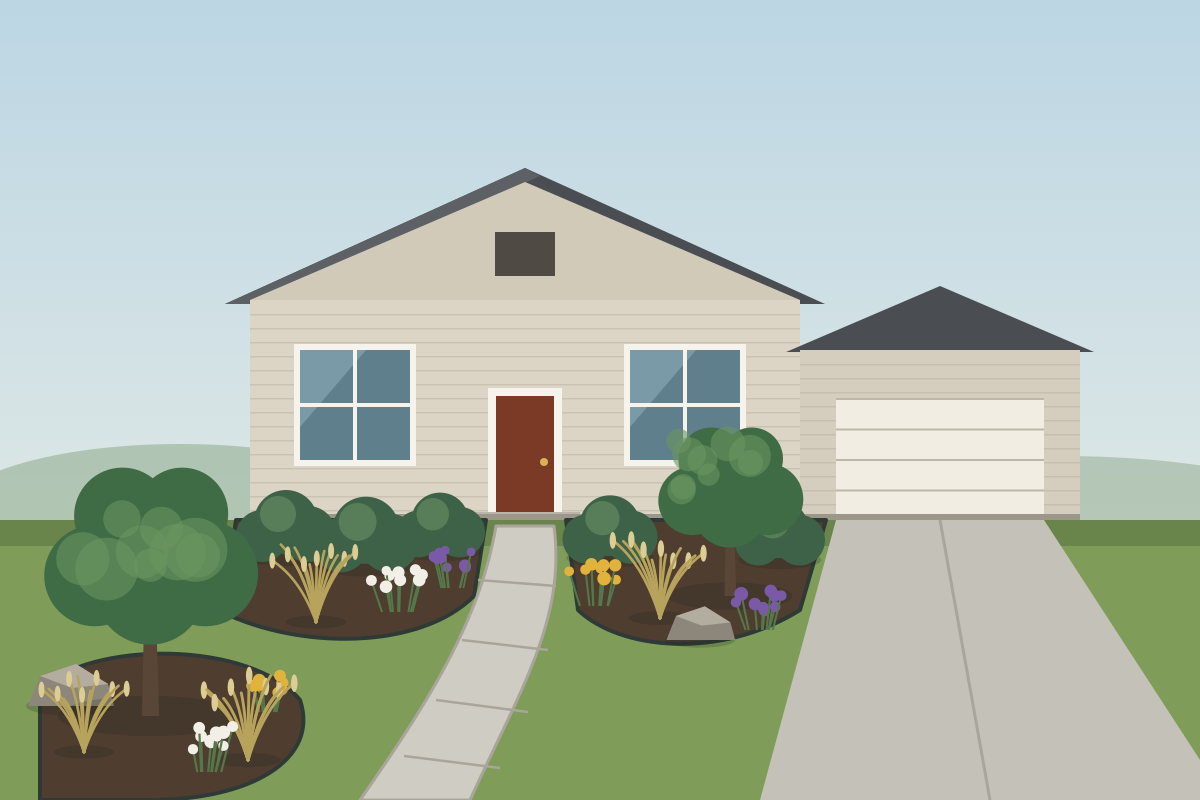
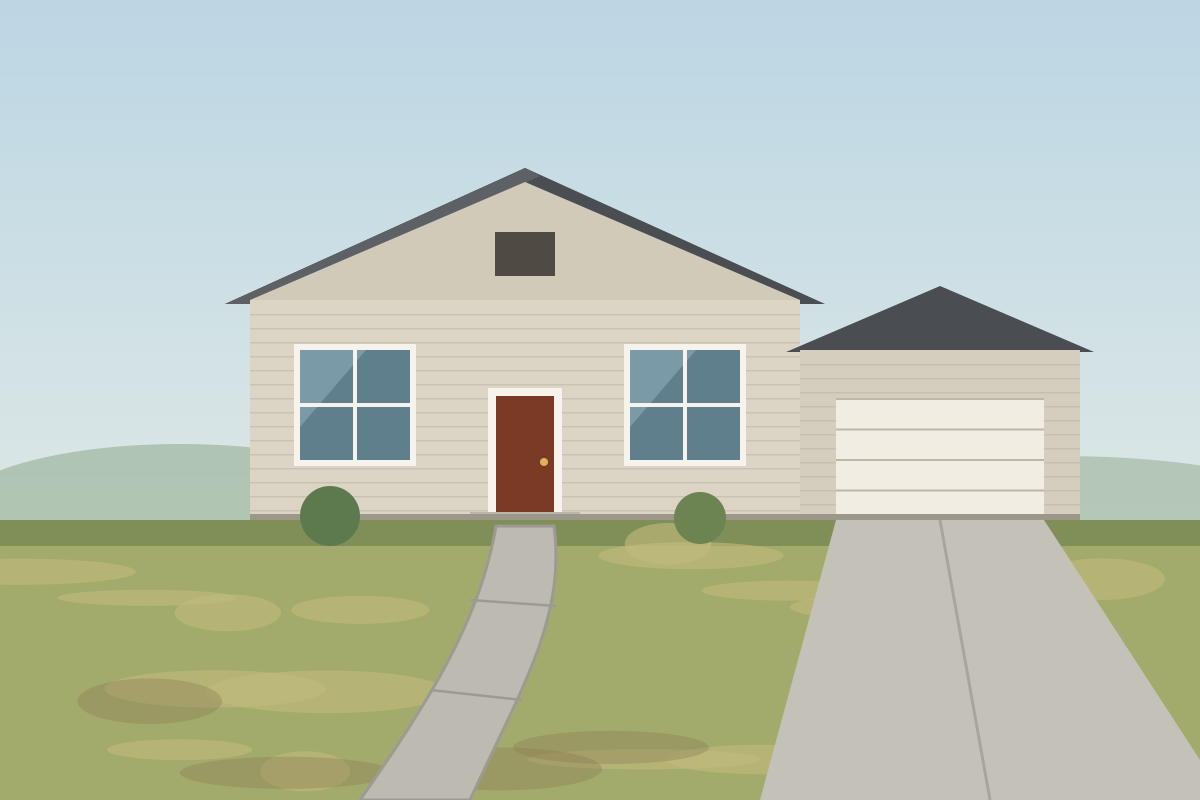 OriginalModern Native concept
Checking today's free renders…
2 · Tune the design
Units
USDA Zone 10a · Australian Temperate3000, Melbourne VIC, Australia · winter low −1 to 2 °C
Area
Design style
Clean lines, massed regional natives, steel edging.
Sun exposure
Landscape plan & nursery list
Modern Native Front Yard Plan
USDA Zone 10a · Australian Temperate · 3000, Melbourne VIC, Australia · 74.3 m² · Full Sun
- Plants
- 49
- Planting beds
- 22.3 m²
- DIY total
- A$3,069
- Landscaper
- A$7,443
Trees
A$274
Jacaranda
Jacaranda mimosifolia
- Zone
- 10–11
- Size
- 35 × 35 ft
- Bloom
- Violet-blue, October–December (SH)
- Water
- Moderate water
Regionally adaptedPet caution1 × 15 gal
A$274 each
A$274
Shrubs
A$328
Slim Bottlebrush
Callistemon viminalis 'Slim'
- Zone
- 9–11
- Size
- 9 × 4 ft
- Bloom
- Crimson brushes, spring & autumn
- Water
- Moderate water
Native to your regionPet-safeDrought-tolerantDeer-resistant5 × 3 gal
A$49 each
A$243
Coast Rosemary
Westringia fruticosa
- Zone
- 9–11
- Size
- 5 × 5 ft
- Bloom
- White, year-round
- Water
- Low water
Native to your regionPet-safeDrought-tolerantDeer-resistant2 × 3 gal
A$43 each
A$85
Perennials
A$441
Kangaroo Paw
Anigozanthos 'Bush Gems'
- Zone
- 9–11
- Size
- 3 × 2 ft
- Bloom
- Red, yellow, orange, September–March (SH)
- Water
- Low water
Native to your regionPet-safeDrought-tolerantDeer-resistant6 × 1 gal
A$27 each
A$164
Dianella Little Jess
Dianella caerulea 'Little Jess'
- Zone
- 8–11
- Size
- 1.5 × 1.5 ft
- Bloom
- Blue flowers, summer; purple berries
- Water
- Low water
Native to your regionPet cautionDrought-tolerantDeer-resistant10 × 1 gal
A$21 each
A$213
Silver Spear
Astelia chathamica 'Silver Spear'
- Zone
- 9–11
- Size
- 3 × 4 ft
- Bloom
- Silver sword foliage
- Water
- Low water
Regionally adaptedPet cautionDrought-tolerantDeer-resistant1 × 1 gal
A$64 each
A$64
Ornamental grasses
A$383
Lomandra Tanika
Lomandra longifolia 'Tanika'
- Zone
- 8–12
- Size
- 2.5 × 2.5 ft
- Bloom
- Fine green blades
- Water
- Low water
Native to your regionPet-safeDrought-tolerantDeer-resistant7 × 1 gal
A$24 each
A$170
California Fescue
Festuca californica
- Zone
- 7–10
- Size
- 2 × 2 ft
- Bloom
- Blue-green blades
- Water
- Low water
Zone-compatiblePet-safeDrought-tolerantDeer-resistant10 × 1 gal
A$21 each
A$213
Groundcovers
A$96
Beach Sunflower
Helianthus debilis
- Zone
- 8–11
- Size
- 1.5 × 3 ft
- Bloom
- Yellow, year-round
- Water
- Low water
Zone-compatiblePet-safeDrought-tolerant7 × quart
A$14 each
A$96
DIY vs. landscaper
| Item | DIY | Pro |
|---|---|---|
| Plants49 plants across 9 species | A$1,522 | A$1,978 |
| Soil & compost1.1 m³ at 5 cm deep | A$96 | A$178 |
| Mulch1.7 m³ shredded hardwood mulch | A$128 | A$284 |
| Edging21.6 linear m steel edging | A$351 | A$810 |
| Pavers & hardscape5.9 m² large-format concrete pavers | A$730 | A$2,043 |
| LaborDIY: about 30.5 hours of your time | A$0 | A$1,353 |
| Delivery & tool rentalBulk delivery plus plate compactor | A$243 | A$0 |
| Design & overhead12% contractor overhead | A$0 | A$798 |
| Total | A$3,069 | A$7,443 |
Doing it yourself saves about A$4,375 for roughly 30.5 hours of work.
Planting notes
- Best planting window for Zone 10a: may through august, ahead of summer heat. Typical last spring frost Frost is rare (before Jul 31 if at all); first autumn frost Frost is rare (mid-June or later).
- Australian Temperate: Mild to warm temperate climate of Sydney, Melbourne, Adelaide and the southeast coast. Expect 500–1200 mm / yr, year-round in the south.
- Work 5 cm of compost into the top 15 cm of soil, then mulch 8 cm deep, keeping it off stems and trunks.
- Water deeply twice a week for the first 8 weeks, weekly through the first summer, then taper. Established natives need supplemental water only in drought.
Year-round interest calendar
Southern Hemisphere · 9 species · 49 plants
Lawn-replacement water & cost savings
vs. irrigated turfgrass
- Water saved / yr
- 25,510 L
- Water bill saved / yr
- A$77
- Share of turf irrigation cut
- 32%
(6,739 gal)
at local average water rates
Planning estimate — confirm with your utility.
Curious how another style compares? See a side-by-side water & cost readout.
Zone estimated from your ZIP, postal code or city using the 2023 USDA map and equivalents. Plants marked pet-safe are not listed as toxic by the ASPCA and are recognized as non-toxic to dogs and cats; “pet caution” means unlisted or mildly irritating. Prices shown in AUD are converted from mid-range US estimates — confirm stock and pricing with your nursery. Water-savings figures are climate-adjusted planning estimates benchmarked against a thirsty cool-season lawn; confirm current rates with your utility.
Southern Hemisphere planting & bloom calendar
Seasonal timing for Australian Temperate
Major metros in this region include Melbourne, Canberra, Hobart, Geelong and southeastern NSW. Autumn (March–May) is prime planting time while soil is still warm and winter rains are approaching. Use low-phosphorus native fertilizers only.
- Best planting window
- May through August, ahead of summer heat
- Typical last spring frost
- Frost is rare (before Jul 31 if at all)
- Typical first autumn frost
- Frost is rare (mid-June or later)
- Growing season
- about 330–365 days
Regional 12-month bloom & evergreen calendar (Southern Hemisphere)
Across 13 native & adapted catalog species
Regional plant catalog
Native & adapted plants for Australian Temperate
All 13 regional picks (7 native, 6 adapted) from YardCraft's 186-plant catalog, with Southern Hemisphere peak bloom windows.
Trees (1)
Jacaranda
AdaptedJacaranda mimosifolia
Zone 10–11 · 35 × 35 ft · Moderate water
Peak Oct–Dec
Shrubs (6)
Coast Rosemary
NativeWestringia fruticosa
Zone 9–11 · 5 × 5 ft · Low water
Year-round interest · Drought-tolerant · Pet-safe
Moonlight Grevillea
NativeGrevillea 'Moonlight'
Zone 9–11 · 8 × 8 ft · Low water
Year-round interest · Drought-tolerant
Silver Banksia
NativeBanksia marginata
Zone 8–10 · 15 × 10 ft · Low water
Peak Mar–Aug · Drought-tolerant
Slim Bottlebrush
NativeCallistemon viminalis 'Slim'
Zone 9–11 · 9 × 4 ft · Moderate water
Peak Mar–Nov · Drought-tolerant · Pet-safe
Broadleaf
AdaptedGriselinia littoralis
Zone 8–10 · 15 × 8 ft · Low water
Evergreen year-round · Drought-tolerant
Hebe Wiri Mist
AdaptedVeronica 'Wiri Mist'
Zone 8–10 · 2.5 × 3 ft · Low water
Peak Jan–Dec · Drought-tolerant · Pet-safe
Perennials (4)
Dianella Little Jess
NativeDianella caerulea 'Little Jess'
Zone 8–11 · 1.5 × 1.5 ft · Low water
Peak Jan–Dec · Drought-tolerant
Kangaroo Paw
NativeAnigozanthos 'Bush Gems'
Zone 9–11 · 3 × 2 ft · Low water
Peak Jan–Dec · Drought-tolerant · Pet-safe
New Zealand Iris
AdaptedLibertia grandiflora
Zone 8–10 · 2.5 × 2 ft · Low water
Peak Oct–Dec · Drought-tolerant
Silver Spear
AdaptedAstelia chathamica 'Silver Spear'
Zone 9–11 · 3 × 4 ft · Low water
Evergreen year-round · Drought-tolerant
Ornamental grasses (2)
Lomandra Tanika
NativeLomandra longifolia 'Tanika'
Zone 8–12 · 2.5 × 2.5 ft · Low water
Evergreen year-round · Drought-tolerant · Pet-safe
Orange New Zealand Sedge
AdaptedCarex testacea
Zone 6–9 · 1.5 × 2 ft · Low water
Evergreen year-round · Drought-tolerant · Pet-safe
Soil, climate & style match
Designing for Australian Temperate
Four temperate Southern Hemisphere seasons—warm-to-hot dry spells in January–February, cool damp winters in June–August, and low-phosphorus Australian soils.
Best landscape styles for this region
Regional playbook
Local planting & care checklist
- 01Always use native-specific low-phosphorus fertilizer around banksias, grevilleas and proteaceae—standard NPK feeds can burn native roots.
- 02Mulch 7 cm deep with coarse eucalyptus chip to buffer soil through January–February heatwaves.
- 03Tip-prune native shrubs right after spring flowering (October–November) to keep habits dense and bushy.
- 04Check local council water rules and hydrozone higher-water edibles separately from dry native borders.
Questions
Australian Temperate landscaping FAQ
What native plants grow best in Australian Temperate?
Top regional picks in YardCraft's catalog for Australian Temperate include Coast Rosemary, Dianella Little Jess, Kangaroo Paw, Lomandra Tanika. In total, the catalog tracks 7 native and 6 adapted species for this region—enter your exact city or postal code in the studio to filter by sun exposure, drought tolerance and pet safety.
When is the best time to plant in Australian Temperate?
For a representative Australian Temperate location like Melbourne, VIC (3000) (Zone 10a, Southern Hemisphere), the best planting window is may through august, ahead of summer heat. Autumn (March–May) is prime planting time while soil is still warm and winter rains are approaching. Use low-phosphorus native fertilizers only.
What rainfall and winter temperatures should I plan for in Australian Temperate?
Australian Temperate receives roughly 500–1200 mm / yr, year-round in the south. Around Melbourne, VIC (3000), average annual minimum temperatures fall in the −1 to 2 °C band. Mild to warm temperate climate of Sydney, Melbourne, Adelaide and the southeast coast.
When is peak bloom season in Australian Temperate?
Adjusted for the Southern Hemisphere calendar, the heaviest flowering months across YardCraft's Australian Temperate plant palette fall around October, November, December, supported by evergreen shrubs and grasses that hold structure through the rest of the year.