Climate region · Midwest Continental
Midwest landscaping anchored by deep-rooted prairie natives.
Build resilient gardens with purple coneflower, little bluestem, prairie dropseed, viburnum and redbud engineered for sub-zero January winds and humid 95°F July heat.
- Zone 5b
- Des Moines, IA (50309) (−15 to −10 °F)
- 28–42 in / yr
- typical annual rainfall
- 40 native
- 14 adapted in catalog
- Imperial · USD
- Northern Hemisphere
Plan a Midwest Continental garden
Pre-configured for Des Moines, IA (50309) in imperial (sq ft) units and USD, with Northern Hemisphere seasons. Enter your own city, ZIP or postcode below to customize for your exact address.
1 · Pick a yard
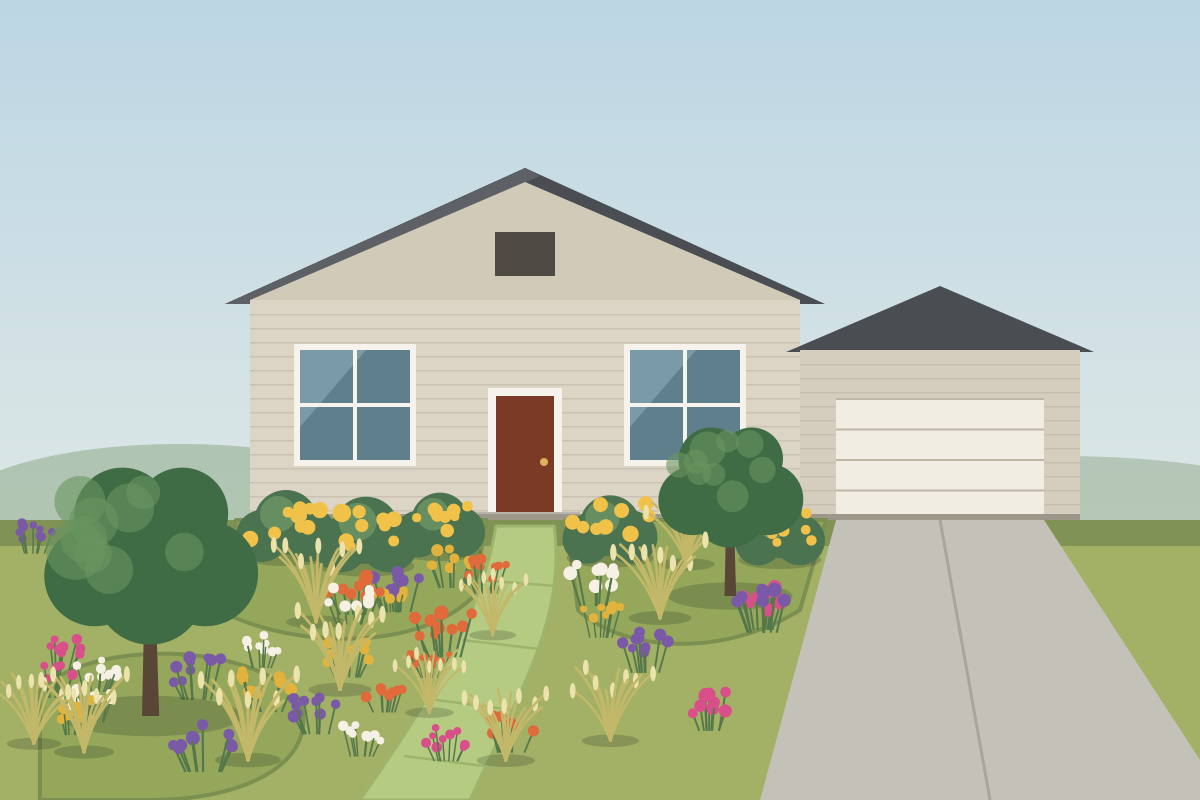
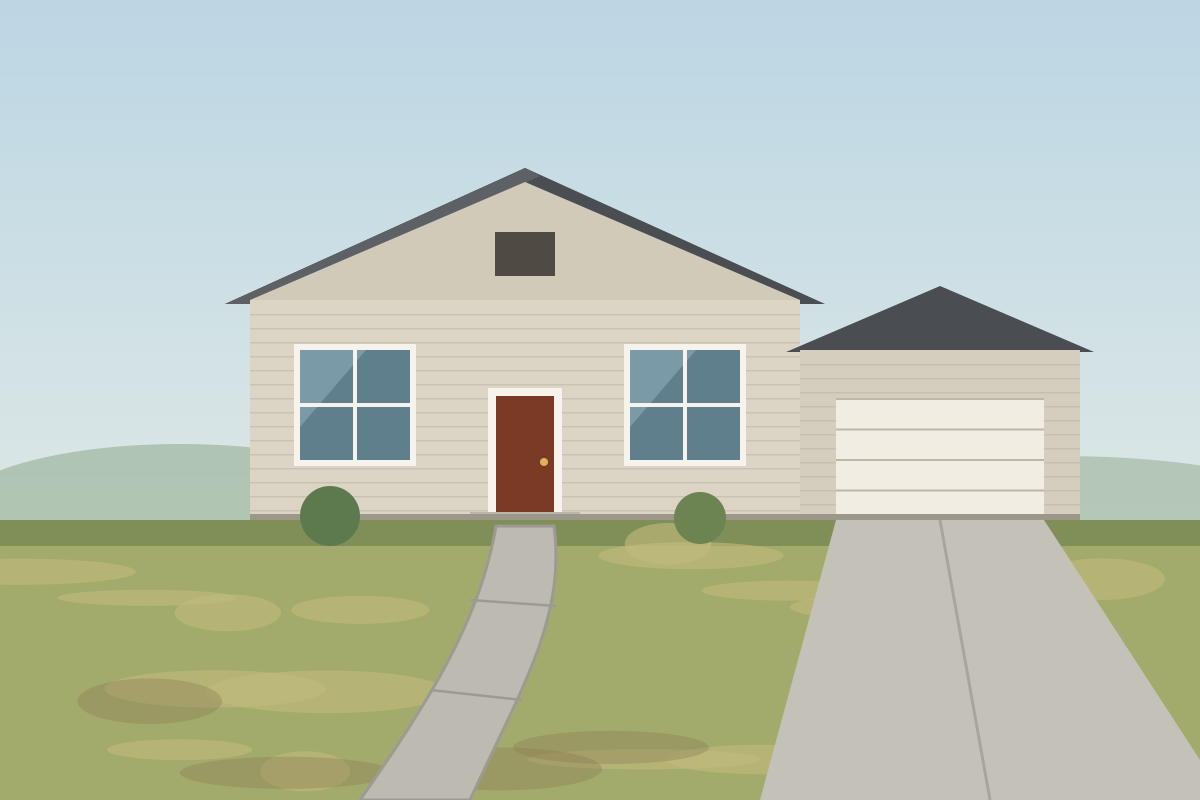 OriginalPollinator Meadow concept
Checking today's free renders…
2 · Tune the design
Units
USDA Zone 5b · Midwest ContinentalZIP 50309, IA, USA · winter low −15 to −10 °F
Area
Design style
Grasses and nectar plants in drifts, mown paths through.
Sun exposure
Landscape plan & nursery list
Pollinator Meadow Front Yard Plan
USDA Zone 5b · Midwest Continental · ZIP 50309, IA, USA · 900 sq ft · Full Sun
- Plants
- 125
- Planting beds
- 405 sq ft
- DIY total
- $2,796
- Landscaper
- $6,677
Trees
$190
Bur Oak
Quercus macrocarpa
- Zone
- 2–8
- Size
- 70 × 70 ft
- Bloom
- Insignificant
- Water
- Low water
Native to your regionPet cautionDrought-tolerant1 × 15 gal
$190 each
$190
Shrubs
$98
New Jersey Tea
Ceanothus americanus
- Zone
- 4–8
- Size
- 3 × 4 ft
- Bloom
- White, June–July
- Water
- Low water
Native to your regionPet cautionDrought-tolerant2 × 3 gal
$30 each
$60
Arrowwood Viburnum
Viburnum dentatum
- Zone
- 3–8
- Size
- 8 × 8 ft
- Bloom
- White, May–June
- Water
- Moderate water
Native to your regionPet-safe1 × 3 gal
$38 each
$38
Perennials
$903
Dense Blazing Star
Liatris spicata
- Zone
- 3–9
- Size
- 3 × 1.5 ft
- Bloom
- Violet, July–August
- Water
- Moderate water
Native to your regionPet-safeDrought-tolerant23 × 1 gal
$12 each
$276
Lanceleaf Coreopsis
Coreopsis lanceolata
- Zone
- 4–9
- Size
- 2 × 1.5 ft
- Bloom
- Yellow, May–July
- Water
- Low water
Native to your regionPet-safeDrought-tolerantDeer-resistant23 × 1 gal
$12 each
$276
Purple Coneflower
Echinacea purpurea
- Zone
- 3–9
- Size
- 3 × 2 ft
- Bloom
- Rose-purple, June–September
- Water
- Low water
Native to your regionPet-safeDrought-tolerantDeer-resistant13 × 1 gal
$14 each
$182
Goldsturm Black-Eyed Susan
Rudbeckia fulgida 'Goldsturm'
- Zone
- 3–9
- Size
- 2.5 × 2 ft
- Bloom
- Gold, July–October
- Water
- Moderate water
Native to your regionPet cautionDrought-tolerantDeer-resistant13 × 1 gal
$13 each
$169
Ornamental grasses
$403
Blonde Ambition Blue Grama
Bouteloua gracilis 'Blonde Ambition'
- Zone
- 4–9
- Size
- 2.5 × 2.5 ft
- Bloom
- Chartreuse flags, July–October
- Water
- Low water
Native to your regionPet-safeDrought-tolerantDeer-resistant11 × 1 gal
$15 each
$165
Little Bluestem
Schizachyrium scoparium
- Zone
- 3–9
- Size
- 3 × 2 ft
- Bloom
- Copper fall color
- Water
- Low water
Native to your regionPet-safeDrought-tolerantDeer-resistant17 × 1 gal
$14 each
$238
Groundcovers
$168
Moss Phlox
Phlox subulata
- Zone
- 2–9
- Size
- 6 in × 2 ft
- Bloom
- Pink, April–May
- Water
- Moderate water
Native to your regionPet-safeDrought-tolerantDeer-resistant21 × quart
$8 each
$168
DIY vs. landscaper
| Item | DIY | Pro |
|---|---|---|
| Plants125 plants across 10 species | $1,762 | $2,291 |
| Soil & compost2.5 cu yd at 2 in deep | $105 | $195 |
| Mulch3.8 cu yd leaf mulch (first season only) | $144 | $323 |
| Edging93 linear ft steel edging | $302 | $698 |
| Pavers & hardscape43 sq ft mown or gravel path | $323 | $903 |
| LaborDIY: about 38 hours of your time | $0 | $1,552 |
| Delivery & tool rentalBulk delivery plus plate compactor | $160 | $0 |
| Design & overhead12% contractor overhead | $0 | $715 |
| Total | $2,796 | $6,677 |
Doing it yourself saves about $3,881 for roughly 38 hours of work.
Planting notes
- Best planting window for Zone 5b: late april to early june, then september. Typical last spring frost Apr 15 – May 1; first fall frost Oct 7 – Oct 21.
- Midwest Continental: Cold winters, hot humid summers, and deep prairie soils. Expect 28–42 in / yr.
- Work 2 in of compost into the top 6 in of soil, then mulch 3 in deep, keeping it off stems and trunks.
- Water deeply twice a week for the first 8 weeks, weekly through the first summer, then taper. Established natives need supplemental water only in drought.
Year-round interest calendar
Northern Hemisphere · 10 species · 125 plants
December–March is bare (Northern Hemisphere winter). Add an evergreen anchor or winter-interest shrub — e.g. inkberry holly, boxwood, or hellebore — to carry the view.
Lawn-replacement water & cost savings
vs. irrigated turfgrass
- Water saved / yr
- 8,603 gal
- Water bill saved / yr
- $65
- Share of turf irrigation cut
- 37%
(32,566 L)
at local average water rates
Planning estimate — confirm with your utility.
Curious how another style compares? See a side-by-side water & cost readout.
Zone estimated from your ZIP, postal code or city using the 2023 USDA map and equivalents. Plants marked pet-safe are not listed as toxic by the ASPCA and are recognized as non-toxic to dogs and cats; “pet caution” means unlisted or mildly irritating. Prices shown in USD are converted from mid-range US estimates — confirm stock and pricing with your nursery. Water-savings figures are climate-adjusted planning estimates benchmarked against a thirsty cool-season lawn; confirm current rates with your utility.
Northern Hemisphere planting & bloom calendar
Seasonal timing for Midwest Continental
Major metros in this region include Chicago, Minneapolis–St. Paul, Des Moines, Columbus, Kansas City, Madison and Omaha. Plant in spring after last frost or by early September so roots anchor before deep winter freeze. Prairie perennials put their first year's energy underground—expect explosive bloom in years two and three.
- Best planting window
- Late April to early June, then September
- Typical last spring frost
- Apr 15 – May 1
- Typical first fall frost
- Oct 7 – Oct 21
- Growing season
- about 150–175 days
Regional 12-month bloom & evergreen calendar (Northern Hemisphere)
Across 54 native & adapted catalog species
Regional plant catalog
Native & adapted plants for Midwest Continental
All 54 regional picks (40 native, 14 adapted) from YardCraft's 186-plant catalog, with Northern Hemisphere peak bloom windows.
Trees (9)
Bur Oak
NativeQuercus macrocarpa
Zone 2–8 · 70 × 70 ft · Low water
Peak Apr–Oct · Drought-tolerant
Winter King Hawthorn
NativeCrataegus viridis 'Winter King'
Zone 4–8 · 25 × 25 ft · Moderate water
Peak May · Drought-tolerant · Pet-safe
Autumn Brilliance Serviceberry
NativeAmelanchier × grandiflora
Zone 4–9 · 20 × 15 ft · Moderate water
Peak Apr
Eastern Redbud
NativeCercis canadensis
Zone 4–9 · 25 × 25 ft · Moderate water
Peak Mar–Apr
Flowering Dogwood
NativeCornus florida
Zone 5–9 · 20 × 20 ft · Moderate water
Peak Apr–May · Pet-safe
Heritage River Birch
NativeBetula nigra 'Heritage'
Zone 4–9 · 40 × 30 ft · Regular water
Peak Mar–May · Pet-safe
Quaking Aspen
NativePopulus tremuloides
Zone 2–7 · 40 × 20 ft · Moderate water
Peak Sep–Nov
Red Maple
NativeAcer rubrum
Zone 3–9 · 50 × 35 ft · Moderate water
Peak Mar
Japanese Maple
AdaptedAcer palmatum
Zone 5–9 · 15 × 15 ft · Moderate water
Peak Apr–Oct · Pet-safe
Shrubs (9)
Diabolo Ninebark
NativePhysocarpus opulifolius 'Diabolo'
Zone 2–7 · 8 × 6 ft · Low water
Peak May–Jun · Drought-tolerant
New Jersey Tea
NativeCeanothus americanus
Zone 4–8 · 3 × 4 ft · Low water
Peak Jun–Jul · Drought-tolerant
Annabelle Smooth Hydrangea
NativeHydrangea arborescens 'Annabelle'
Zone 3–9 · 4 × 5 ft · Moderate water
Peak Jun–Sep
Arrowwood Viburnum
NativeViburnum dentatum
Zone 3–8 · 8 × 8 ft · Moderate water
Peak May–Jun · Pet-safe
Black Chokeberry
NativeAronia melanocarpa
Zone 3–8 · 5 × 5 ft · Moderate water
Peak May
Henry's Garnet Sweetspire
NativeItea virginica 'Henry's Garnet'
Zone 5–9 · 4 × 5 ft · Moderate water
Peak Jun
Red Twig Dogwood
NativeCornus sericea
Zone 2–8 · 7 × 8 ft · Moderate water
Peak May–Jun · Pet-safe
Dwarf Mugo Pine
AdaptedPinus mugo 'Pumilio'
Zone 2–7 · 4 × 6 ft · Low water
Evergreen year-round · Drought-tolerant
Green Velvet Boxwood
AdaptedBuxus 'Green Velvet'
Zone 5–9 · 3 × 3 ft · Moderate water
Evergreen year-round
Perennials (21)
Blanket Flower
NativeGaillardia aristata
Zone 3–9 · 2 × 2 ft · Low water
Peak Jun–Sep · Drought-tolerant
Blue Wild Indigo
NativeBaptisia australis
Zone 3–9 · 4 × 4 ft · Low water
Peak May–Jun · Drought-tolerant
Butterfly Milkweed
NativeAsclepias tuberosa
Zone 3–9 · 2 × 1.5 ft · Low water
Peak Jun–Aug · Drought-tolerant
Dense Blazing Star
NativeLiatris spicata
Zone 3–9 · 3 × 1.5 ft · Moderate water
Peak Jul–Aug · Drought-tolerant · Pet-safe
Goldsturm Black-Eyed Susan
NativeRudbeckia fulgida 'Goldsturm'
Zone 3–9 · 2.5 × 2 ft · Moderate water
Peak Jul–Oct · Drought-tolerant
Lanceleaf Coreopsis
NativeCoreopsis lanceolata
Zone 4–9 · 2 × 1.5 ft · Low water
Peak May–Jul · Drought-tolerant · Pet-safe
Prairie Smoke
NativeGeum triflorum
Zone 2–7 · 1 × 1 ft · Low water
Peak Apr–Jun · Drought-tolerant
Purple Coneflower
NativeEchinacea purpurea
Zone 3–9 · 3 × 2 ft · Low water
Peak Jun–Sep · Drought-tolerant · Pet-safe
Western Yarrow
NativeAchillea millefolium
Zone 2–9 · 2 × 2 ft · Low water
Peak May–Sep · Drought-tolerant
Wild Bergamot
NativeMonarda fistulosa
Zone 2–9 · 3 × 3 ft · Moderate water
Peak Jul–Aug · Drought-tolerant · Pet-safe
American Alumroot
NativeHeuchera americana
Zone 4–9 · 1.5 × 1.5 ft · Moderate water
Peak May–Jun · Pet-safe
Christmas Fern
NativePolystichum acrostichoides
Zone 3–9 · 2 × 2 ft · Moderate water
Evergreen year-round · Pet-safe
Eastern Red Columbine
NativeAquilegia canadensis
Zone 3–8 · 2 × 1 ft · Moderate water
Peak Apr–Jun
New England Aster
NativeSymphyotrichum novae-angliae
Zone 4–8 · 4 × 3 ft · Moderate water
Peak Aug–Oct · Pet-safe
Woodland Phlox
NativePhlox divaricata
Zone 3–8 · 1 × 1 ft · Moderate water
Peak Apr–May · Pet-safe
Hidcote English Lavender
AdaptedLavandula angustifolia 'Hidcote'
Zone 5–9 · 2 × 2 ft · Low water
Peak Jun–Aug · Drought-tolerant
Lamb's Ear
AdaptedStachys byzantina
Zone 4–9 · 1.5 × 2 ft · Low water
Evergreen year-round · Drought-tolerant · Pet-safe
Russian Sage
AdaptedPerovskia atriplicifolia
Zone 4–9 · 4 × 3 ft · Low water
Peak Jul–Sep · Drought-tolerant
Walker's Low Catmint
AdaptedNepeta × faassenii 'Walker's Low'
Zone 4–8 · 2 × 3 ft · Low water
Peak May–Sep · Drought-tolerant
Chinese Astilbe
AdaptedAstilbe chinensis
Zone 4–8 · 2 × 2 ft · Regular water
Peak Jun–Jul · Pet-safe
Halcyon Hosta
AdaptedHosta 'Halcyon'
Zone 3–9 · 1.5 × 3 ft · Moderate water
Peak Jul
Ornamental grasses (8)
Blonde Ambition Blue Grama
NativeBouteloua gracilis 'Blonde Ambition'
Zone 4–9 · 2.5 × 2.5 ft · Low water
Peak Jul–Oct · Drought-tolerant · Pet-safe
Little Bluestem
NativeSchizachyrium scoparium
Zone 3–9 · 3 × 2 ft · Low water
Peak Sep–Nov · Drought-tolerant · Pet-safe
Northwind Switchgrass
NativePanicum virgatum 'Northwind'
Zone 4–9 · 5 × 2.5 ft · Low water
Peak Aug · Drought-tolerant · Pet-safe
Prairie Dropseed
NativeSporobolus heterolepis
Zone 3–9 · 2.5 × 2.5 ft · Low water
Peak Aug · Drought-tolerant · Pet-safe
River Oats
NativeChasmanthium latifolium
Zone 4–9 · 3 × 2 ft · Moderate water
Peak Jul · Pet-safe
Elijah Blue Fescue
AdaptedFestuca glauca 'Elijah Blue'
Zone 4–8 · 1 × 1 ft · Low water
Evergreen year-round · Drought-tolerant · Pet-safe
Golden Japanese Forest Grass
AdaptedHakonechloa macra 'Aureola'
Zone 5–9 · 1.5 × 2 ft · Moderate water
Peak Apr–Oct · Pet-safe
Karl Foerster Feather Reed Grass
AdaptedCalamagrostis × acutiflora 'Karl Foerster'
Zone 4–9 · 5 × 2 ft · Moderate water
Peak Jun · Pet-safe
Groundcovers (7)
Kinnikinnick
NativeArctostaphylos uva-ursi
Zone 2–7 · 6 in × 4 ft · Low water
Peak Apr–May · Drought-tolerant
Moss Phlox
NativePhlox subulata
Zone 2–9 · 6 in × 2 ft · Moderate water
Peak Apr–May · Drought-tolerant · Pet-safe
Pennsylvania Sedge
NativeCarex pensylvanica
Zone 3–8 · 8 in × 1 ft · Moderate water
Evergreen year-round · Drought-tolerant · Pet-safe
Canada Wild Ginger
NativeAsarum canadense
Zone 3–8 · 6 in × 1.5 ft · Moderate water
Peak Apr
Wild Strawberry
NativeFragaria virginiana
Zone 2–9 · 5 in × 2 ft · Moderate water
Peak Apr–Jun · Pet-safe
Angelina Stonecrop
AdaptedSedum rupestre 'Angelina'
Zone 4–9 · 5 in × 2 ft · Low water
Evergreen year-round · Drought-tolerant · Pet-safe
Creeping Thyme
AdaptedThymus serpyllum
Zone 4–9 · 3 in × 1.5 ft · Low water
Peak Jun–Jul · Drought-tolerant · Pet-safe
Soil, climate & style match
Designing for Midwest Continental
Deep fertile prairie loam or heavy clay, dramatic winter-to-summer swings, open wind exposure, and reliable spring-summer rainfall.
Best landscape styles for this region
Regional playbook
Local planting & care checklist
- 01Pair tall prairie perennials with sturdy native grasses (little bluestem, switchgrass) so stems prop each other upright in wind.
- 02Cut prairie beds back to 4–6 inches in early spring rather than autumn so winter stalks catch insulating snow.
- 03Avoid over-fertilizing native prairie species—excess nitrogen makes them floppy.
- 04Include early spring ephemerals and late autumn asters to bookend peak summer meadow blooms.
Questions
Midwest Continental landscaping FAQ
What native plants grow best in Midwest Continental?
Top regional picks in YardCraft's catalog for Midwest Continental include Blanket Flower, Blonde Ambition Blue Grama, Blue Wild Indigo, Bur Oak. In total, the catalog tracks 40 native and 14 adapted species for this region—enter your exact city or postal code in the studio to filter by sun exposure, drought tolerance and pet safety.
When is the best time to plant in Midwest Continental?
For a representative Midwest Continental location like Des Moines, IA (50309) (Zone 5b, Northern Hemisphere), the best planting window is late april to early june, then september. Plant in spring after last frost or by early September so roots anchor before deep winter freeze. Prairie perennials put their first year's energy underground—expect explosive bloom in years two and three.
What rainfall and winter temperatures should I plan for in Midwest Continental?
Midwest Continental receives roughly 28–42 in / yr. Around Des Moines, IA (50309), average annual minimum temperatures fall in the −15 to −10 °F band. Cold winters, hot humid summers, and deep prairie soils.
When is peak bloom season in Midwest Continental?
Adjusted for the Northern Hemisphere calendar, the heaviest flowering months across YardCraft's Midwest Continental plant palette fall around May, June, July, supported by evergreen shrubs and grasses that hold structure through the rest of the year.