Climate region · Mountain West
Mountain West landscaping built for altitude, dry air and cold nights.
Design water-wise high-plains and foothill yards with ponderosa-belt shrubs, cold-hardy ornamental grasses, yarrow and rabbitbrush that handle 40°F diurnal swings.
- Zone 6a
- Denver, CO (80202) (−10 to −5 °F)
- 8–20 in / yr
- typical annual rainfall
- 22 native
- 9 adapted in catalog
- Imperial · USD
- Northern Hemisphere
Plan a Mountain West garden
Pre-configured for Denver, CO (80202) in imperial (sq ft) units and USD, with Northern Hemisphere seasons. Enter your own city, ZIP or postcode below to customize for your exact address.
1 · Pick a yard
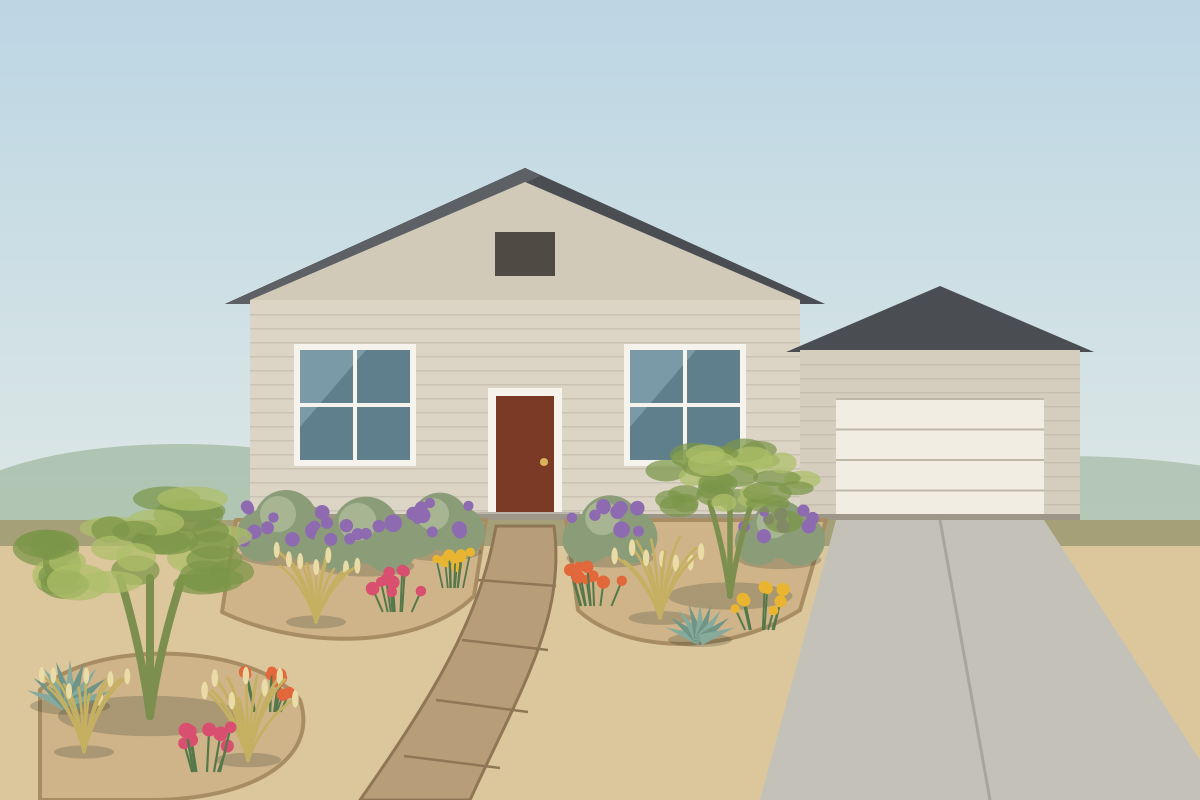
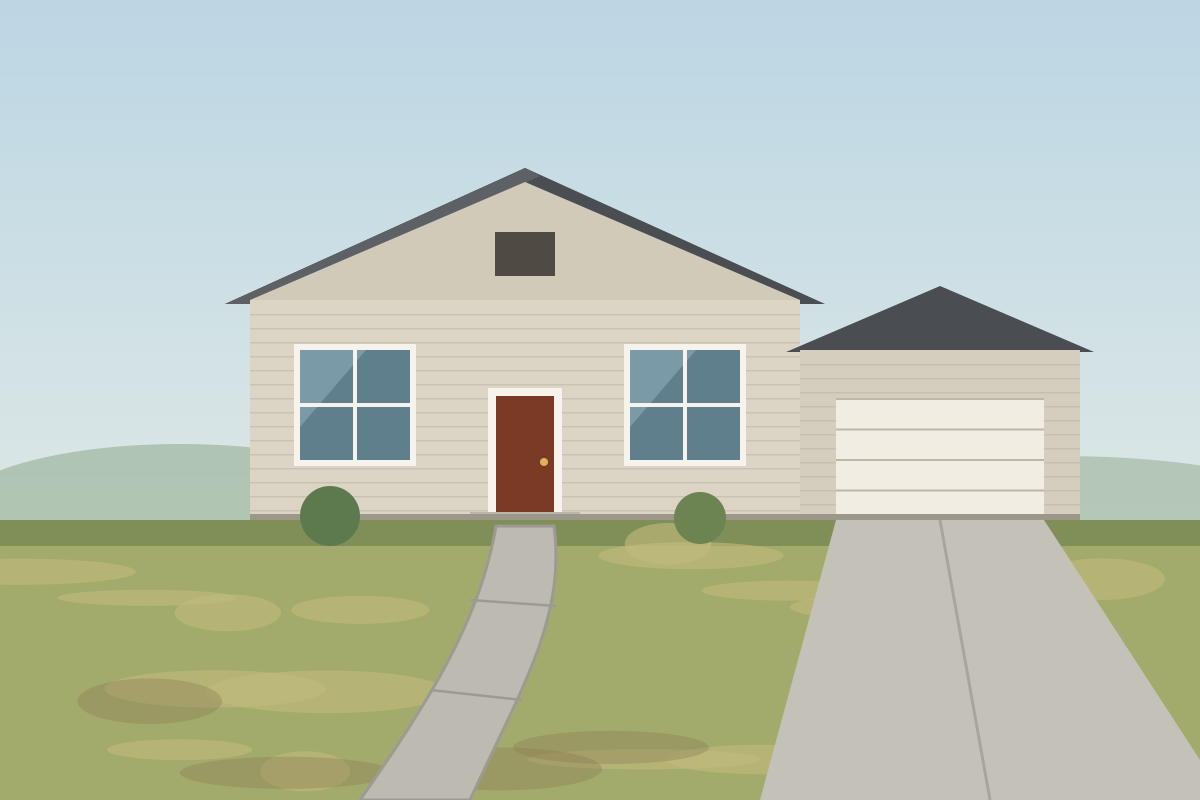 OriginalLow-Water Xeriscape concept
Checking today's free renders…
2 · Tune the design
Units
USDA Zone 6a · Mountain WestZIP 80202, CO, USA · winter low −10 to −5 °F
Area
Design style
Gravel mulch, boulders, and plants that live on rainfall.
Sun exposure
Landscape plan & nursery list
Low-Water Xeriscape Front Yard Plan
USDA Zone 6a · Mountain West · ZIP 80202, CO, USA · 900 sq ft · Full Sun
- Plants
- 89
- Planting beds
- 351 sq ft
- DIY total
- $2,464
- Landscaper
- $6,016
Trees
$190
Bur Oak
Quercus macrocarpa
- Zone
- 2–8
- Size
- 70 × 70 ft
- Bloom
- Insignificant
- Water
- Low water
Native to your regionPet cautionDrought-tolerant1 × 15 gal
$190 each
$190
Shrubs
$168
Apache Plume
Fallugia paradoxa
- Zone
- 4–9
- Size
- 5 × 5 ft
- Bloom
- White, May–September
- Water
- Low water
Native to your regionPet cautionDrought-tolerantDeer-resistant2 × 3 gal
$32 each
$64
Rubber Rabbitbrush
Ericameria nauseosa
- Zone
- 4–9
- Size
- 4 × 4 ft
- Bloom
- Gold, August–October
- Water
- Low water
Native to your regionPet cautionDrought-tolerantDeer-resistant4 × 3 gal
$26 each
$104
Perennials
$494
Sunset Hyssop
Agastache rupestris
- Zone
- 5–9
- Size
- 2.5 × 1.5 ft
- Bloom
- Coral, July–October
- Water
- Low water
Native to your regionPet-safeDrought-tolerantDeer-resistant15 × 1 gal
$14 each
$210
Rocky Mountain Penstemon
Penstemon strictus
- Zone
- 4–9
- Size
- 2.5 × 2 ft
- Bloom
- Royal blue, May–July
- Water
- Low water
Native to your regionPet-safeDrought-tolerantDeer-resistant8 × 1 gal
$13 each
$104
Blanket Flower
Gaillardia aristata
- Zone
- 3–9
- Size
- 2 × 2 ft
- Bloom
- Red and gold, June–September
- Water
- Low water
Native to your regionPet cautionDrought-tolerantDeer-resistant15 × 1 gal
$12 each
$180
Ornamental grasses
$230
Blonde Ambition Blue Grama
Bouteloua gracilis 'Blonde Ambition'
- Zone
- 4–9
- Size
- 2.5 × 2.5 ft
- Bloom
- Chartreuse flags, July–October
- Water
- Low water
Native to your regionPet-safeDrought-tolerantDeer-resistant6 × 1 gal
$15 each
$90
Little Bluestem
Schizachyrium scoparium
- Zone
- 3–9
- Size
- 3 × 2 ft
- Bloom
- Copper fall color
- Water
- Low water
Native to your regionPet-safeDrought-tolerantDeer-resistant10 × 1 gal
$14 each
$140
Groundcovers
$226
Kinnikinnick
Arctostaphylos uva-ursi
- Zone
- 2–7
- Size
- 6 in × 4 ft
- Bloom
- Pink, April–May
- Water
- Low water
Native to your regionPet cautionDrought-tolerantDeer-resistant6 × quart
$12 each
$72
Angelina Stonecrop
Sedum rupestre 'Angelina'
- Zone
- 4–9
- Size
- 5 in × 2 ft
- Bloom
- Chartreuse foliage
- Water
- Low water
Regionally adaptedPet-safeDrought-tolerantDeer-resistant22 × quart
$7 each
$154
DIY vs. landscaper
| Item | DIY | Pro |
|---|---|---|
| Plants89 plants across 10 species | $1,308 | $1,700 |
| Soil & compost2.2 cu yd at 2 in deep | $92 | $172 |
| Decomposed granite & gravel2.2 cu yd decomposed granite | $136 | $264 |
| Edging86 linear ft steel edging | $280 | $645 |
| Pavers & hardscape65 sq ft flagstone on compacted base | $488 | $1,365 |
| LaborDIY: about 37 hours of your time | $0 | $1,225 |
| Delivery & tool rentalBulk delivery plus plate compactor | $160 | $0 |
| Design & overhead12% contractor overhead | $0 | $645 |
| Total | $2,464 | $6,016 |
Doing it yourself saves about $3,552 for roughly 37 hours of work.
Planting notes
- Best planting window for Zone 6a: april to may, then september to mid-october. Typical last spring frost Apr 1 – Apr 21; first fall frost Oct 17 – Oct 31.
- Mountain West: High elevation, big day-night swings, low humidity, and short seasons. Expect 8–20 in / yr.
- Spread decomposed granite 2 in deep over bare soil — skip landscape fabric so natives can self-seed.
- Water deeply twice a week for the first 8 weeks, weekly through the first summer, then taper. Established natives need supplemental water only in drought.
Year-round interest calendar
Northern Hemisphere · 10 species · 89 plants
Lawn-replacement water & cost savings
vs. irrigated turfgrass
- Water saved / yr
- 9,447 gal
- Water bill saved / yr
- $71
- Share of turf irrigation cut
- 40%
(35,761 L)
at local average water rates
Planning estimate — confirm with your utility.
Curious how another style compares? See a side-by-side water & cost readout.
Zone estimated from your ZIP, postal code or city using the 2023 USDA map and equivalents. Plants marked pet-safe are not listed as toxic by the ASPCA and are recognized as non-toxic to dogs and cats; “pet caution” means unlisted or mildly irritating. Prices shown in USD are converted from mid-range US estimates — confirm stock and pricing with your nursery. Water-savings figures are climate-adjusted planning estimates benchmarked against a thirsty cool-season lawn; confirm current rates with your utility.
Northern Hemisphere planting & bloom calendar
Seasonal timing for Mountain West
Major metros in this region include Denver, Salt Lake City, Boise, Bozeman, Santa Fe, Reno and Calgary. Wait until late spring frost risk fades for tender perennials, and prioritize winter-hardy, wind-tolerant natives. Winter watering on warm, snowless days prevents evergreen desiccation.
- Best planting window
- April to May, then September to mid-October
- Typical last spring frost
- Apr 1 – Apr 21
- Typical first fall frost
- Oct 17 – Oct 31
- Growing season
- about 180–200 days
Regional 12-month bloom & evergreen calendar (Northern Hemisphere)
Across 31 native & adapted catalog species
Regional plant catalog
Native & adapted plants for Mountain West
All 31 regional picks (22 native, 9 adapted) from YardCraft's 186-plant catalog, with Northern Hemisphere peak bloom windows.
Trees (3)
Bur Oak
NativeQuercus macrocarpa
Zone 2–8 · 70 × 70 ft · Low water
Peak Apr–Oct · Drought-tolerant
Autumn Brilliance Serviceberry
NativeAmelanchier × grandiflora
Zone 4–9 · 20 × 15 ft · Moderate water
Peak Apr
Quaking Aspen
NativePopulus tremuloides
Zone 2–7 · 40 × 20 ft · Moderate water
Peak Sep–Nov
Shrubs (6)
Apache Plume
NativeFallugia paradoxa
Zone 4–9 · 5 × 5 ft · Low water
Peak May–Sep · Drought-tolerant
Diabolo Ninebark
NativePhysocarpus opulifolius 'Diabolo'
Zone 2–7 · 8 × 6 ft · Low water
Peak May–Jun · Drought-tolerant
Rubber Rabbitbrush
NativeEricameria nauseosa
Zone 4–9 · 4 × 4 ft · Low water
Peak Aug–Oct · Drought-tolerant
Tall Oregon Grape
NativeMahonia aquifolium
Zone 5–9 · 5 × 4 ft · Low water
Peak Mar–Apr · Drought-tolerant · Pet-safe
Red Twig Dogwood
NativeCornus sericea
Zone 2–8 · 7 × 8 ft · Moderate water
Peak May–Jun · Pet-safe
Dwarf Mugo Pine
AdaptedPinus mugo 'Pumilio'
Zone 2–7 · 4 × 6 ft · Low water
Evergreen year-round · Drought-tolerant
Perennials (12)
Blanket Flower
NativeGaillardia aristata
Zone 3–9 · 2 × 2 ft · Low water
Peak Jun–Sep · Drought-tolerant
Oregon Sunshine
NativeEriophyllum lanatum
Zone 5–9 · 1.5 × 2 ft · Low water
Peak May–Aug · Drought-tolerant
Prairie Smoke
NativeGeum triflorum
Zone 2–7 · 1 × 1 ft · Low water
Peak Apr–Jun · Drought-tolerant
Rocky Mountain Penstemon
NativePenstemon strictus
Zone 4–9 · 2.5 × 2 ft · Low water
Peak May–Jul · Drought-tolerant · Pet-safe
Sulphur Buckwheat
NativeEriogonum umbellatum
Zone 4–8 · 1 × 2 ft · Low water
Peak Jun–Aug · Drought-tolerant
Sunset Hyssop
NativeAgastache rupestris
Zone 5–9 · 2.5 × 1.5 ft · Low water
Peak Jul–Oct · Drought-tolerant · Pet-safe
Western Yarrow
NativeAchillea millefolium
Zone 2–9 · 2 × 2 ft · Low water
Peak May–Sep · Drought-tolerant
Wild Bergamot
NativeMonarda fistulosa
Zone 2–9 · 3 × 3 ft · Moderate water
Peak Jul–Aug · Drought-tolerant · Pet-safe
Rocky Mountain Columbine
NativeAquilegia caerulea
Zone 3–8 · 2 × 1.5 ft · Moderate water
Peak May–Jul
Hidcote English Lavender
AdaptedLavandula angustifolia 'Hidcote'
Zone 5–9 · 2 × 2 ft · Low water
Peak Jun–Aug · Drought-tolerant
Russian Sage
AdaptedPerovskia atriplicifolia
Zone 4–9 · 4 × 3 ft · Low water
Peak Jul–Sep · Drought-tolerant
Walker's Low Catmint
AdaptedNepeta × faassenii 'Walker's Low'
Zone 4–8 · 2 × 3 ft · Low water
Peak May–Sep · Drought-tolerant
Ornamental grasses (5)
Blonde Ambition Blue Grama
NativeBouteloua gracilis 'Blonde Ambition'
Zone 4–9 · 2.5 × 2.5 ft · Low water
Peak Jul–Oct · Drought-tolerant · Pet-safe
Little Bluestem
NativeSchizachyrium scoparium
Zone 3–9 · 3 × 2 ft · Low water
Peak Sep–Nov · Drought-tolerant · Pet-safe
Tufted Hairgrass
NativeDeschampsia cespitosa
Zone 2–9 · 3 × 2 ft · Moderate water
Peak Jun · Pet-safe
Elijah Blue Fescue
AdaptedFestuca glauca 'Elijah Blue'
Zone 4–8 · 1 × 1 ft · Low water
Evergreen year-round · Drought-tolerant · Pet-safe
Karl Foerster Feather Reed Grass
AdaptedCalamagrostis × acutiflora 'Karl Foerster'
Zone 4–9 · 5 × 2 ft · Moderate water
Peak Jun · Pet-safe
Groundcovers (5)
Kinnikinnick
NativeArctostaphylos uva-ursi
Zone 2–7 · 6 in × 4 ft · Low water
Peak Apr–May · Drought-tolerant
Wild Strawberry
NativeFragaria virginiana
Zone 2–9 · 5 in × 2 ft · Moderate water
Peak Apr–Jun · Pet-safe
Angelina Stonecrop
AdaptedSedum rupestre 'Angelina'
Zone 4–9 · 5 in × 2 ft · Low water
Evergreen year-round · Drought-tolerant · Pet-safe
Creeping Thyme
AdaptedThymus serpyllum
Zone 4–9 · 3 in × 1.5 ft · Low water
Peak Jun–Jul · Drought-tolerant · Pet-safe
Hardy Ice Plant
AdaptedDelosperma cooperi
Zone 6–10 · 4 in × 2 ft · Low water
Peak Jun–Sep · Drought-tolerant · Pet-safe
Soil, climate & style match
Designing for Mountain West
High UV intensity, low humidity, fast day-to-night temperature drops, alkaline lean soils, and only 8–20 in of precipitation annually—often arriving as spring snow.
Best landscape styles for this region
Regional playbook
Local planting & care checklist
- 01Give newly planted evergreens and trees a deep soak during warm, dry winter spells when the ground is thawed.
- 02Use pea gravel or decomposed granite mulch in dry beds—it stays put in Chinook winds better than light bark.
- 03Choose cold-hardy xeriscape perennials rated at least one half-zone colder for exposed windy sites.
- 04Protect young thin-barked trunks from winter sunscald on south- and west-facing exposures.
Questions
Mountain West landscaping FAQ
What native plants grow best in Mountain West?
Top regional picks in YardCraft's catalog for Mountain West include Apache Plume, Blanket Flower, Blonde Ambition Blue Grama, Bur Oak. In total, the catalog tracks 22 native and 9 adapted species for this region—enter your exact city or postal code in the studio to filter by sun exposure, drought tolerance and pet safety.
When is the best time to plant in Mountain West?
For a representative Mountain West location like Denver, CO (80202) (Zone 6a, Northern Hemisphere), the best planting window is april to may, then september to mid-october. Wait until late spring frost risk fades for tender perennials, and prioritize winter-hardy, wind-tolerant natives. Winter watering on warm, snowless days prevents evergreen desiccation.
What rainfall and winter temperatures should I plan for in Mountain West?
Mountain West receives roughly 8–20 in / yr. Around Denver, CO (80202), average annual minimum temperatures fall in the −10 to −5 °F band. High elevation, big day-night swings, low humidity, and short seasons.
When is peak bloom season in Mountain West?
Adjusted for the Northern Hemisphere calendar, the heaviest flowering months across YardCraft's Mountain West plant palette fall around June, July, August, supported by evergreen shrubs and grasses that hold structure through the rest of the year.