Climate region · Northern Europe
Northern Europe garden design built for bright summers and deep winters.
Plan resilient Nordic landscapes with silver birch, lingonberry, hardy roses, sedges and frost-proof perennials tuned for long summer daylight and cold winters.
- Zone 6b
- Stockholm, Sweden (−21 to −18 °C)
- 500–900 mm / yr, year-round
- typical annual rainfall
- 11 native
- 0 adapted in catalog
- Metric · SEK
- Northern Hemisphere
Plan a Northern Europe garden
Pre-configured for Stockholm, Sweden in metric (m²) units and SEK, with Northern Hemisphere seasons. Enter your own city, ZIP or postcode below to customize for your exact address.
1 · Pick a yard
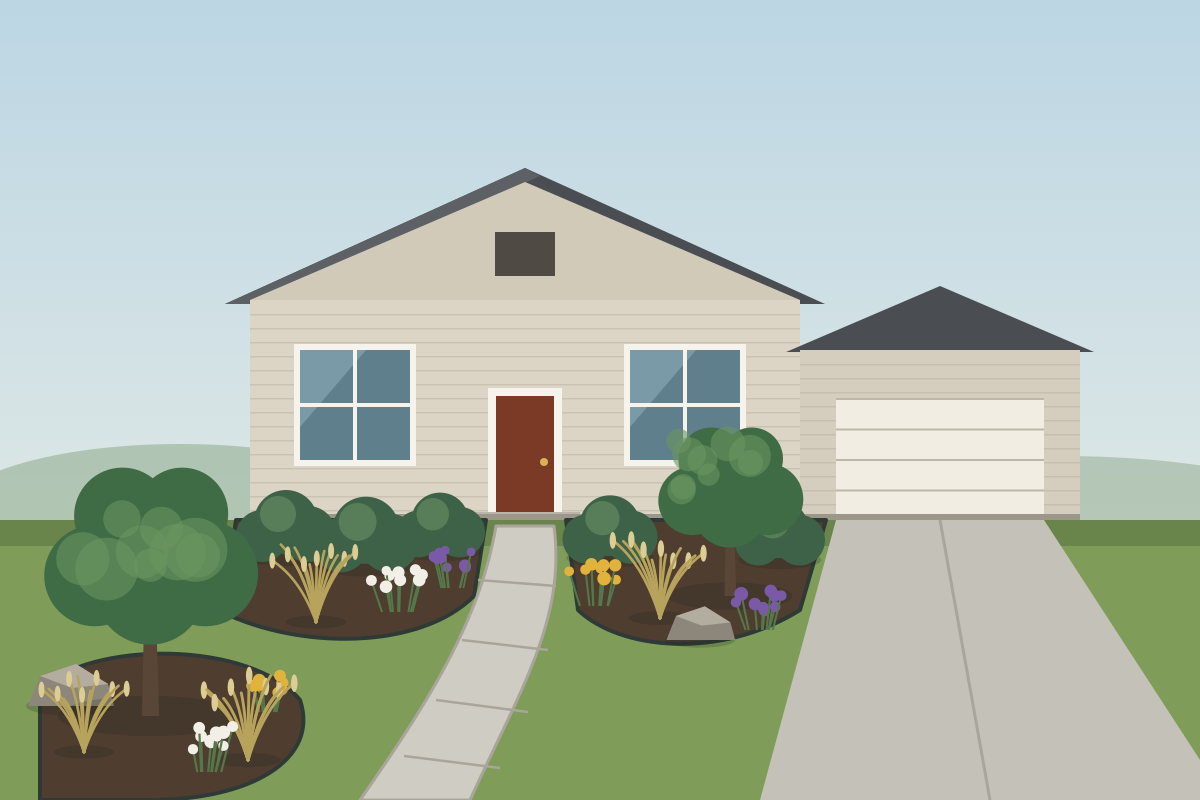
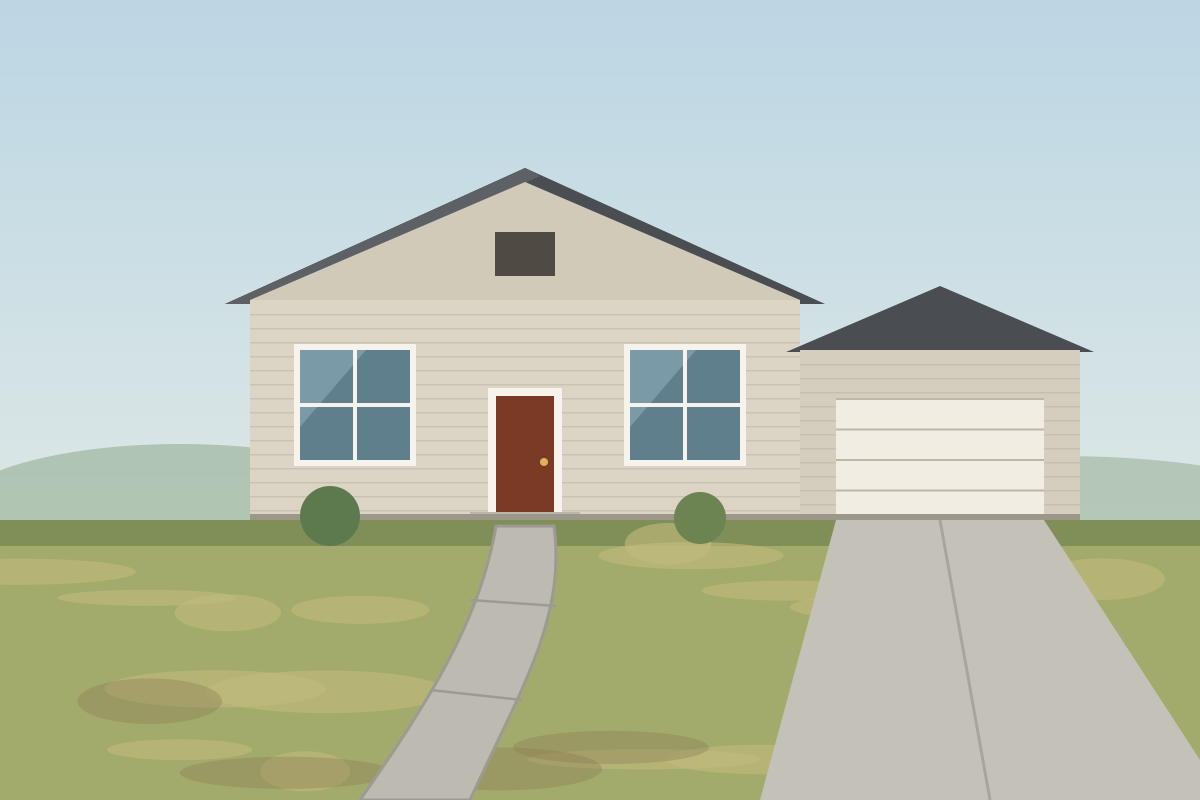 OriginalModern Native concept
Checking today's free renders…
2 · Tune the design
Units
USDA Zone 6b · Northern EuropeStockholm, Sweden · winter low −21 to −18 °C
Area
Design style
Clean lines, massed regional natives, steel edging.
Sun exposure
Landscape plan & nursery list
Modern Native Front Yard Plan
USDA Zone 6b · Northern Europe · Stockholm, Sweden · 74.3 m² · Full Sun
- Plants
- 94
- Planting beds
- 22.3 m²
- DIY total
- kr 24 707
- Landscaper
- kr 61 719
Trees
kr 1 575
Silver Birch
Betula pendula
- Zone
- 2–7
- Size
- 50 × 25 ft
- Bloom
- Catkins, spring
- Water
- Moderate water
Native to your regionPet-safe1 × 15 gal
kr 1 575 each
kr 1 575
Shrubs
kr 2 331
Scotch Heather
Calluna vulgaris
- Zone
- 4–7
- Size
- 1.5 × 2 ft
- Bloom
- Purple-pink, August–October
- Water
- Low water
Native to your regionPet-safeDrought-tolerantDeer-resistant10 × 3 gal
kr 189 each
kr 1 890
Mock Orange
Philadelphus coronarius
- Zone
- 4–8
- Size
- 8 × 7 ft
- Bloom
- White, fragrant, June
- Water
- Moderate water
Native to your regionPet caution1 × 3 gal
kr 441 each
kr 441
Perennials
kr 3 276
Western Yarrow
Achillea millefolium
- Zone
- 2–9
- Size
- 2 × 2 ft
- Bloom
- White, May–September
- Water
- Low water
Native to your regionToxic to petsDrought-tolerantDeer-resistant6 × 1 gal
kr 126 each
kr 756
Dense Blazing Star
Liatris spicata
- Zone
- 3–9
- Size
- 3 × 1.5 ft
- Bloom
- Violet, July–August
- Water
- Moderate water
Zone-compatiblePet-safeDrought-tolerant10 × 1 gal
kr 126 each
kr 1 260
Lanceleaf Coreopsis
Coreopsis lanceolata
- Zone
- 4–9
- Size
- 2 × 1.5 ft
- Bloom
- Yellow, May–July
- Water
- Low water
Zone-compatiblePet-safeDrought-tolerantDeer-resistant10 × 1 gal
kr 126 each
kr 1 260
Ornamental grasses
kr 6 206
Tufted Hairgrass
Deschampsia cespitosa
- Zone
- 2–9
- Size
- 3 × 2 ft
- Bloom
- Gold haze, June
- Water
- Moderate water
Native to your regionPet-safeDeer-resistant10 × 1 gal
kr 147 each
kr 1 470
Elijah Blue Fescue
Festuca glauca 'Elijah Blue'
- Zone
- 4–8
- Size
- 1 × 1 ft
- Bloom
- Steel-blue tufts
- Water
- Low water
Zone-compatiblePet-safeDrought-tolerantDeer-resistant41 × 1 gal
kr 116 each
kr 4 736
Groundcovers
kr 630
Kinnikinnick
Arctostaphylos uva-ursi
- Zone
- 2–7
- Size
- 6 in × 4 ft
- Bloom
- Pink, April–May
- Water
- Low water
Native to your regionPet cautionDrought-tolerantDeer-resistant5 × quart
kr 126 each
kr 630
DIY vs. landscaper
| Item | DIY | Pro |
|---|---|---|
| Plants94 plants across 9 species | kr 14 018 | kr 18 228 |
| Soil & compost1.1 m³ at 5 cm deep | kr 662 | kr 1 229 |
| Mulch1.7 m³ shredded hardwood mulch | kr 882 | kr 1 964 |
| Edging21.6 linear m steel edging | kr 2 426 | kr 5 597 |
| Pavers & hardscape5.9 m² large-format concrete pavers | kr 5 040 | kr 14 112 |
| LaborDIY: about 38.5 hours of your time | kr 0 | kr 13 976 |
| Delivery & tool rentalBulk delivery plus plate compactor | kr 1 680 | kr 0 |
| Design & overhead12% contractor overhead | kr 0 | kr 6 615 |
| Total | kr 24 707 | kr 61 719 |
Doing it yourself saves about kr 37 013 for roughly 38.5 hours of work.
Planting notes
- Best planting window for Zone 6b: april to may, then september to mid-october. Typical last spring frost Apr 1 – Apr 21; first fall frost Oct 17 – Oct 31.
- Northern Europe: Cold winters, short cool summers, long low-light shoulder seasons across Scandinavia and the Baltic. Expect 500–900 mm / yr, year-round.
- Work 5 cm of compost into the top 15 cm of soil, then mulch 8 cm deep, keeping it off stems and trunks.
- Water deeply twice a week for the first 8 weeks, weekly through the first summer, then taper. Established natives need supplemental water only in drought.
Year-round interest calendar
Northern Hemisphere · 9 species · 94 plants
Lawn-replacement water & cost savings
vs. irrigated turfgrass
- Water saved / yr
- 24,719 L
- Water bill saved / yr
- kr 514
- Share of turf irrigation cut
- 31%
(6,530 gal)
at local average water rates
Planning estimate — confirm with your utility.
Curious how another style compares? See a side-by-side water & cost readout.
Zone estimated from your ZIP, postal code or city using the 2023 USDA map and equivalents. Plants marked pet-safe are not listed as toxic by the ASPCA and are recognized as non-toxic to dogs and cats; “pet caution” means unlisted or mildly irritating. Prices shown in SEK are converted from mid-range US estimates — confirm stock and pricing with your nursery. Water-savings figures are climate-adjusted planning estimates benchmarked against a thirsty cool-season lawn; confirm current rates with your utility.
Northern Hemisphere planting & bloom calendar
Seasonal timing for Northern Europe
Major metros in this region include Stockholm, Gothenburg, Oslo, Bergen, Copenhagen and Helsinki. Plant primarily in late spring and early summer so root systems harden off completely before October frosts. Choose tough, snow-load-tolerant woody structure.
- Best planting window
- April to May, then September to mid-October
- Typical last spring frost
- Apr 1 – Apr 21
- Typical first fall frost
- Oct 17 – Oct 31
- Growing season
- about 180–200 days
Regional 12-month bloom & evergreen calendar (Northern Hemisphere)
Across 11 native & adapted catalog species
Regional plant catalog
Native & adapted plants for Northern Europe
All 11 regional picks (11 native, 0 adapted) from YardCraft's 186-plant catalog, with Northern Hemisphere peak bloom windows.
Trees (2)
European Beech
NativeFagus sylvatica
Zone 4–7 · 60 × 40 ft · Moderate water
Peak Sep–Nov
Silver Birch
NativeBetula pendula
Zone 2–7 · 50 × 25 ft · Moderate water
Peak Mar–May · Pet-safe
Shrubs (2)
Scotch Heather
NativeCalluna vulgaris
Zone 4–7 · 1.5 × 2 ft · Low water
Peak Aug–Oct · Drought-tolerant · Pet-safe
Mock Orange
NativePhiladelphus coronarius
Zone 4–8 · 8 × 7 ft · Moderate water
Peak Jun
Perennials (3)
Western Yarrow
NativeAchillea millefolium
Zone 2–9 · 2 × 2 ft · Low water
Peak May–Sep · Drought-tolerant
Common Primrose
NativePrimula vulgaris
Zone 4–8 · 8 in × 1 ft · Moderate water
Peak Mar–Apr
Lady Fern
NativeAthyrium filix-femina
Zone 2–8 · 3 × 2 ft · Regular water
Peak Apr–Oct · Pet-safe
Ornamental grasses (1)
Tufted Hairgrass
NativeDeschampsia cespitosa
Zone 2–9 · 3 × 2 ft · Moderate water
Peak Jun · Pet-safe
Groundcovers (3)
Creeping Thyme
NativeThymus serpyllum
Zone 4–9 · 3 in × 1.5 ft · Low water
Peak Jun–Jul · Drought-tolerant · Pet-safe
Kinnikinnick
NativeArctostaphylos uva-ursi
Zone 2–7 · 6 in × 4 ft · Low water
Peak Apr–May · Drought-tolerant
Lingonberry
NativeVaccinium vitis-idaea
Zone 2–7 · 1 × 1.5 ft · Moderate water
Sep–Nov · Evergreen · Pet-safe
Soil, climate & style match
Designing for Northern Europe
Long cold winters, rapid spring thaws, intense long-daylight summer growth, and acidic boreal-to-temperate soils across Scandinavia and the Baltic.
Best landscape styles for this region
Regional playbook
Local planting & care checklist
- 01Select multi-stemmed birch, mountain ash and cold-hardy evergreens that resist heavy wet snow breakage.
- 02Stop nitrogen feeding by mid-July so woody shoots harden off before autumn freezes.
- 03Rely on acidic-soil evergreen groundcovers like lingonberry and hardy ferns under birch and pine.
- 04Position gravel seating terraces to catch low-angle spring and autumn Nordic sun.
Questions
Northern Europe landscaping FAQ
What native plants grow best in Northern Europe?
Top regional picks in YardCraft's catalog for Northern Europe include Creeping Thyme, Kinnikinnick, Scotch Heather, Western Yarrow. In total, the catalog tracks 11 native and 0 adapted species for this region—enter your exact city or postal code in the studio to filter by sun exposure, drought tolerance and pet safety.
When is the best time to plant in Northern Europe?
For a representative Northern Europe location like Stockholm, Sweden (Zone 6b, Northern Hemisphere), the best planting window is april to may, then september to mid-october. Plant primarily in late spring and early summer so root systems harden off completely before October frosts. Choose tough, snow-load-tolerant woody structure.
What rainfall and winter temperatures should I plan for in Northern Europe?
Northern Europe receives roughly 500–900 mm / yr, year-round. Around Stockholm, Sweden, average annual minimum temperatures fall in the −21 to −18 °C band. Cold winters, short cool summers, long low-light shoulder seasons across Scandinavia and the Baltic.
When is peak bloom season in Northern Europe?
Adjusted for the Northern Hemisphere calendar, the heaviest flowering months across YardCraft's Northern Europe plant palette fall around April, June, September, supported by evergreen shrubs and grasses that hold structure through the rest of the year.