Climate region · Western & Central Europe
Western & Central Europe landscaping for balanced four-season gardens.
Design structured European gardens from Paris and Amsterdam to Berlin, Munich and Zurich—with metric spacing, EUR cost estimates and cold-hardy regional plants.
- Zone 8b
- Paris, France (−9 to −7 °C)
- 600–1000 mm / yr, year-round
- typical annual rainfall
- 14 native
- 7 adapted in catalog
- Metric · EUR
- Northern Hemisphere
Plan a Western & Central Europe Temperate garden
Pre-configured for Paris, France in metric (m²) units and EUR, with Northern Hemisphere seasons. Enter your own city, ZIP or postcode below to customize for your exact address.
1 · Pick a yard
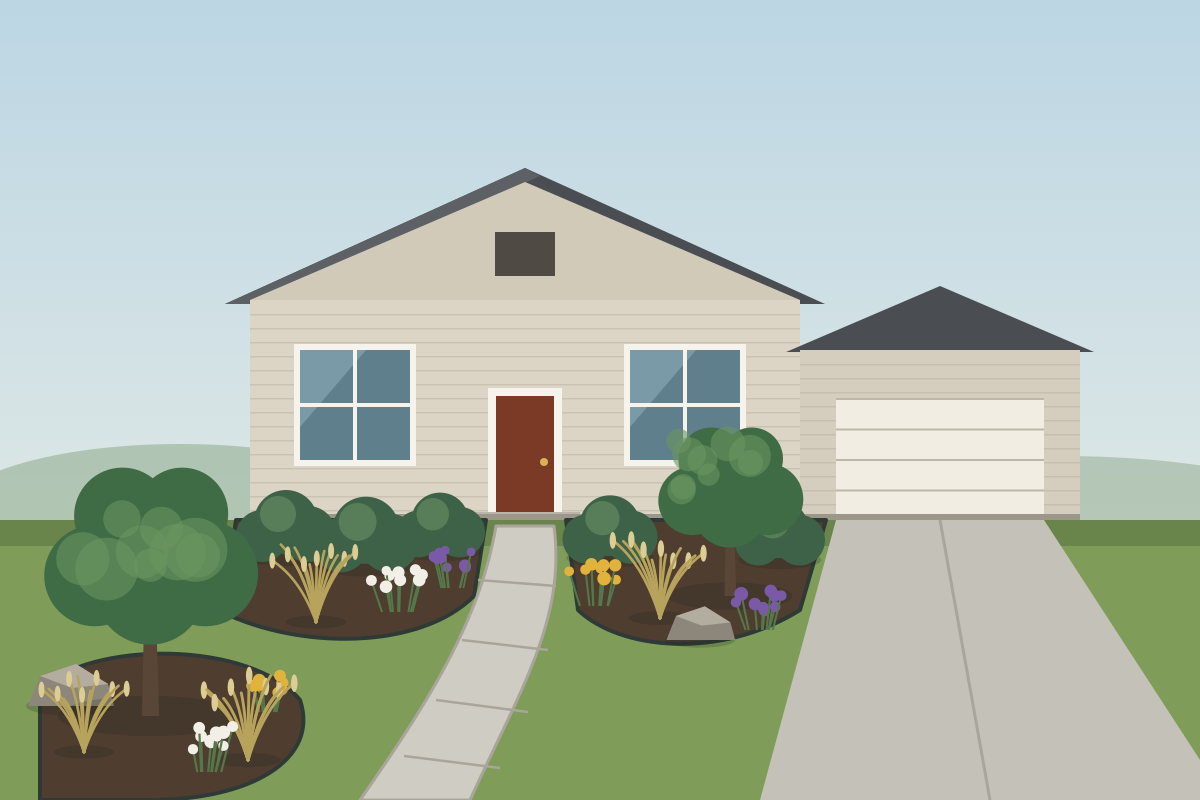
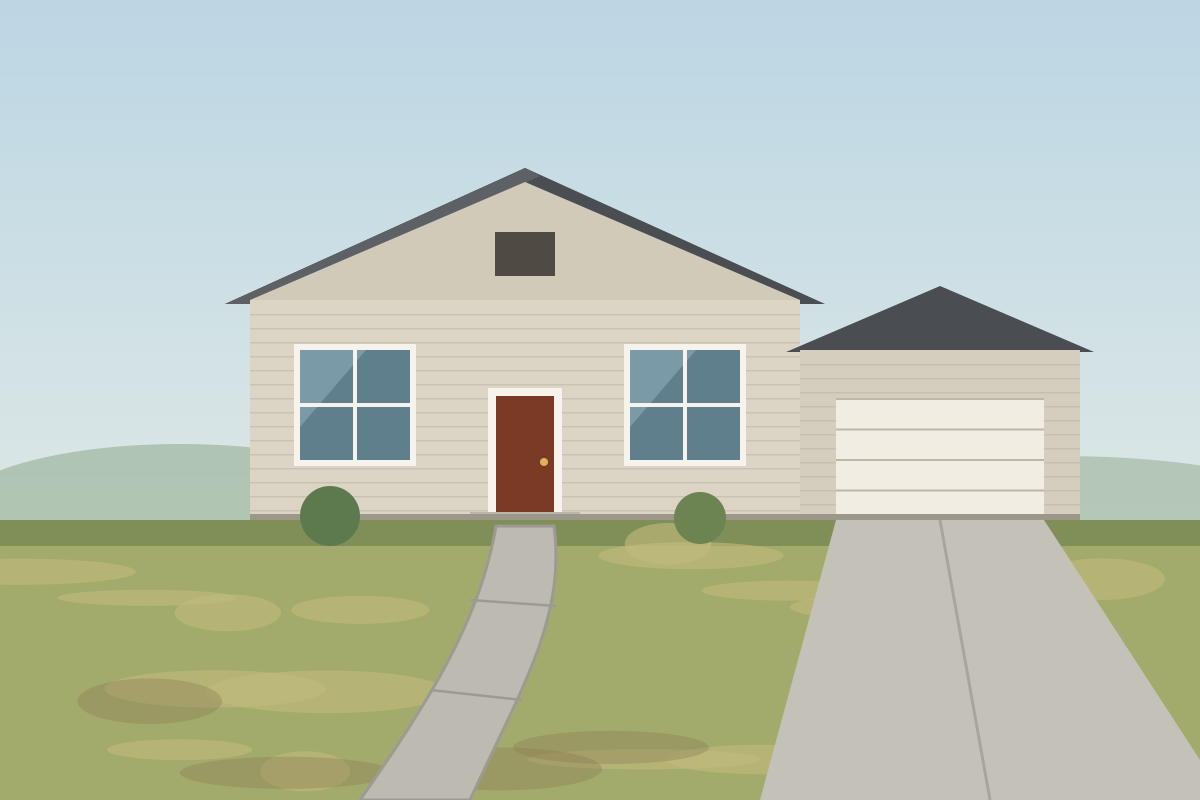 OriginalModern Native concept
Checking today's free renders…
2 · Tune the design
Units
USDA Zone 8b · Western & Central Europe TemperateParis, France · winter low −9 to −7 °C
Area
Design style
Clean lines, massed regional natives, steel edging.
Sun exposure
Landscape plan & nursery list
Modern Native Backyard Plan
USDA Zone 8b · Western & Central Europe Temperate · Paris, France · 83.6 m² · Full Sun
- Plants
- 67
- Planting beds
- 23.4 m²
- DIY total
- €2,382
- Landscaper
- €6,193
Trees
€147
Field Maple
Acer campestre
- Zone
- 5–8
- Size
- 30 × 20 ft
- Bloom
- Gold fall color
- Water
- Moderate water
Native to your regionPet caution1 × 15 gal
€147 each
€147
Shrubs
€149
Shrubby Hebe
Veronica 'Great Orme'
- Zone
- 8–10
- Size
- 3 × 3 ft
- Bloom
- Pink spikes, June–September
- Water
- Low water
Regionally adaptedPet-safeDrought-tolerant5 × 3 gal
€22 each
€110
Mock Orange
Philadelphus coronarius
- Zone
- 4–8
- Size
- 8 × 7 ft
- Bloom
- White, fragrant, June
- Water
- Moderate water
Native to your regionPet caution1 × 3 gal
€39 each
€39
Perennials
€221
Western Yarrow
Achillea millefolium
- Zone
- 2–9
- Size
- 2 × 2 ft
- Bloom
- White, May–September
- Water
- Low water
Native to your regionToxic to petsDrought-tolerantDeer-resistant6 × 1 gal
€11 each
€66
Dense Blazing Star
Liatris spicata
- Zone
- 3–9
- Size
- 3 × 1.5 ft
- Bloom
- Violet, July–August
- Water
- Moderate water
Zone-compatiblePet-safeDrought-tolerant11 × 1 gal
€11 each
€121
Cleveland Sage
Salvia clevelandii
- Zone
- 8–10
- Size
- 4 × 4 ft
- Bloom
- Violet-blue, May–July
- Water
- Low water
Zone-compatiblePet-safeDrought-tolerantDeer-resistant2 × 1 gal
€17 each
€33
Ornamental grasses
€304
Tufted Hairgrass
Deschampsia cespitosa
- Zone
- 2–9
- Size
- 3 × 2 ft
- Bloom
- Gold haze, June
- Water
- Moderate water
Native to your regionPet-safeDeer-resistant11 × 1 gal
€13 each
€142
Karl Foerster Feather Reed Grass
Calamagrostis × acutiflora 'Karl Foerster'
- Zone
- 4–9
- Size
- 5 × 2 ft
- Bloom
- Wheat plumes, June
- Water
- Moderate water
Regionally adaptedPet-safeDeer-resistant11 × 1 gal
€15 each
€162
Groundcovers
€122
Creeping Thyme
Thymus serpyllum
- Zone
- 4–9
- Size
- 3 in × 1.5 ft
- Bloom
- Mauve, June–July
- Water
- Low water
Native to your regionPet-safeDrought-tolerantDeer-resistant19 × quart
€6 each
€122
DIY vs. landscaper
| Item | DIY | Pro |
|---|---|---|
| Plants67 plants across 9 species | €943 | €1,226 |
| Soil & compost1.2 m³ at 5 cm deep | €62 | €115 |
| Mulch1.8 m³ shredded hardwood mulch | €80 | €179 |
| Edging22.3 linear m steel edging | €218 | €504 |
| Pavers & hardscape12.5 m² large-format concrete pavers | €932 | €2,608 |
| LaborDIY: about 50 hours of your time | €0 | €897 |
| Delivery & tool rentalBulk delivery plus plate compactor | €147 | €0 |
| Design & overhead12% contractor overhead | €0 | €663 |
| Total | €2,382 | €6,193 |
Doing it yourself saves about €3,812 for roughly 50 hours of work.
Planting notes
- Best planting window for Zone 8b: october through march (fall planting is best). Typical last spring frost Mar 7 – Mar 28; first fall frost Nov 7 – Nov 28.
- Western & Central Europe Temperate: Cool temperate oceanic-to-continental climate across France, Benelux, Germany and the Alps foreland. Expect 600–1000 mm / yr, year-round.
- Work 5 cm of compost into the top 15 cm of soil, then mulch 8 cm deep, keeping it off stems and trunks.
- Water deeply twice a week for the first 8 weeks, weekly through the first summer, then taper. Established natives need supplemental water only in drought.
Year-round interest calendar
Northern Hemisphere · 9 species · 67 plants
December–April is bare (Northern Hemisphere winter). Add an evergreen anchor or winter-interest shrub — e.g. inkberry holly, boxwood, or hellebore — to carry the view.
Lawn-replacement water & cost savings
vs. irrigated turfgrass
- Water saved / yr
- 30,480 L
- Water bill saved / yr
- €56
- Share of turf irrigation cut
- 34%
(8,052 gal)
at local average water rates
Planning estimate — confirm with your utility.
Curious how another style compares? See a side-by-side water & cost readout.
Zone estimated from your ZIP, postal code or city using the 2023 USDA map and equivalents. Plants marked pet-safe are not listed as toxic by the ASPCA and are recognized as non-toxic to dogs and cats; “pet caution” means unlisted or mildly irritating. Prices shown in EUR are converted from mid-range US estimates — confirm stock and pricing with your nursery. Water-savings figures are climate-adjusted planning estimates benchmarked against a thirsty cool-season lawn; confirm current rates with your utility.
Northern Hemisphere planting & bloom calendar
Seasonal timing for Western & Central Europe Temperate
Major metros in this region include Paris, Lyon, Amsterdam, Brussels, Berlin, Munich, Hamburg, Zurich and Vienna. Plant woody trees and shrubs in autumn so roots settle before spring; install frost-tender perennials after mid-May (after the Ice Saints frost window in Central Europe).
- Best planting window
- October through March (fall planting is best)
- Typical last spring frost
- Mar 7 – Mar 28
- Typical first fall frost
- Nov 7 – Nov 28
- Growing season
- about 240–260 days
Regional 12-month bloom & evergreen calendar (Northern Hemisphere)
Across 21 native & adapted catalog species
Regional plant catalog
Native & adapted plants for Western & Central Europe Temperate
All 21 regional picks (14 native, 7 adapted) from YardCraft's 186-plant catalog, with Northern Hemisphere peak bloom windows.
Trees (3)
European Beech
NativeFagus sylvatica
Zone 4–7 · 60 × 40 ft · Moderate water
Peak Sep–Nov
Field Maple
NativeAcer campestre
Zone 5–8 · 30 × 20 ft · Moderate water
Peak Sep–Nov
Silver Birch
NativeBetula pendula
Zone 2–7 · 50 × 25 ft · Moderate water
Peak Mar–May · Pet-safe
Shrubs (5)
Dwarf Mugo Pine
NativePinus mugo 'Pumilio'
Zone 2–7 · 4 × 6 ft · Low water
Evergreen year-round · Drought-tolerant
Scotch Heather
NativeCalluna vulgaris
Zone 4–7 · 1.5 × 2 ft · Low water
Peak Aug–Oct · Drought-tolerant · Pet-safe
English Hawthorn
NativeCrataegus laevigata
Zone 4–7 · 20 × 15 ft · Moderate water
Peak May
Mock Orange
NativePhiladelphus coronarius
Zone 4–8 · 8 × 7 ft · Moderate water
Peak Jun
Shrubby Hebe
AdaptedVeronica 'Great Orme'
Zone 8–10 · 3 × 3 ft · Low water
Peak Jun–Sep · Drought-tolerant · Pet-safe
Perennials (8)
Western Yarrow
NativeAchillea millefolium
Zone 2–9 · 2 × 2 ft · Low water
Peak May–Sep · Drought-tolerant
Common Primrose
NativePrimula vulgaris
Zone 4–8 · 8 in × 1 ft · Moderate water
Peak Mar–Apr
Lady Fern
NativeAthyrium filix-femina
Zone 2–8 · 3 × 2 ft · Regular water
Peak Apr–Oct · Pet-safe
Cranesbill Geranium
AdaptedGeranium 'Rozanne'
Zone 5–8 · 1.5 × 2 ft · Moderate water
Peak Jun–Oct · Drought-tolerant · Pet-safe
Hidcote English Lavender
AdaptedLavandula angustifolia 'Hidcote'
Zone 5–9 · 2 × 2 ft · Low water
Peak Jun–Aug · Drought-tolerant
Lamb's Ear
AdaptedStachys byzantina
Zone 4–9 · 1.5 × 2 ft · Low water
Evergreen year-round · Drought-tolerant · Pet-safe
Walker's Low Catmint
AdaptedNepeta × faassenii 'Walker's Low'
Zone 4–8 · 2 × 3 ft · Low water
Peak May–Sep · Drought-tolerant
Przewalski's Ligularia
AdaptedLigularia przewalskii
Zone 4–8 · 5 × 2.5 ft · Regular water
Peak Jul–Aug
Ornamental grasses (2)
Tufted Hairgrass
NativeDeschampsia cespitosa
Zone 2–9 · 3 × 2 ft · Moderate water
Peak Jun · Pet-safe
Karl Foerster Feather Reed Grass
AdaptedCalamagrostis × acutiflora 'Karl Foerster'
Zone 4–9 · 5 × 2 ft · Moderate water
Peak Jun · Pet-safe
Groundcovers (3)
Creeping Thyme
NativeThymus serpyllum
Zone 4–9 · 3 in × 1.5 ft · Low water
Peak Jun–Jul · Drought-tolerant · Pet-safe
European Wild Ginger
NativeAsarum europaeum
Zone 4–8 · 5 in × 1.5 ft · Moderate water
Peak Apr
Lingonberry
NativeVaccinium vitis-idaea
Zone 2–7 · 1 × 1.5 ft · Moderate water
Sep–Nov · Evergreen · Pet-safe
Soil, climate & style match
Designing for Western & Central Europe Temperate
Transitions from mild oceanic Western Europe to crisp continental Central Europe, with year-round rainfall (600–1000 mm), distinct seasonal frosts, and increasingly warm summer heatwaves.
Best landscape styles for this region
Regional playbook
Local planting & care checklist
- 01Blend drought-resilient steppe grasses and perennials into traditional borders to handle hotter European summers.
- 02Wait until mid-May ('Ice Saints') in continental Zone 7 areas before setting out tender starts.
- 03Apply 5–7 cm of fine bark or compost mulch to moderate summer soil heat and winter frost.
- 04Combine evergreen hornbeam, boxwood alternatives or yew structure with airy New Perennial-style grasses.
Questions
Western & Central Europe Temperate landscaping FAQ
What native plants grow best in Western & Central Europe Temperate?
Top regional picks in YardCraft's catalog for Western & Central Europe Temperate include Creeping Thyme, Dwarf Mugo Pine, Scotch Heather, Western Yarrow. In total, the catalog tracks 14 native and 7 adapted species for this region—enter your exact city or postal code in the studio to filter by sun exposure, drought tolerance and pet safety.
When is the best time to plant in Western & Central Europe Temperate?
For a representative Western & Central Europe Temperate location like Paris, France (Zone 8b, Northern Hemisphere), the best planting window is october through march (fall planting is best). Plant woody trees and shrubs in autumn so roots settle before spring; install frost-tender perennials after mid-May (after the Ice Saints frost window in Central Europe).
What rainfall and winter temperatures should I plan for in Western & Central Europe Temperate?
Western & Central Europe Temperate receives roughly 600–1000 mm / yr, year-round. Around Paris, France, average annual minimum temperatures fall in the −9 to −7 °C band. Cool temperate oceanic-to-continental climate across France, Benelux, Germany and the Alps foreland.
When is peak bloom season in Western & Central Europe Temperate?
Adjusted for the Northern Hemisphere calendar, the heaviest flowering months across YardCraft's Western & Central Europe Temperate plant palette fall around June, July, September, supported by evergreen shrubs and grasses that hold structure through the rest of the year.